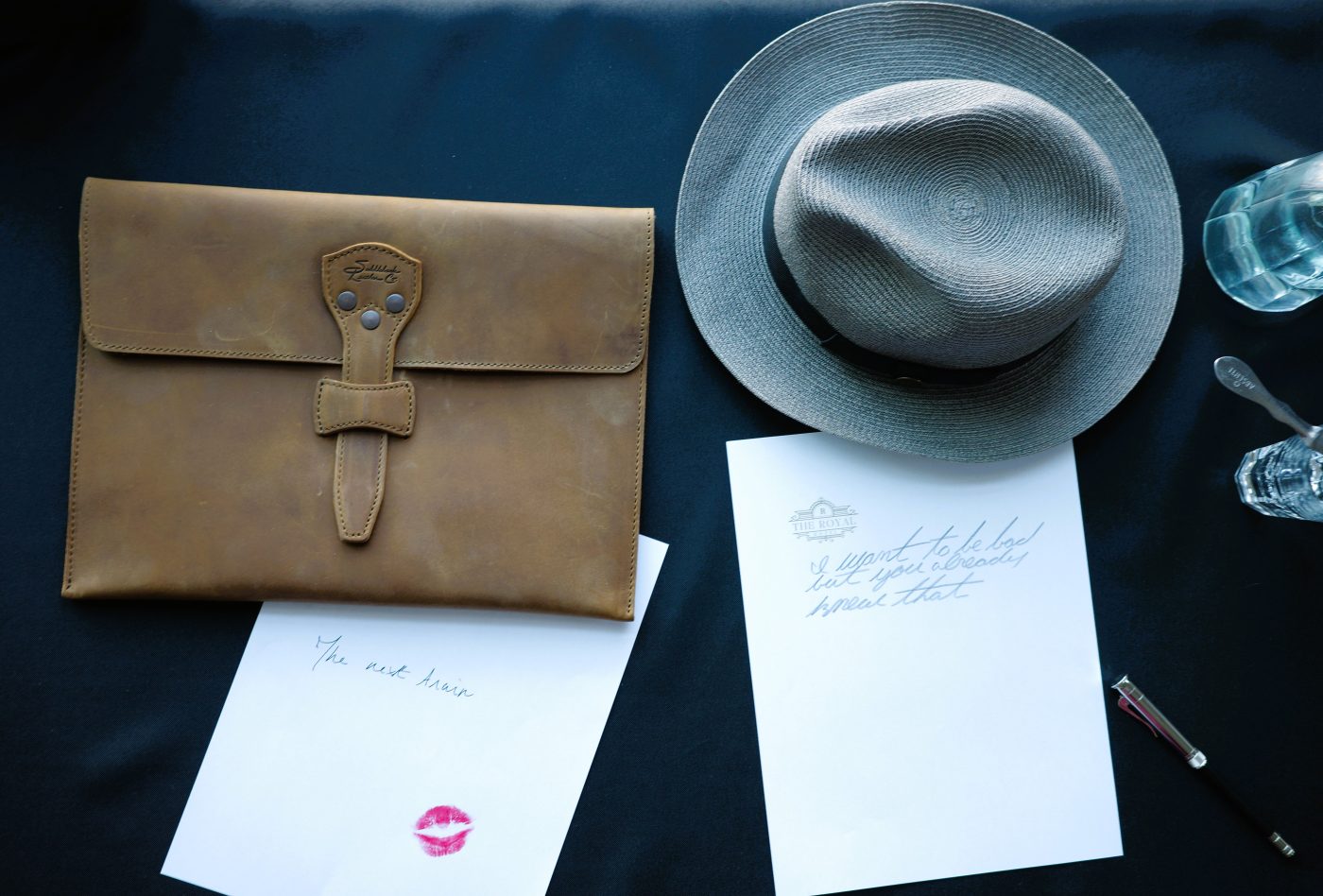
compulsively, I read biographies on artists of every medium & era. I will even delve into people who are not my usual thing which has more than once made me become a fan. There is a commonality which transcends both nation and decade, that of practicality initially dictating artistic direction/materials & methodology.
The Impressionists are mainly talked about in relation to how they used color and lighting effects. Their importance was not just their revolutionary portrayal of light as it effected perception though. Before them, some painters had started breaking away from the pervading “must” of people being heroically portrayed ala history/myth/allegory (Courbet & Millet had started towards more naturalized milieu) they were the first to fold it into their works wholesale.
People were portrayed having an eye opener in a cafe before work, dirty nails, bad skin. Objects were portrayed in natural positions, a wife’s hat left atop a shrub, detritus atop a studio table waiting to be swept with forearm into the trash.
Part of the reason for this all was practicalities sake. Models could not always be afforded and it was easier using friends and family to pose, especially as scheduling could prove to be more convenient and often all it cost was to eventually return the favor.
These things would be enfolded into the methodology of their work and then honed. After this point, it was became their lexicon.
The same thing happened with Picasso/Braque cubist still lives, it was just things they had laying around which were part of their every day lives. Money need not be spent on flowers or any other kind of specialty objects. The only downside to this was that by the time Picasso was moving on from cubism, cubist paintings by participators in the genre more often than not had “required” objects to be included which had initially made appearances in a natural manner due to pragmatism.
Practicality is often an important initial dictator of choices an artist makes, but once the path chosen is felt to be the right one, a philosophy sprouts up. Like the methodology, it is ready to be honed, its articulation, whether to the public or just in the artist’s head, fine tuned.
The Italian painter Giorgi Morandi rarely left his city of Bologna, Italy (only three times, much later in life and then only briefly). He did not portray life in his home city but was fueled by it. He mainly did still lives. Most of these were of bottle which had just been laying around. A cursory look at his work and they seem deceptively simple. There is no bursting forth virtuosic moments to be found in his work. What makes them remarkable is that they very much look like every day objects imbued with organically occurring poetry.
A generation later and half a world away, Henry Virgona worked along a similar philosophical line. He kept the same 300 square foot Union Square studio for fifty nine years (sadly, ending in 2019). He rarely traveled, preferring to stay within the confines of the city whose fabric he was very much part of. He did still lives which showed him to be the artistic son of Morandi. He was an accomplished draftsman and this urban Antaeus did amazing candid drawings of all the people that he encountered in his daily city life, their natural poses maintain the power of the pieces. Two men, one mainly using objects, the other, people encountered every day, both showing inherent natural beauty of regular life.
I had already hit upon my philosophy and modus operandi before discovering Henry’s work. We definitely have marked differences, some of which could be generational. It is inspiring though, to see that one’s idea of serving the process is not completely out of left field but rather an evolved link in a chain which goes way back.
Most of what I work in and how I work all started out from practical considerations. I mainly use people in my life in some manner as models for convenience’s sake. When no one is around, I will paint or draw whatever catches my eye which is right in front of me. I too go for the beauty which organically comes through in every day objects or scenes.
One of my greatest pleasures in life is to conjure up, even if only with a pencil nubbin and scrap paper, either something I am seeing or talking about.
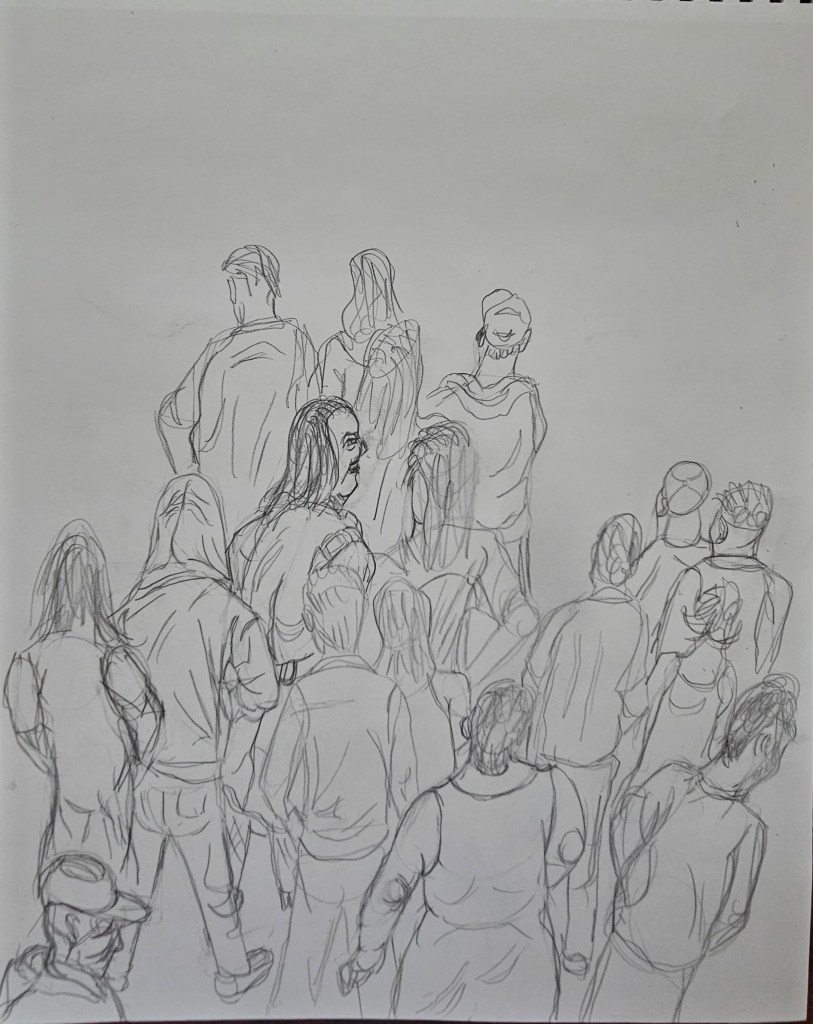
I was at a concert and observed various moments where, as much as I was enjoying the music, got caught up in people watching. Doing a sort of raw-visual-reportage after the fact, I caught the moment in a bigger sized for me piece. Aside from the size of the piece, another departure for me was the fact that I did a few studies as I wanted the crowd scene to be accurate and maintain a certain degree of looseness which already having knowledge of positioning and compositional balance would help with.
“Sept. 19th” 14×19 graphite on paper 5×7 studies



 Paper Life Painting
🤍
LikeLiked by 1 person
Thanks
LikeLike
I too go for the beauty which organically comes through in every day objects or scenes.
Enjoyed reading your words;~)
LikeLiked by 2 people
Thanks for reading
LikeLiked by 1 person
💯
LikeLiked by 6 people