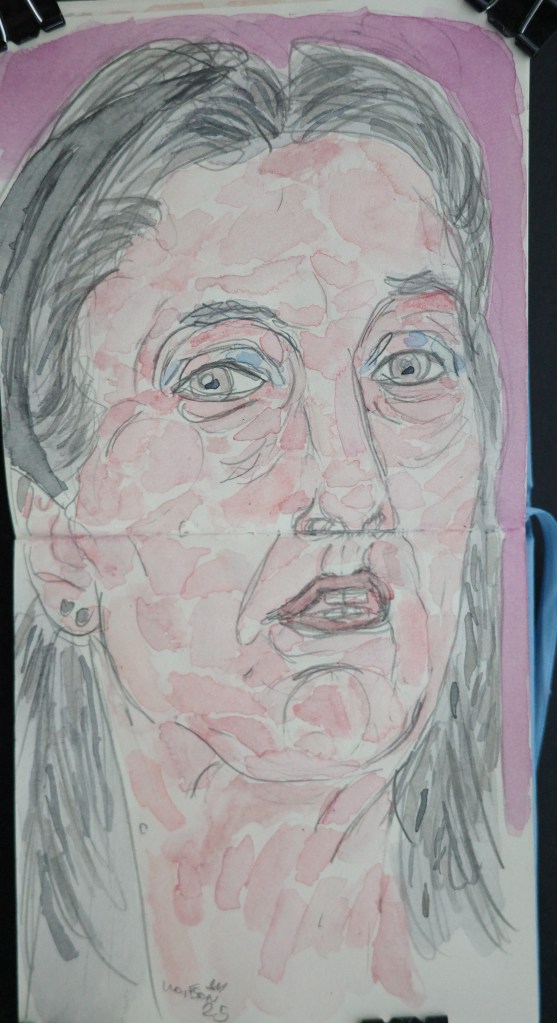
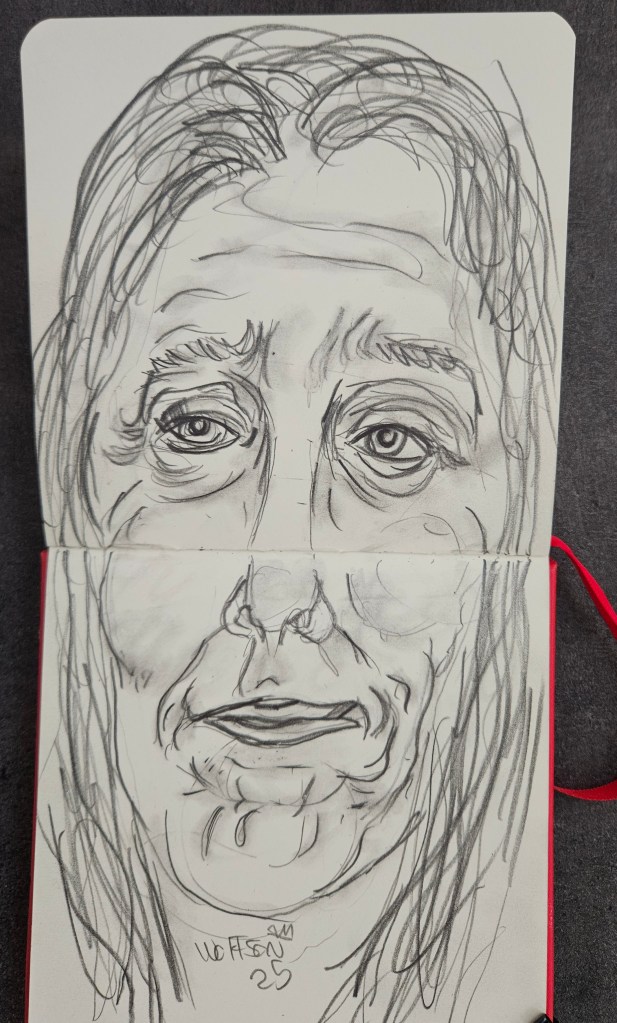
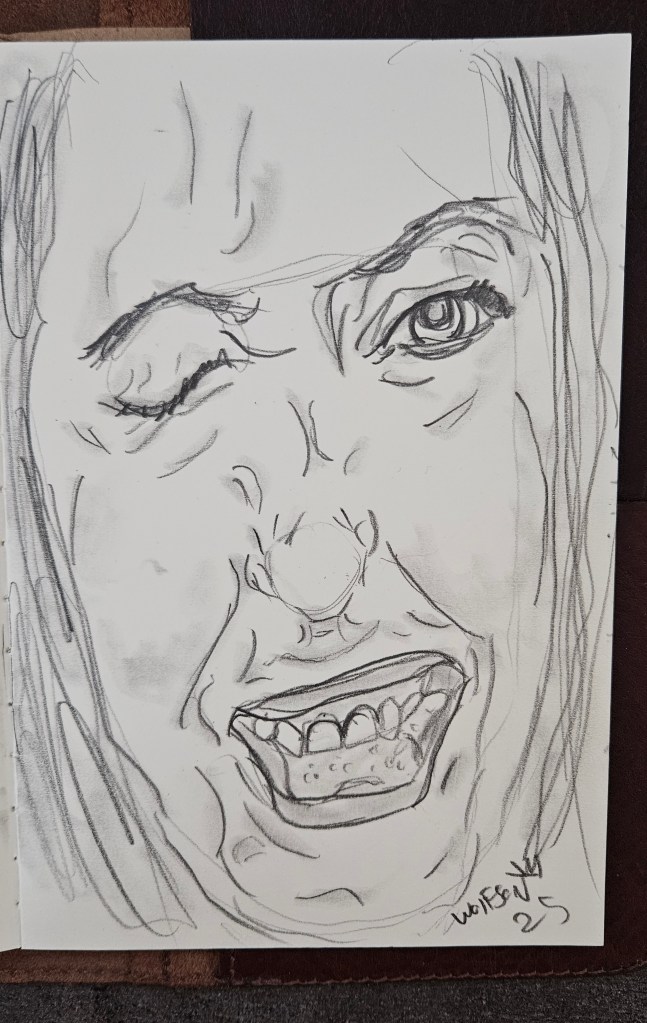
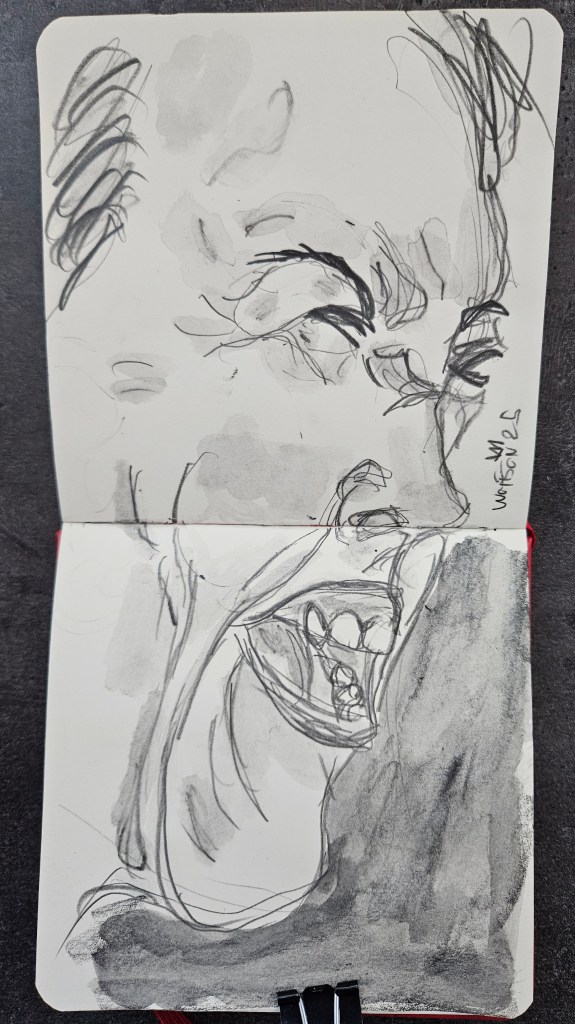
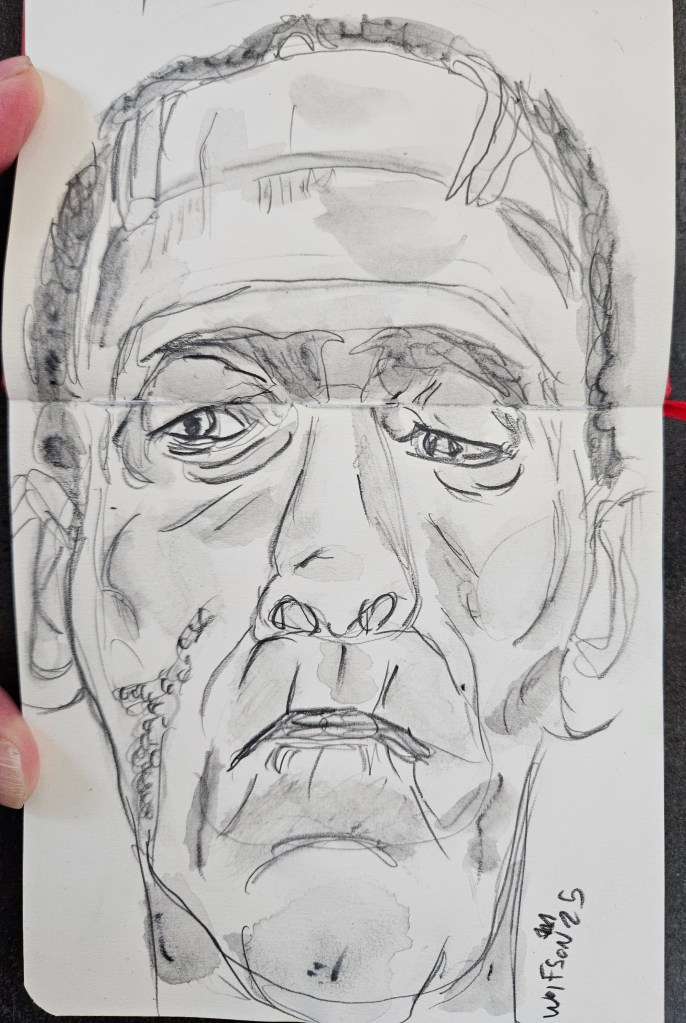
A lot of things in the world of painting which are now common were inspired by a pragmatism. The impressionists often painted in pleine air because it was easier than dealing with the types of studios which they could afford. They used each other and friends, family and lovers as subjects since this would be less expensive than using professional models.
The painter doing self-portraits also came about from such considerations. Occasionally, it does have an aspect of symbolism, the painter proclaiming themselves as such, pledging a lifetime of serving the process.
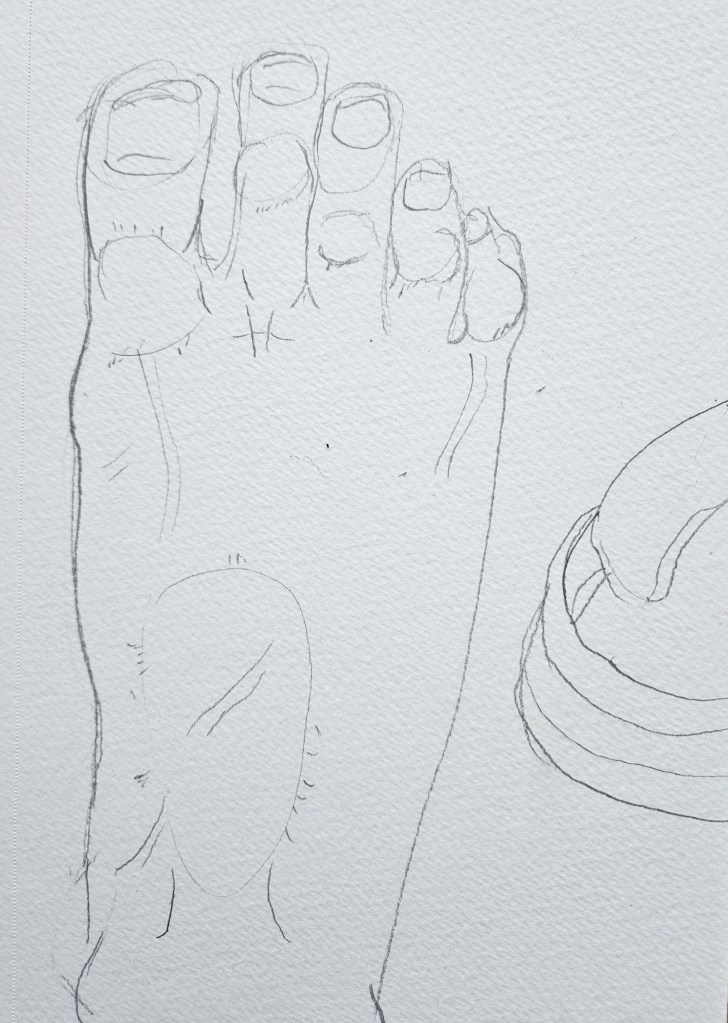
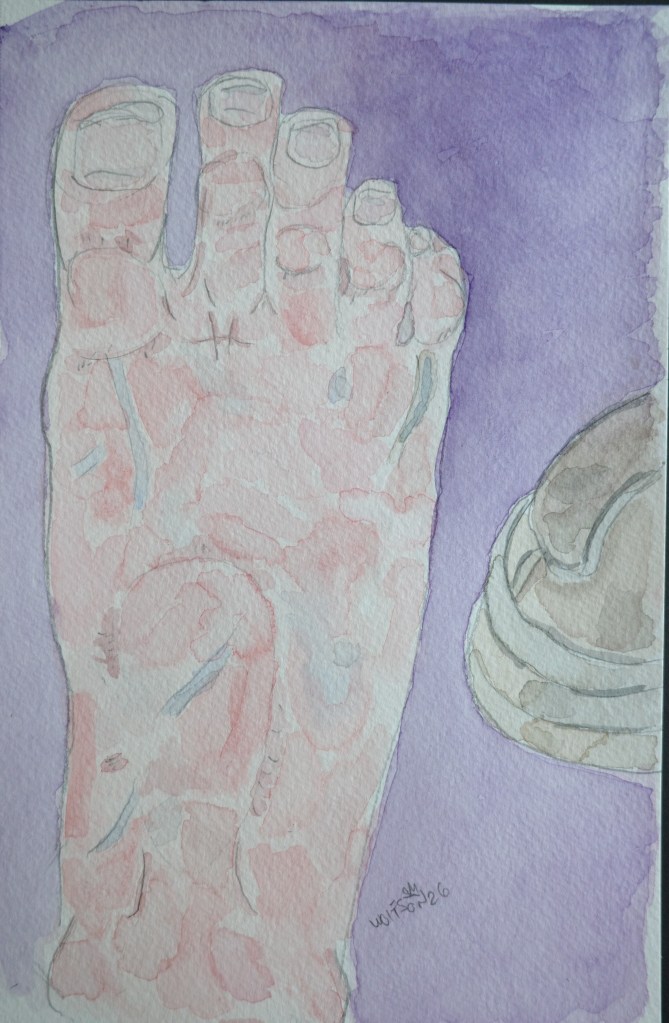
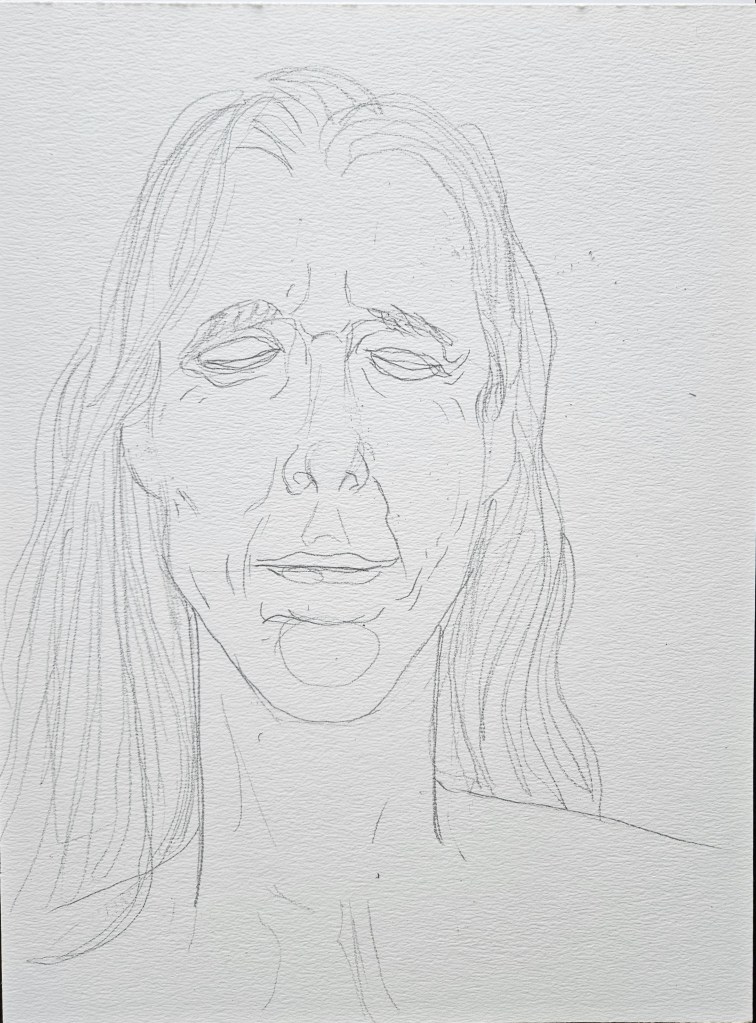
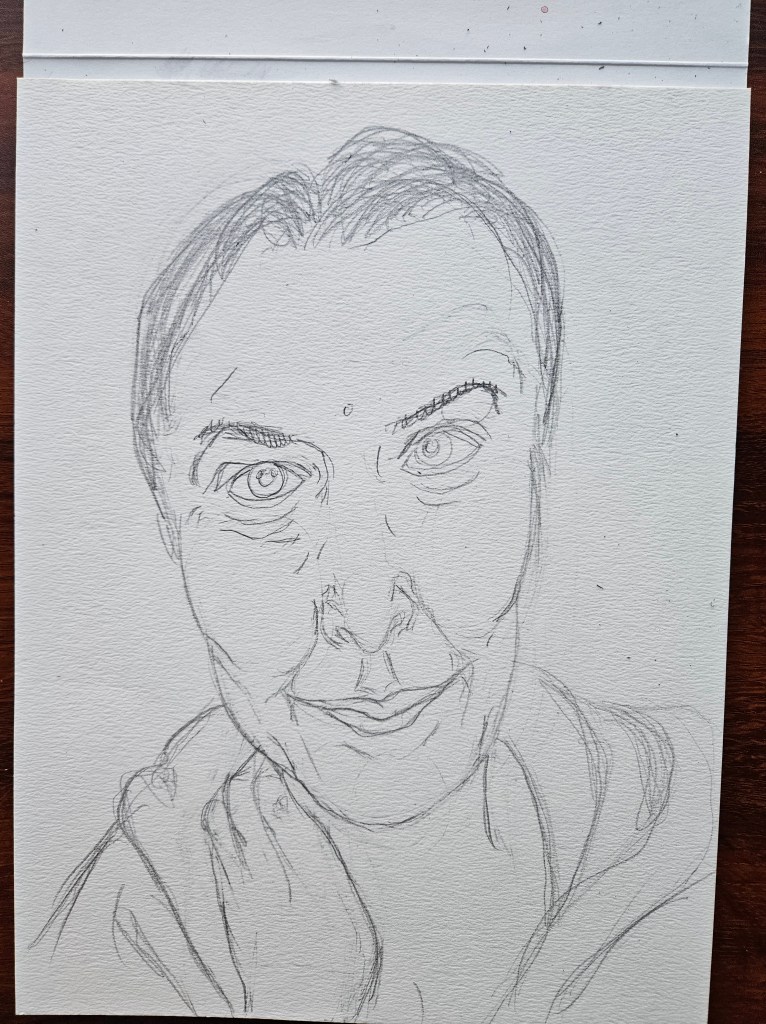
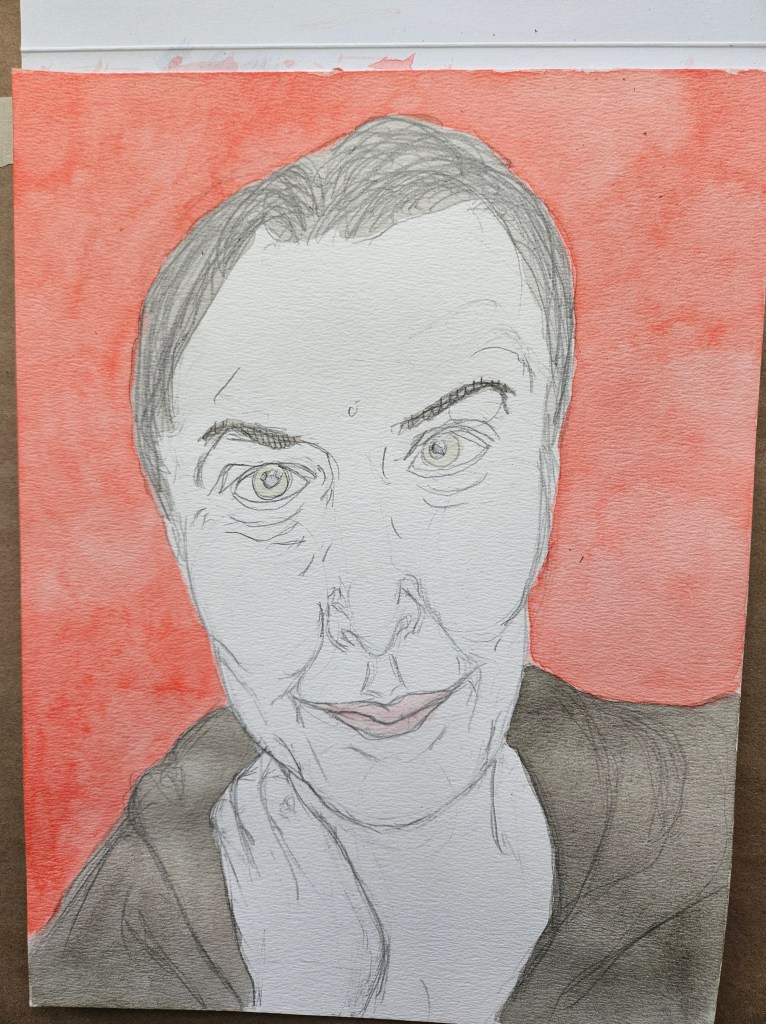
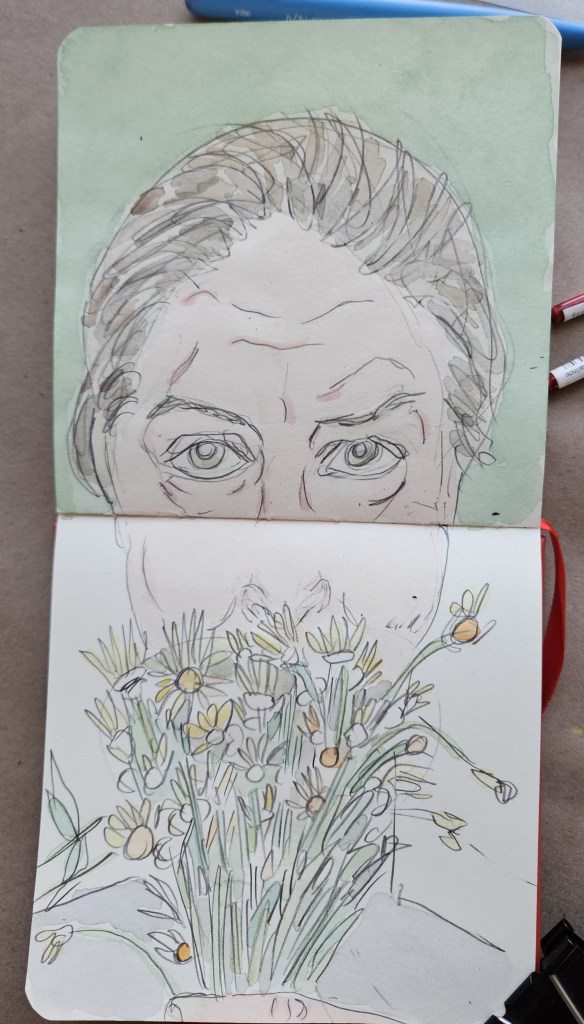
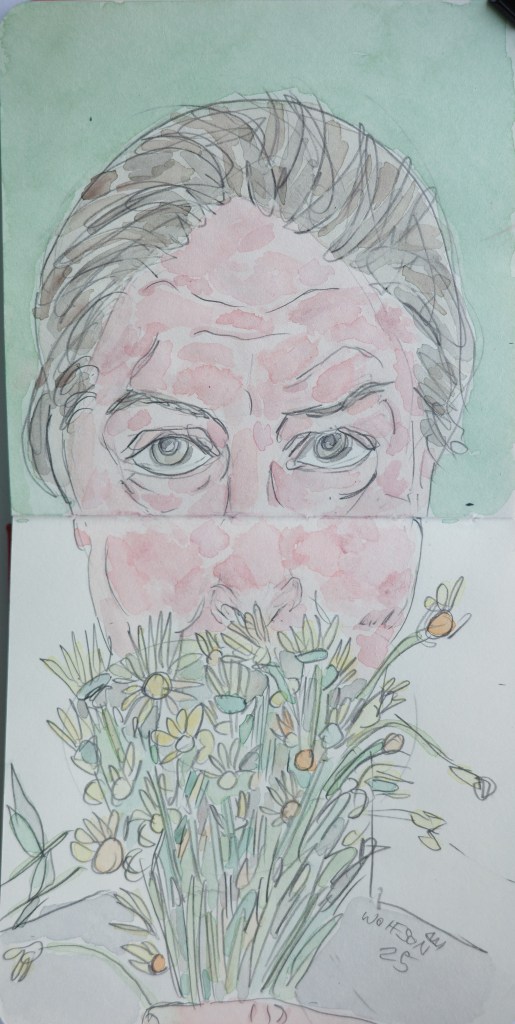
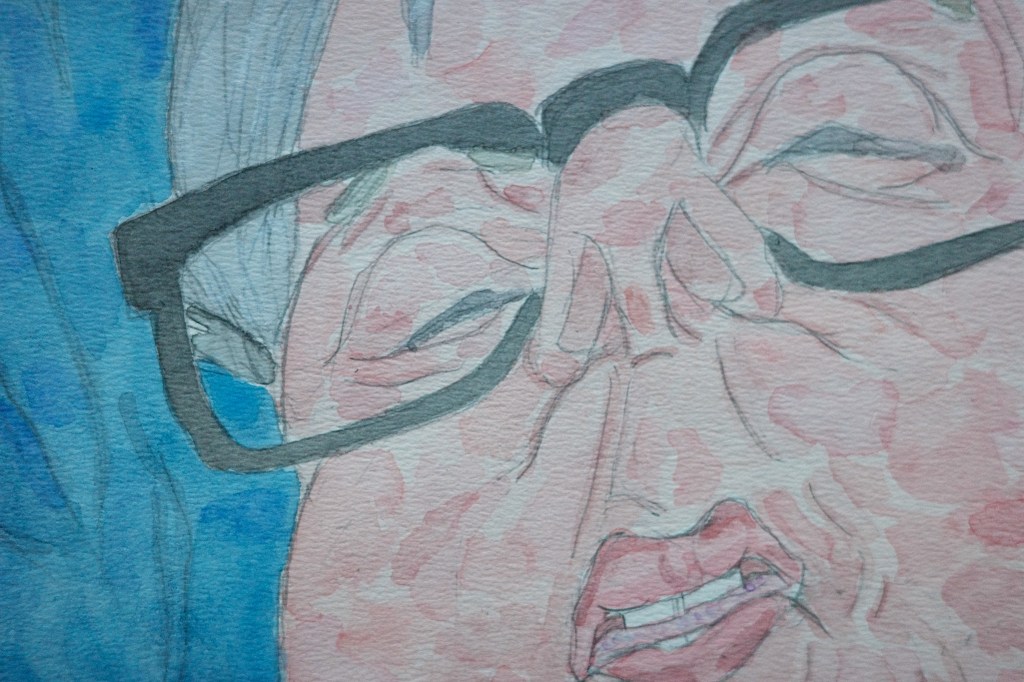
My oeuvre contains many self-portraits. Sometimes just a body part. at others times my mug. There is no symbolism in this. Either I had some paint left in palettes or I wanted to get to work without dealing with anyone else. Initially, there was a time & money pragmaticism for the subjects of my portraits. Now I prefer to use the people from my inner circle since we have an established trust where they offer up an emotional honesty rather than anything which would be too academic or glam.
My mission is to offer up emotional honesty in my work since truth is beauty. The portrayal of myself, warts and all and of flesh in general is a major part of my lexicon.
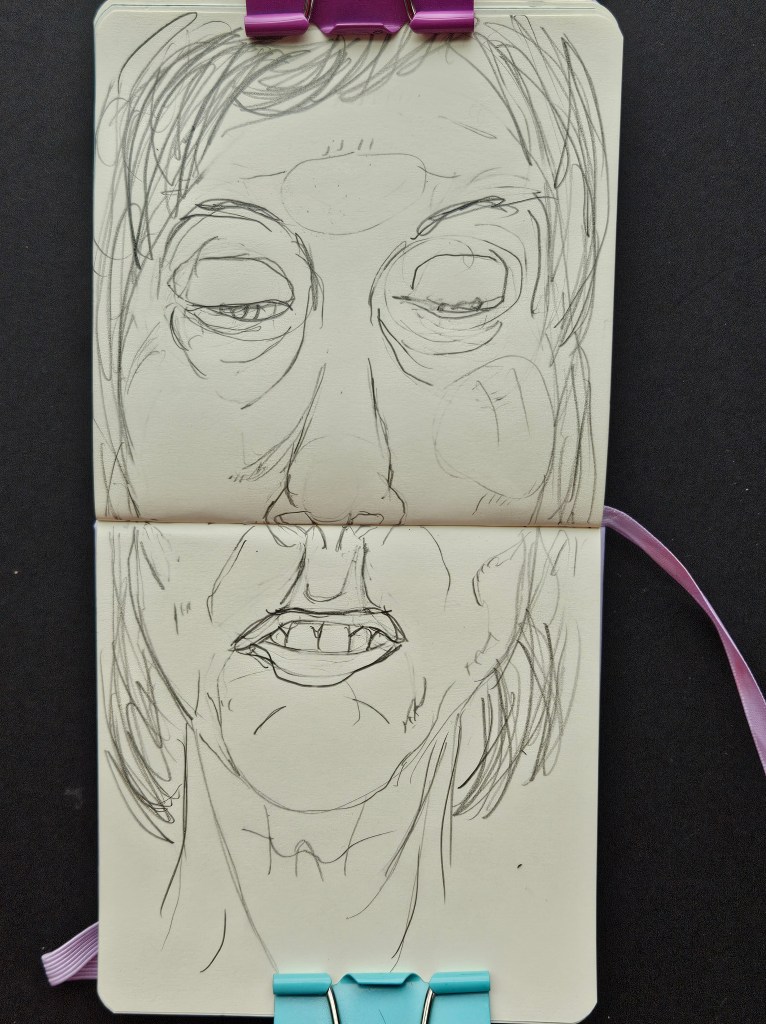
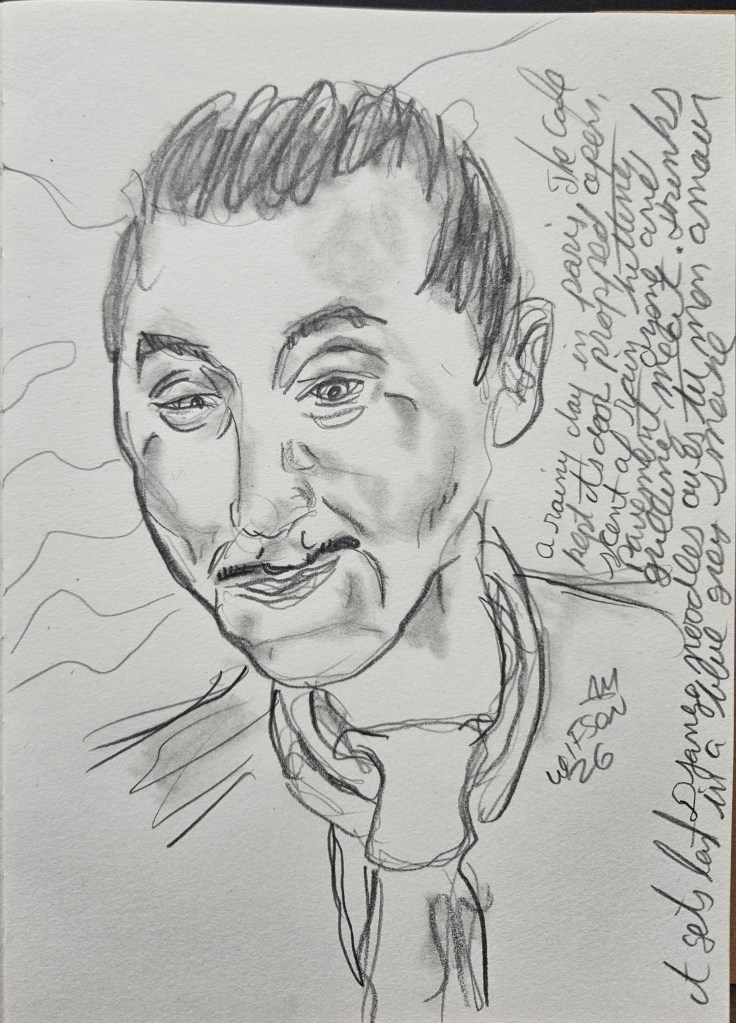
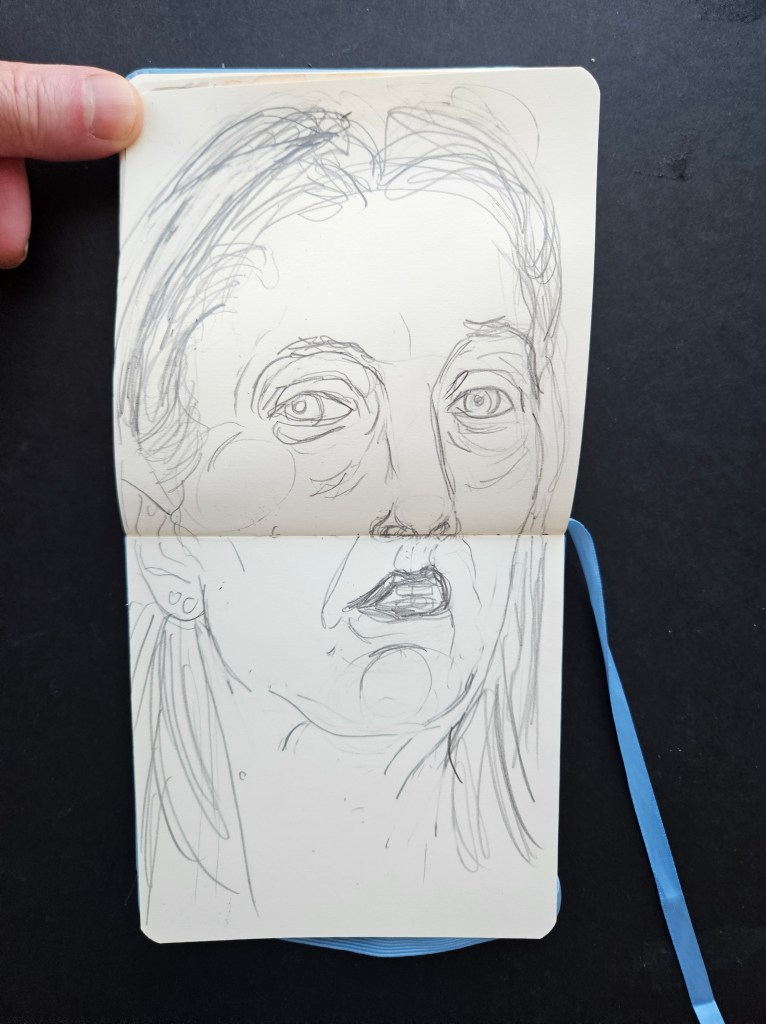
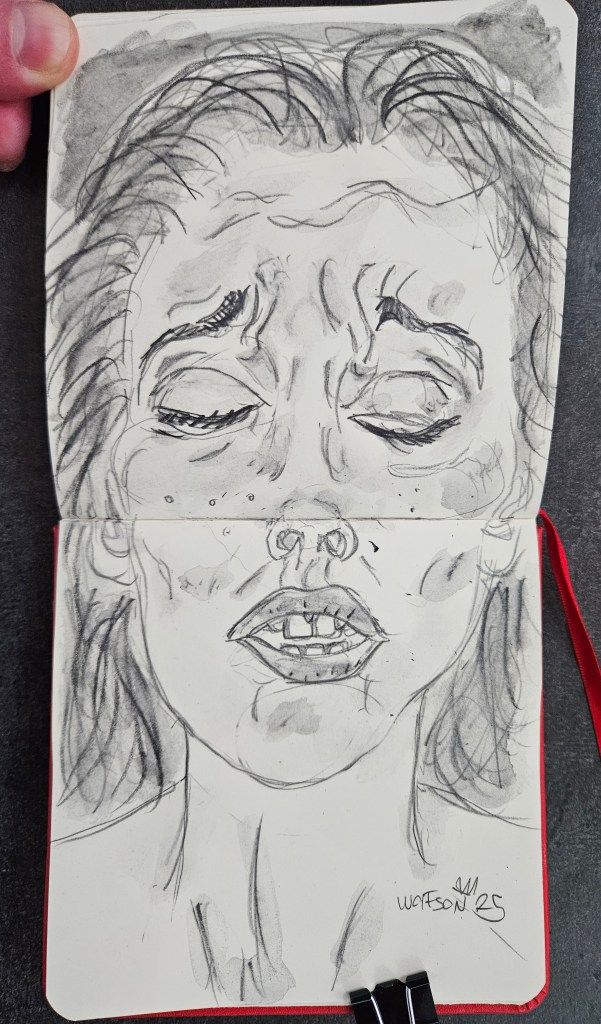
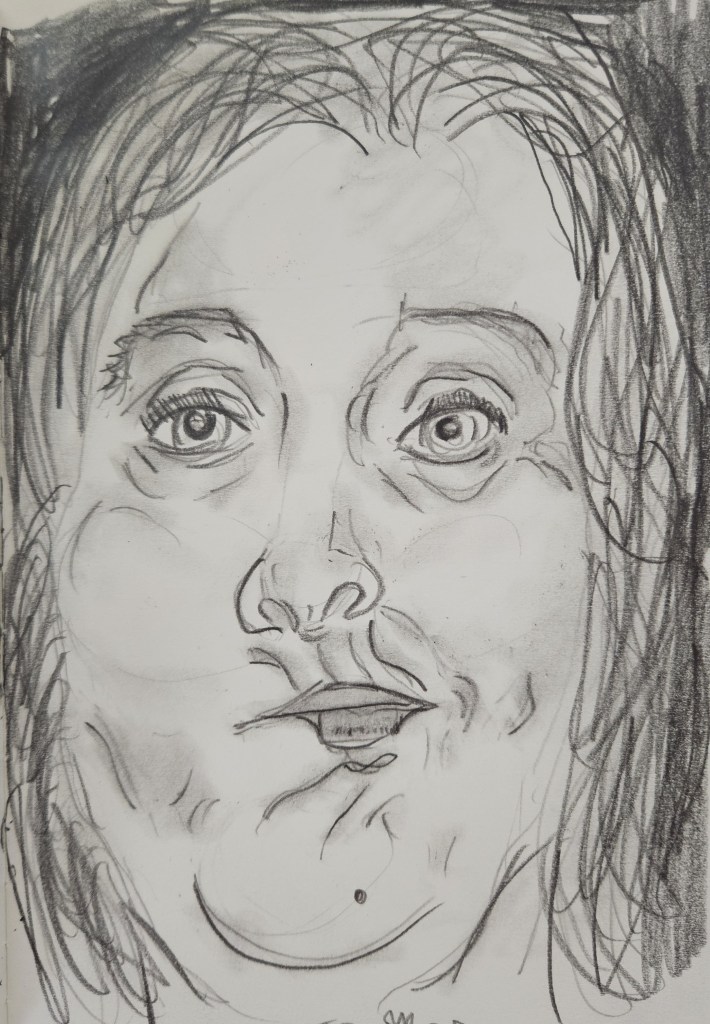
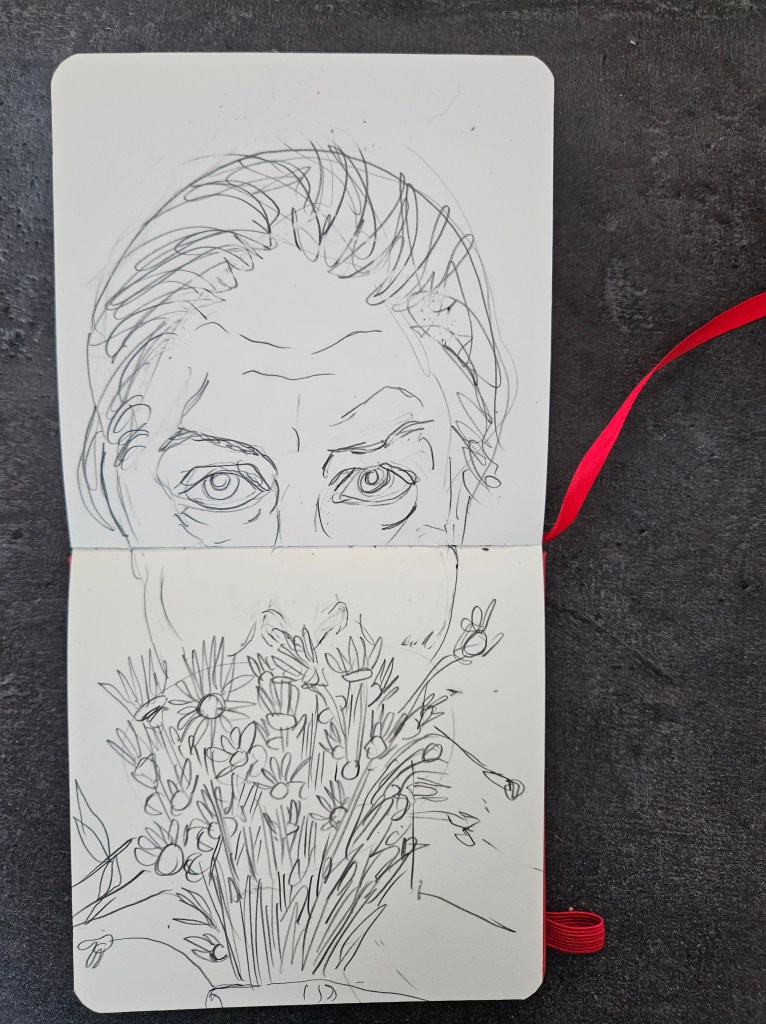
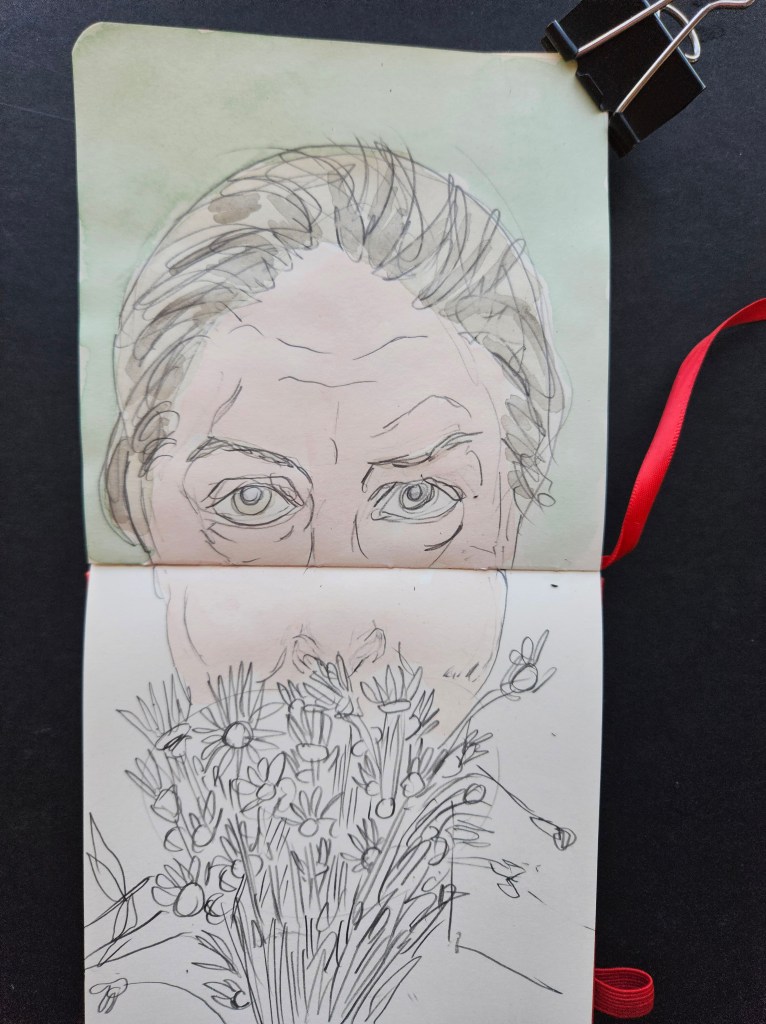
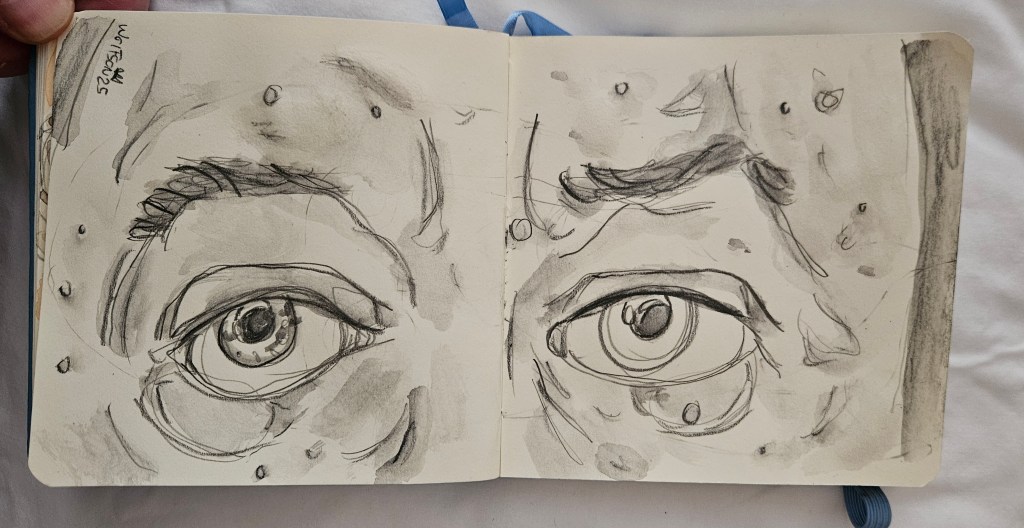
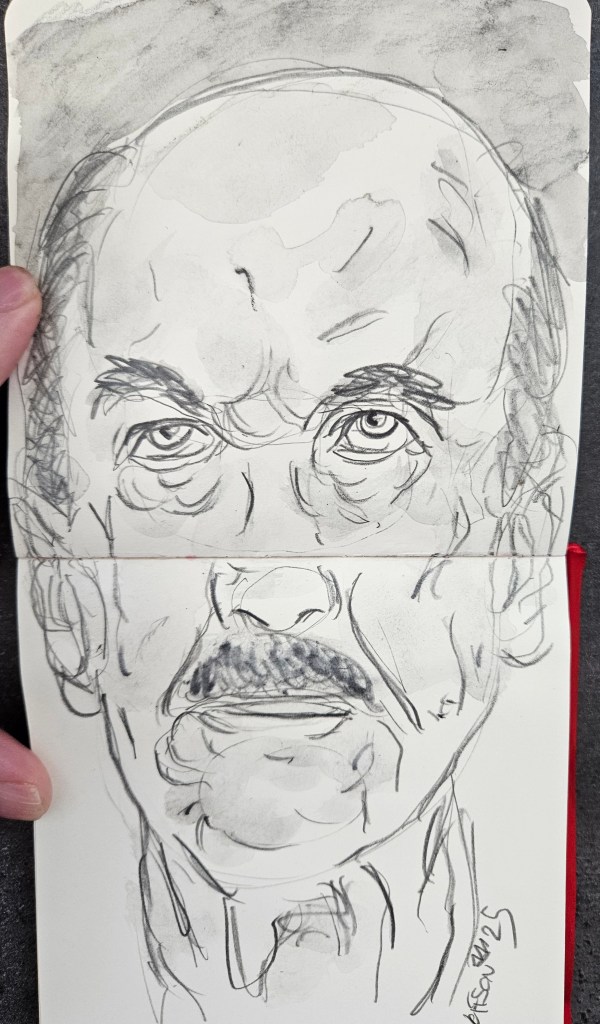
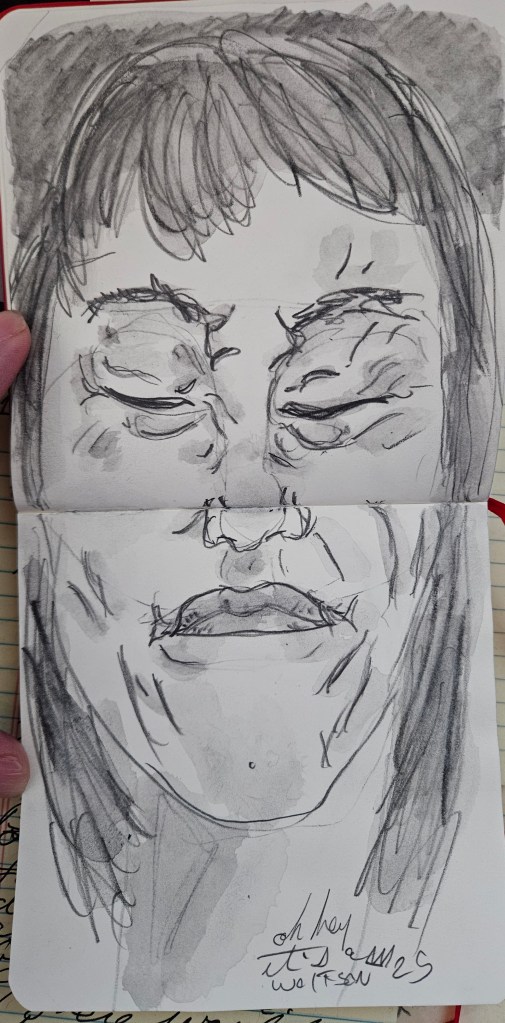
Linguine my ever present Talen Art Creations Multi Media pocket Pad 4×4 inches
There was an article recently about the two most influential modern artists. It got me thinking about the nature of art’s current influence. Art has become specialized. People still flock to museums but the casual viewer is there because of the totem they have made of any given artist, the mythos as it applies to them.
Picasso was important to his peers because of how he freed them up to pursue their own North Stars. The appeal now? He has become a sort of shorthand for being able to do whatever you want, seemingly effortlessly and make money, scribble on a napkin to pay for a roomful of people’s dinner at a four star restaurant, grab a collector/gallerist or peer’s wife by the breast and have everyone laugh and clap. It holds great appeal for people who aspire to become famous from nothing more than becoming an influencer or reality television star.
Picasso was an ass for sure. But credit where credit is due, he spent the majority of his day working in front of an easel and when not directly applying brush to canvas it was one of the things foremost on his mind.
People now admire Picasso not for what he did, nor what he freed up in others but because in their minds he was sort of proto reality start/influencer. They think of all they could do if they could be Picasso-like, not realizing that you can’t wish to be sui generis and still live the life you live now as you live it. That is the wish though and artists have become a totem divorced from what their reality was.
Painting has suffered the same divorce from reality. People have grown used to looking at art online often the artist’s hand/brushstroke is not as apparent and sometimes digitally smoothed out. A.I has made it worse, images made to look “real” quoting if not outright reproducing famous paintings & images do not even attempt to appear made by human hands.
These factors combined with the fact that everyone has a cellphone with which to photograph the minutia of their lives and how to look at and enjoy a painting is forgotten.
The casual viewer does not want to see the artist’s hand, they want machine like perfection as seen on their screens or phones. A painting is judged “good” now by how close to hyper realism it is. If a painting of a face can’t be mistaken for a photo then it is not good. (to me 99% of the hyper realism stuff is all technique and no soul. You forget it a soon as it it not in front of your face).
The only exception to all this seems to be some of the well known paintings, Van Gough, Monet’s waterlilies et al. With those though appeal is artificial story the viewer has told that they insert themselves into.
I was at a museum in Paris looking at one of these well known paintings and a twenty something woman stood next to me with the corners of her mouth turned down. I had to ask what was wrong. She showed me the image of the painting we stood before on her phone. She looked down at it then up. She showed me the image on the phone then waved her hand as if swatting away an insect at the painting;
“What’s all that?”
It was the impasto strokes of the brush on canvas.
For my works, I want my pieces to look like the subject but to also capture the truth of the moment before me. I am not afraid for a painting or drawing to look like painting or drawing. This is simple but important advice I would give any painter.
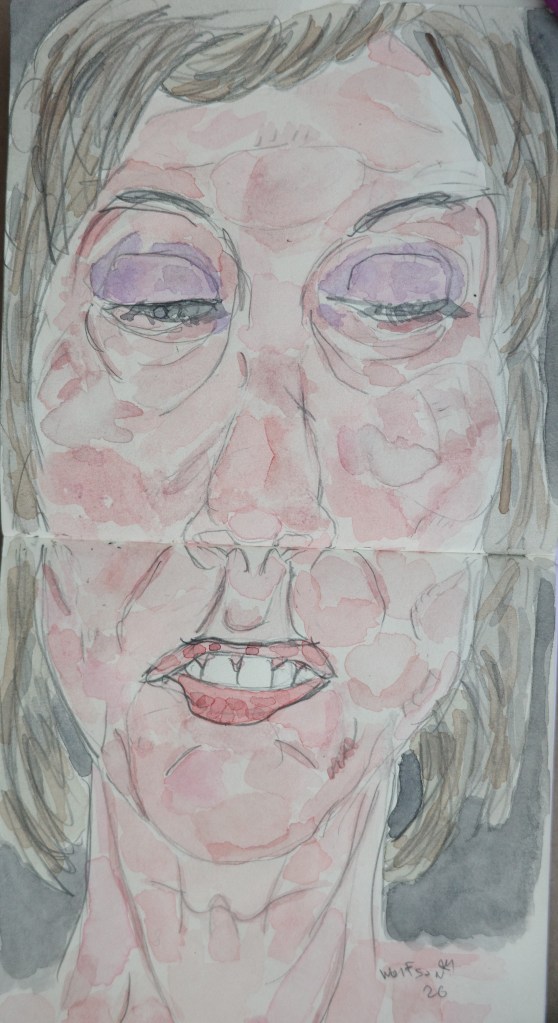
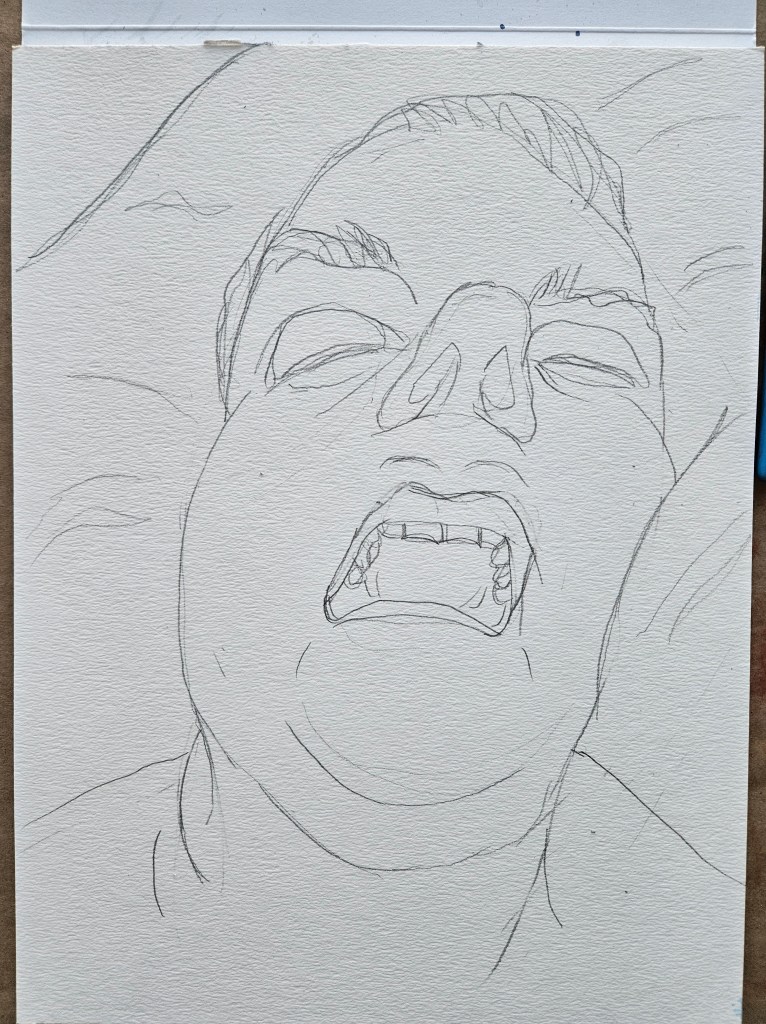
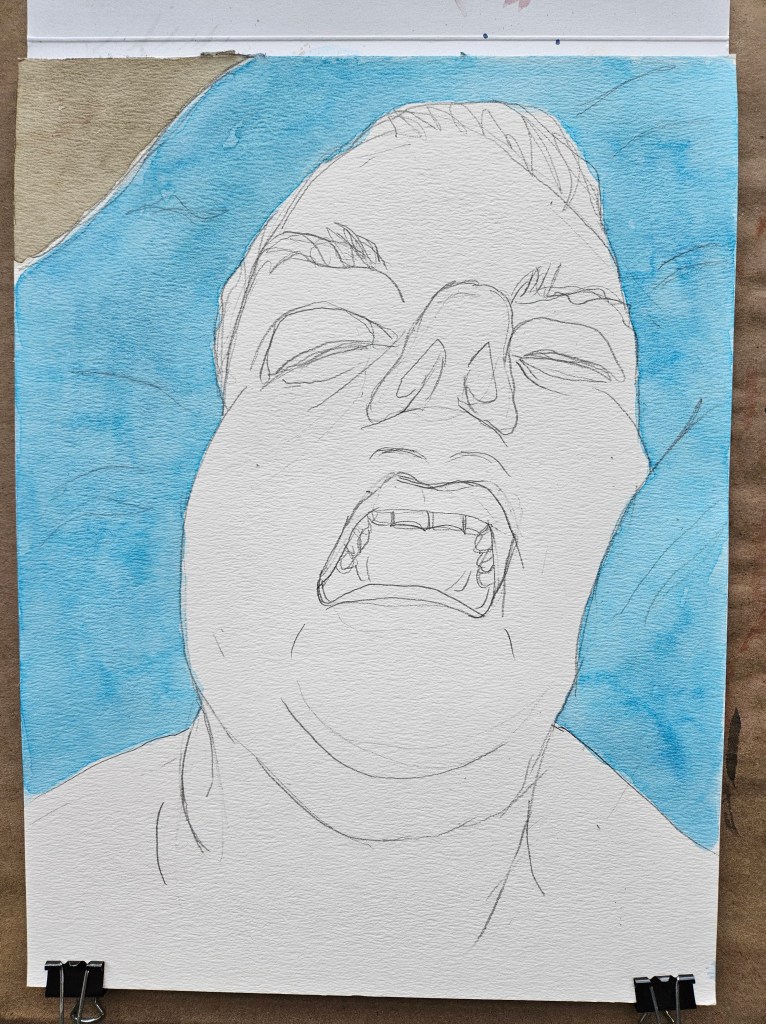
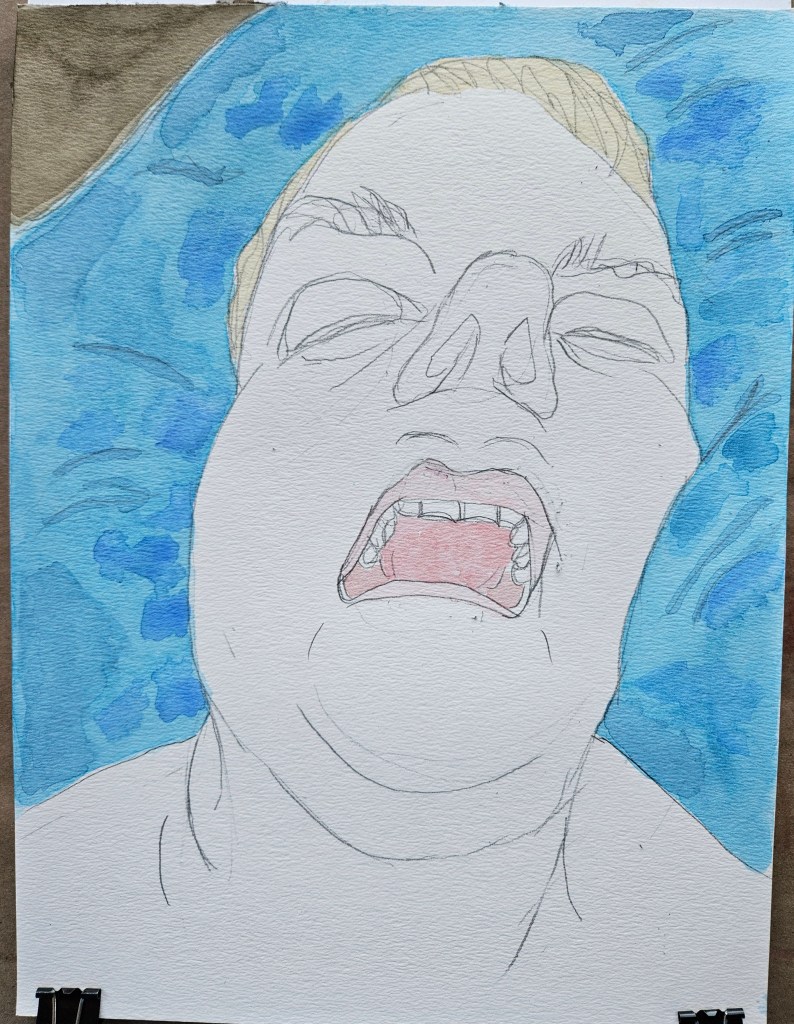
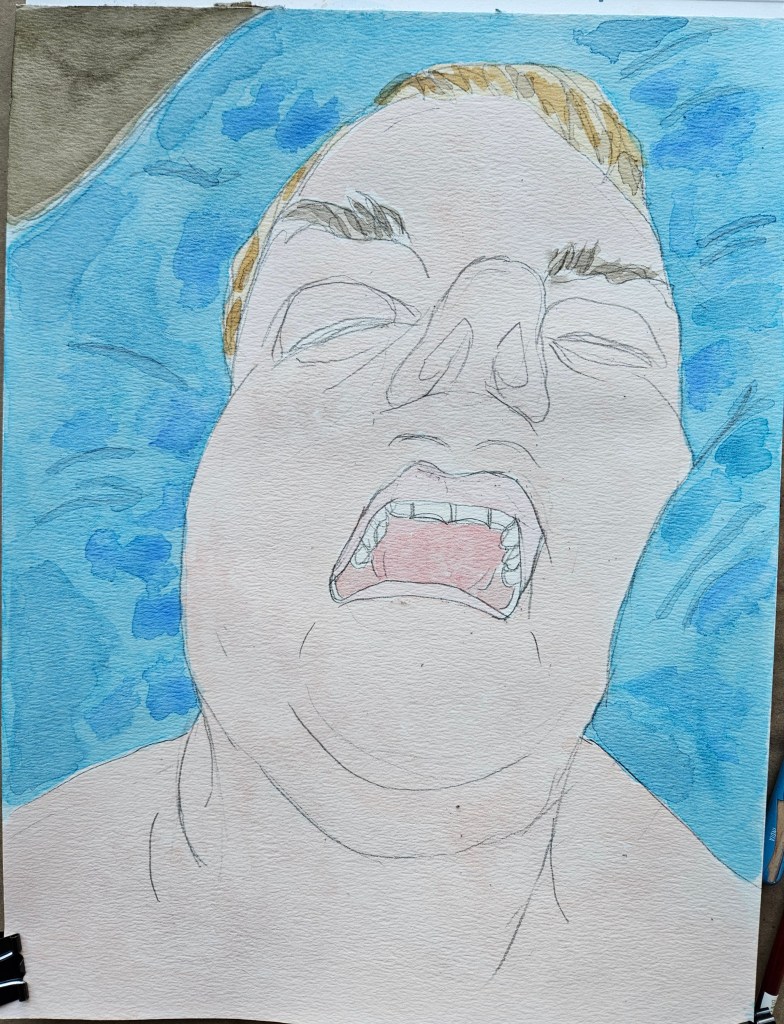
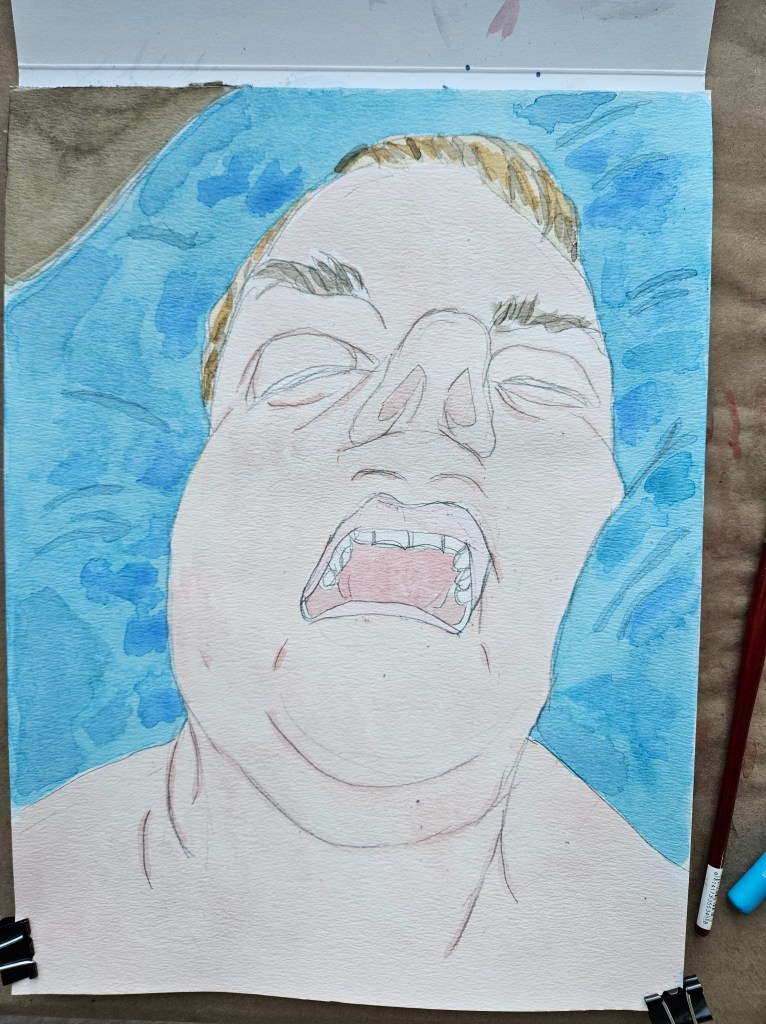
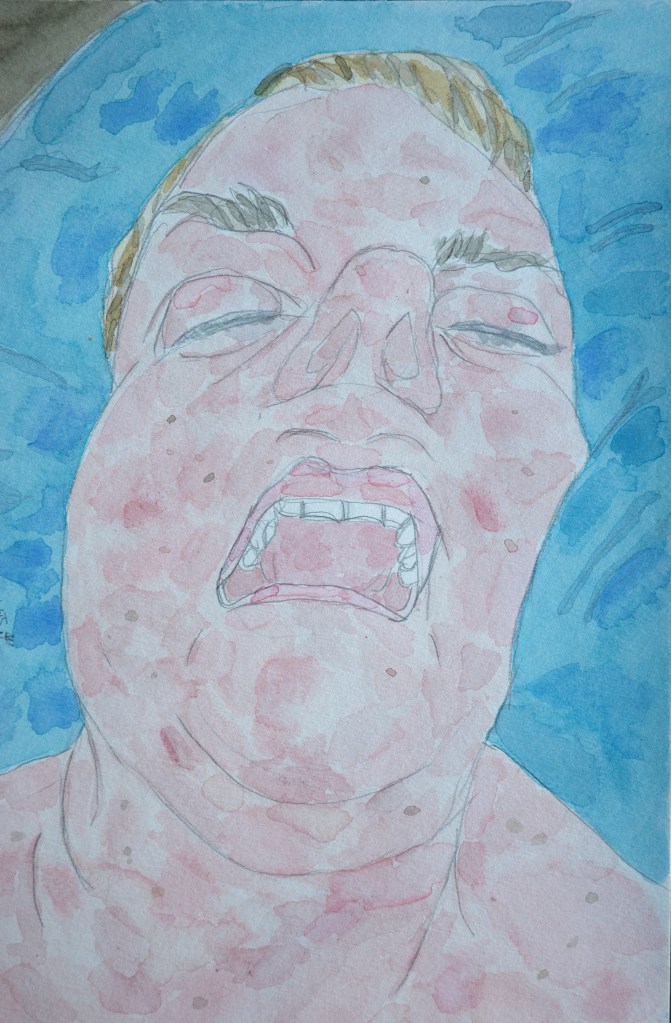
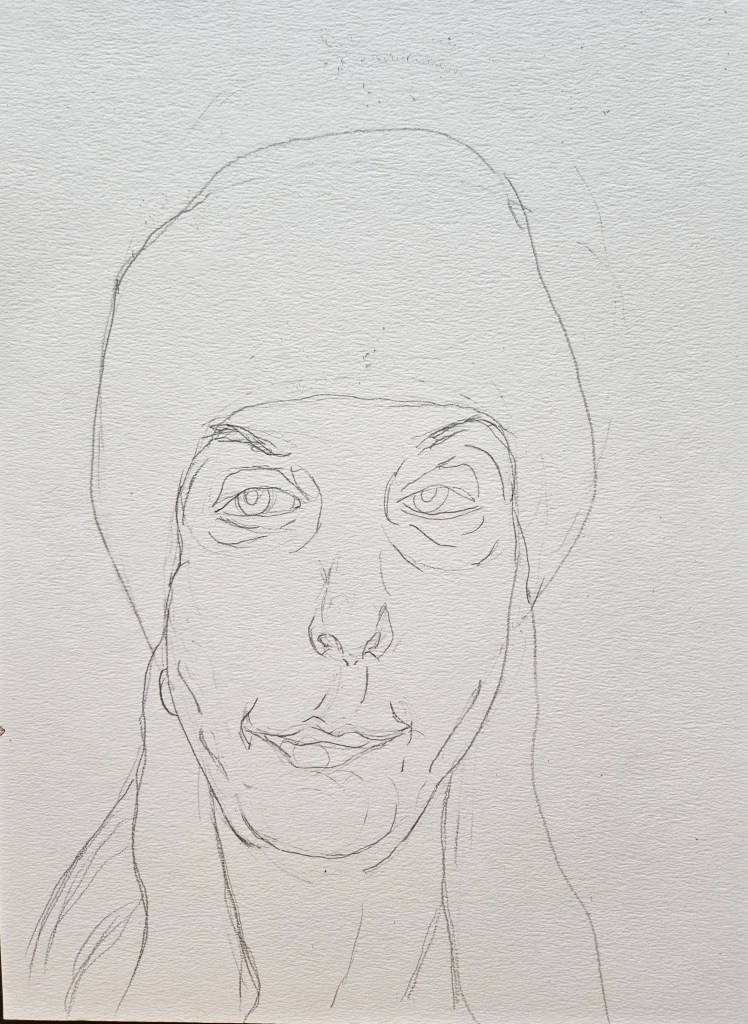
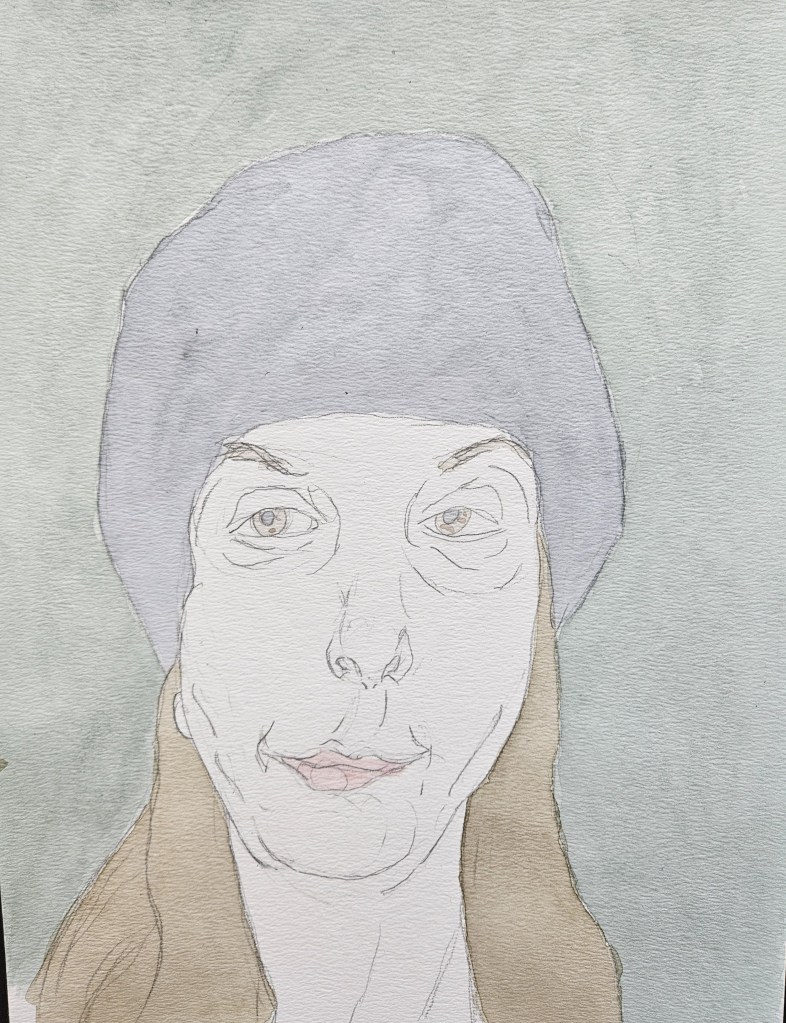
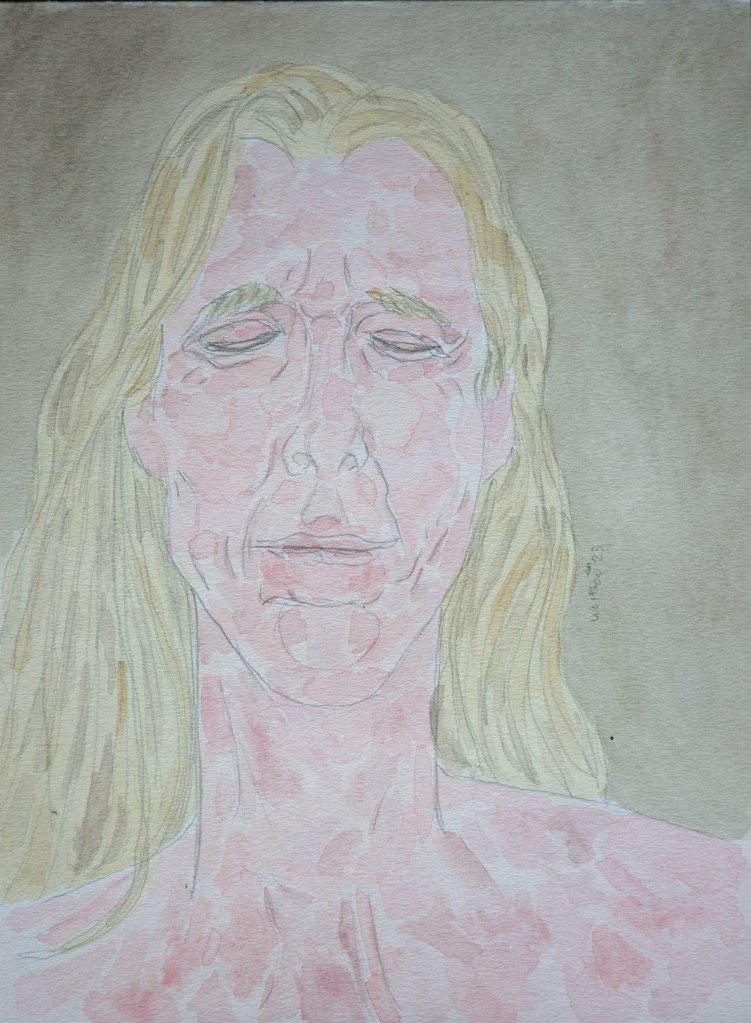
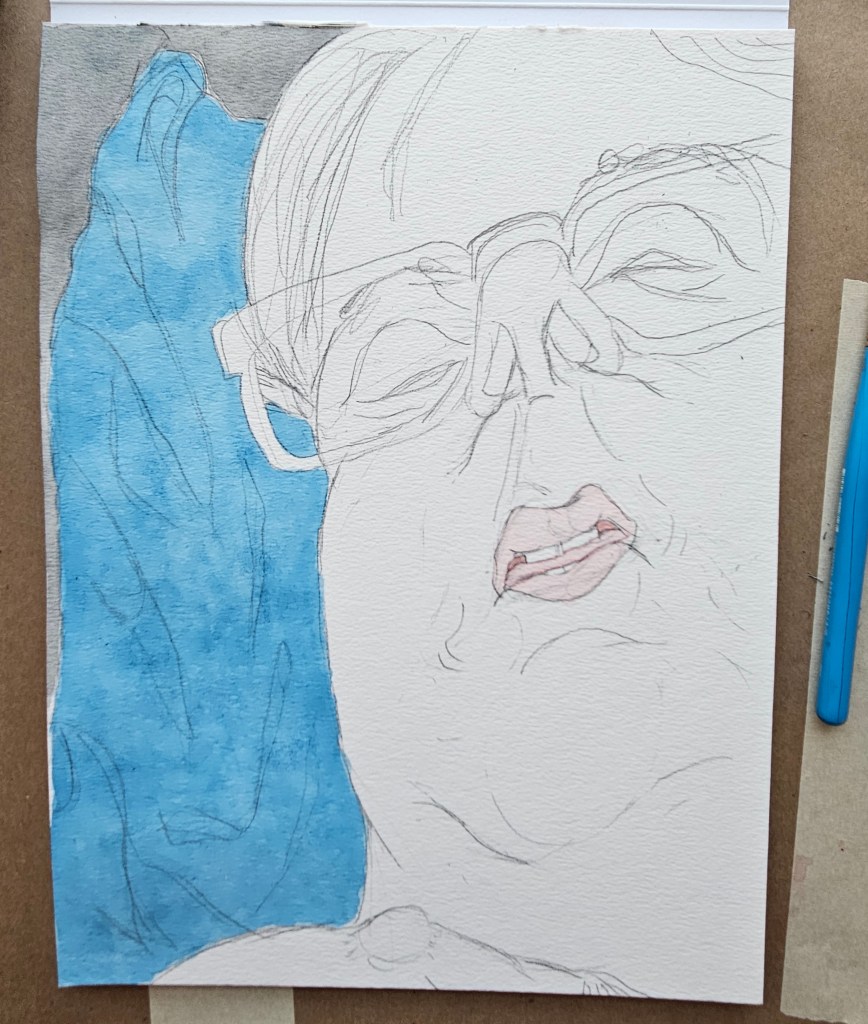
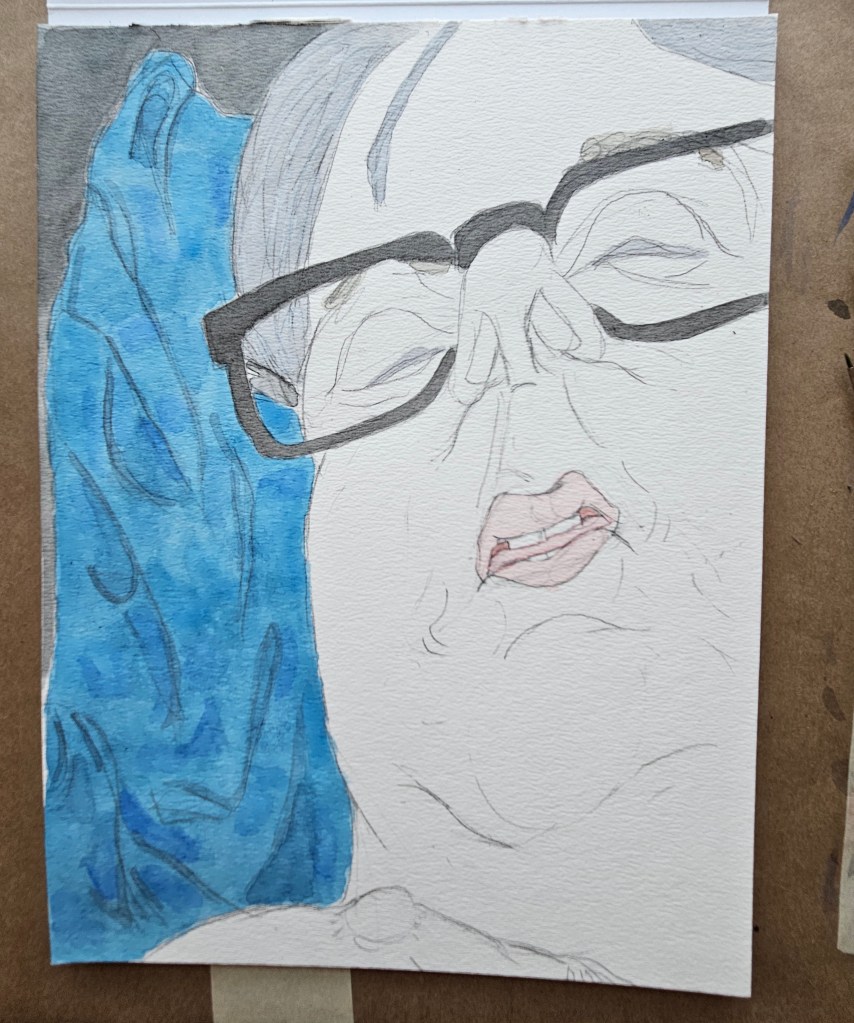
Spaghetti Night 9×12 inches Rembrandt cold pressed fine grain
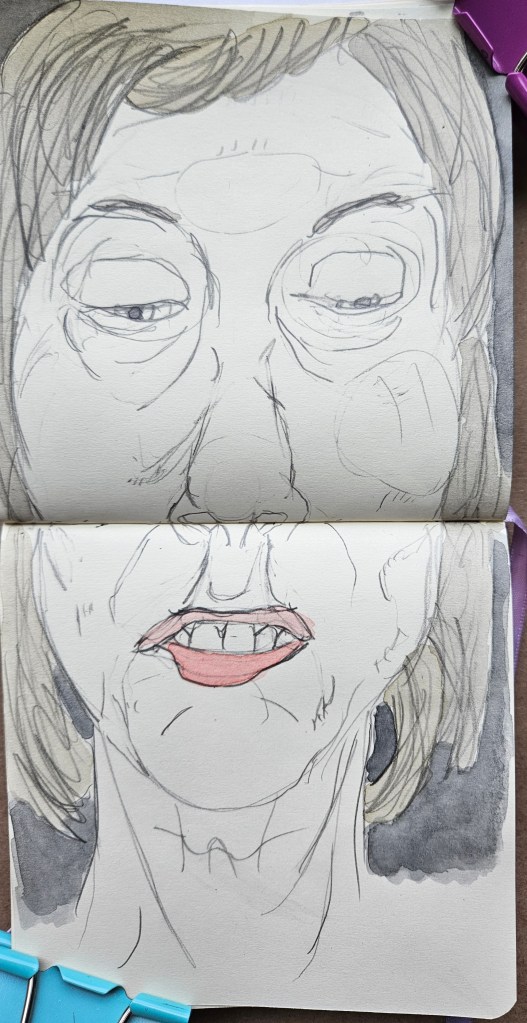
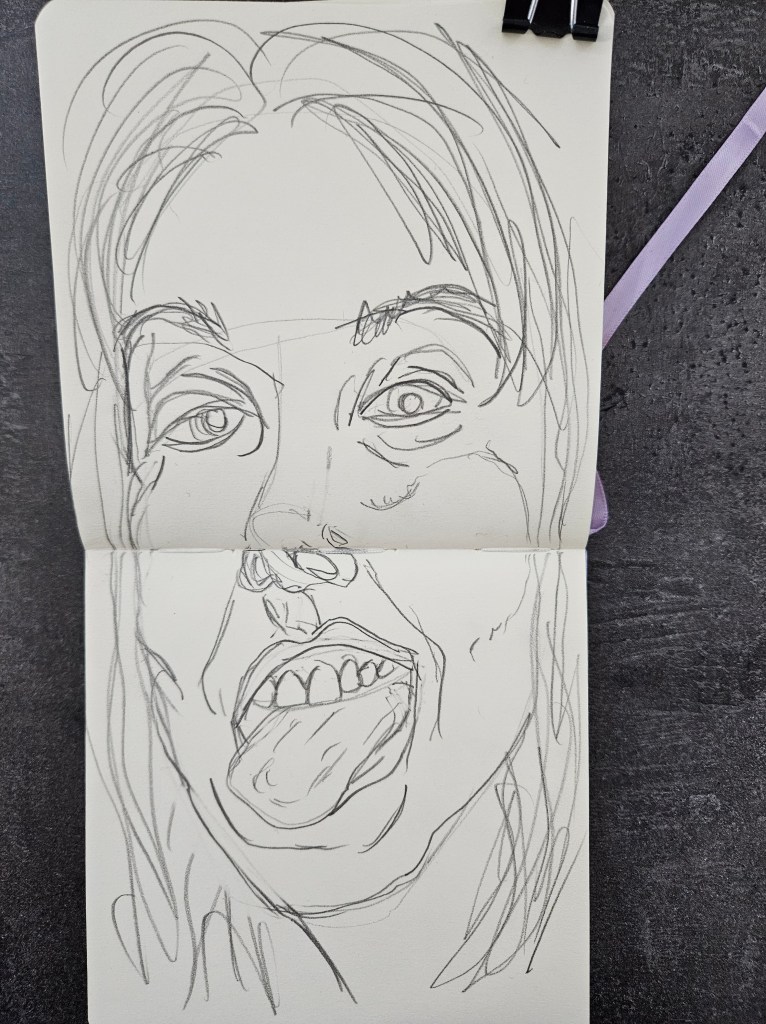
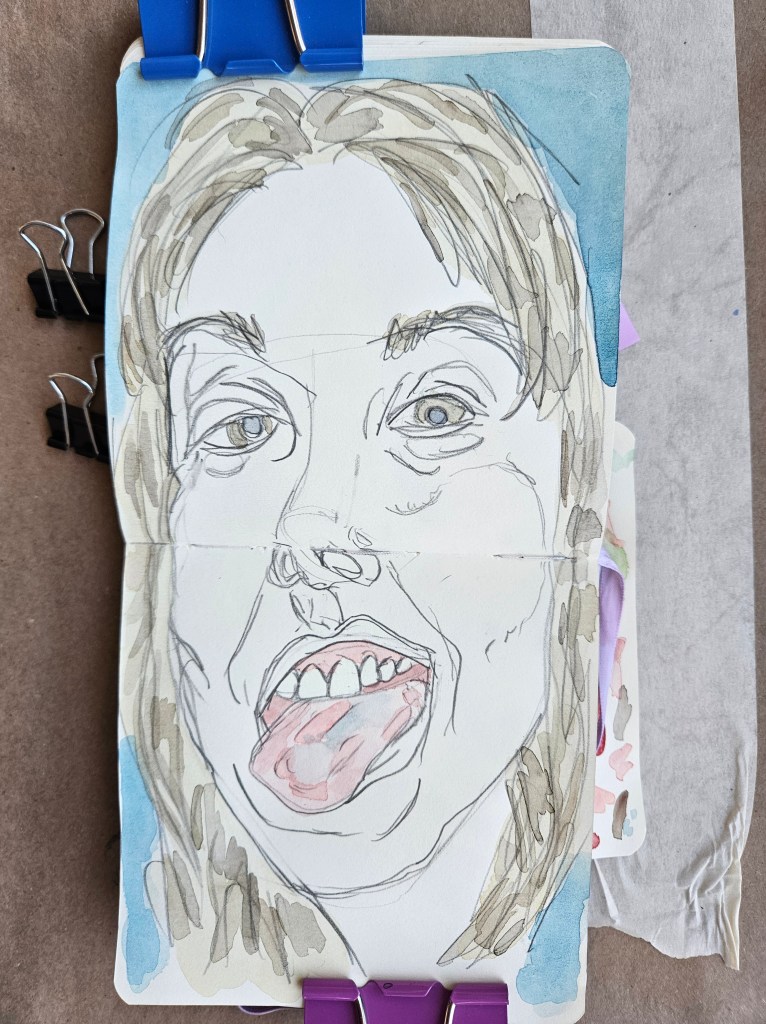
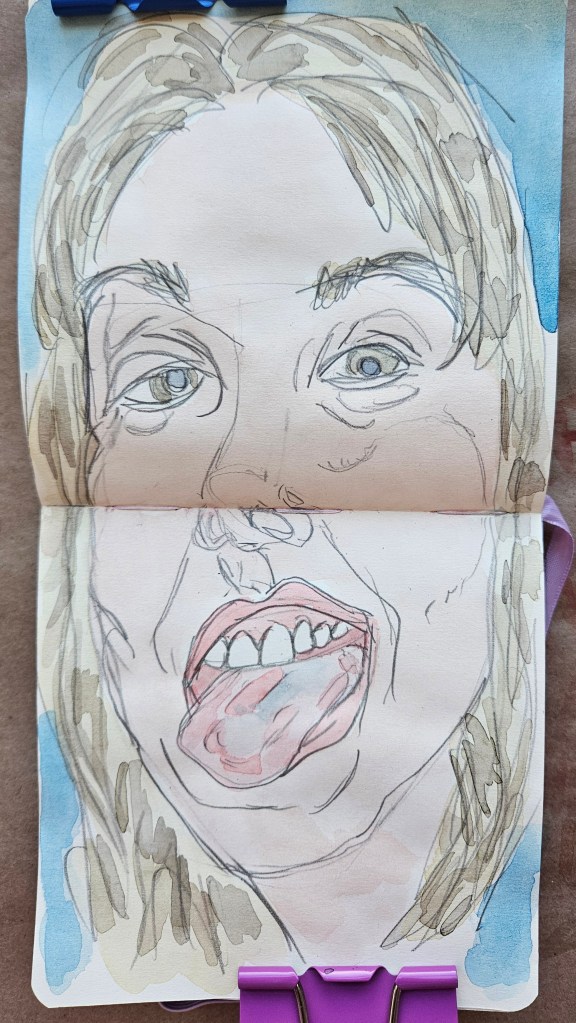
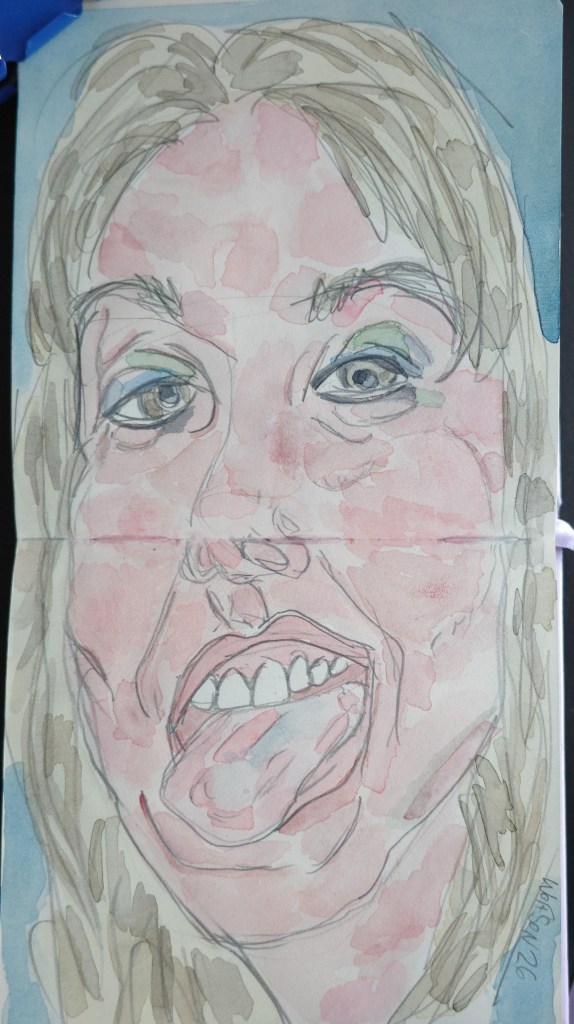
Tongue my ever present Talen Art Creations Multi Media pocket Pad 4×4 inches
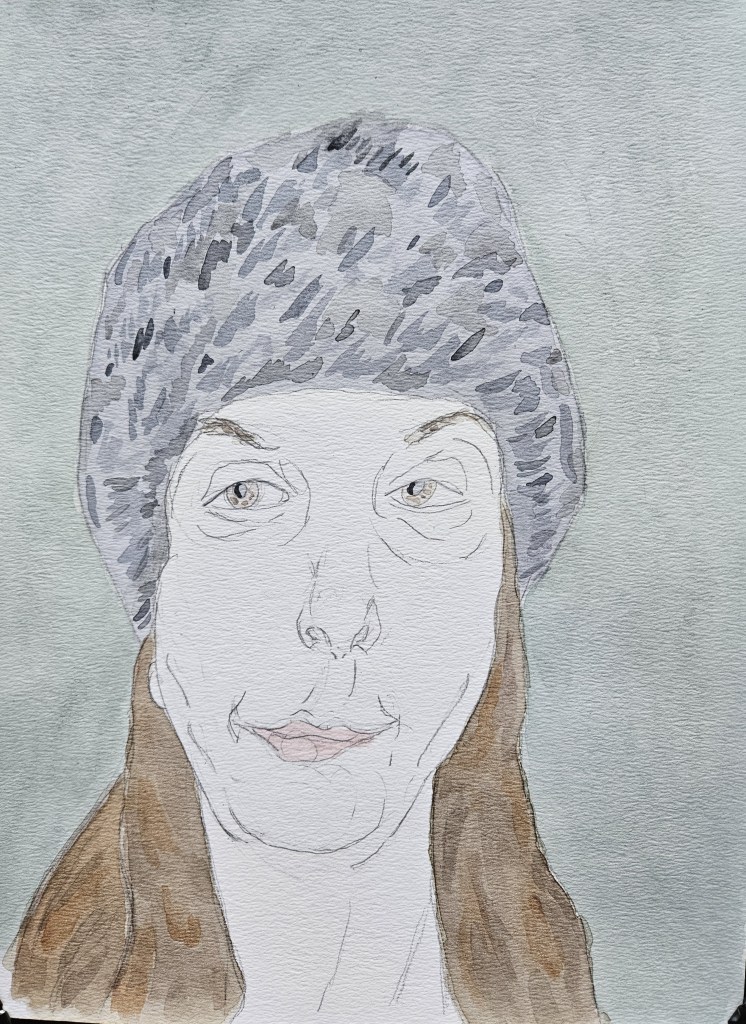
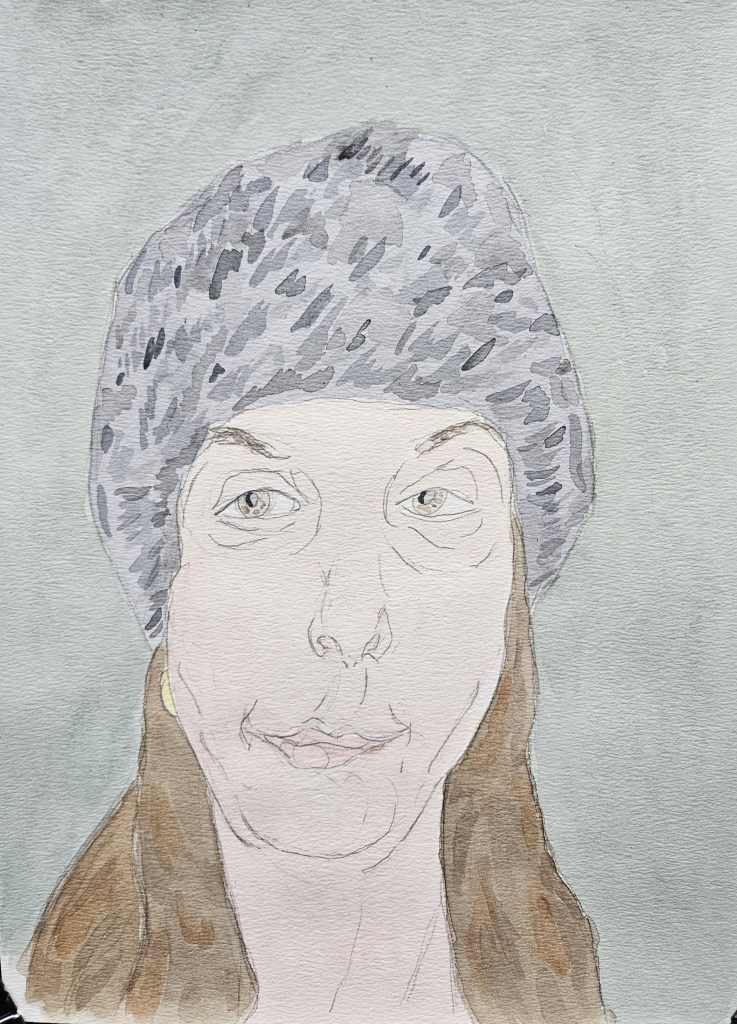
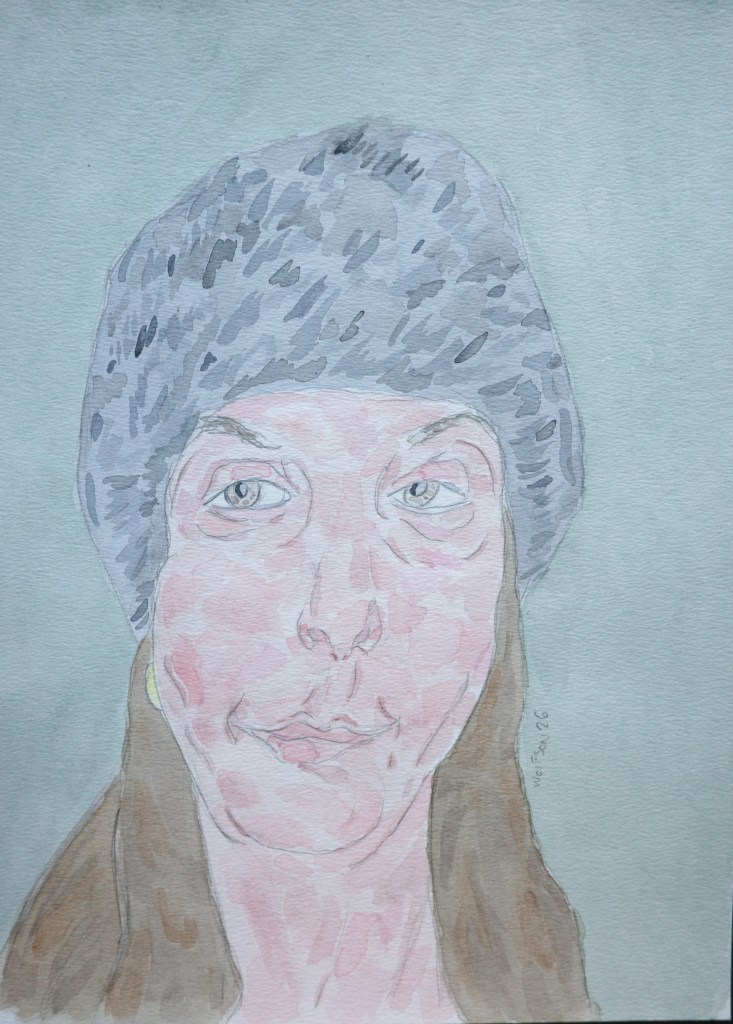
My first painting of 2026. It is 9×12 Rembrandt Cotton Paper, cold pressed. For paints, I used my studio set up which is a mix of companies, all professional grade.
I am always looking for people to draw/paint. I get my share of unsolicited submissions. More important to me than “beauty” or the typical idea/portrayal of it is an emotional honesty. That allows me to convey emotions that will keep the finished work interesting in the audience’s mind, long after the viewing of it is done. It is odd when I receive photos of people in traditional academic poses or overly glammed out ones. For the academic poses, it is how one is “supposed to” learn to draw bodies & anatomy. It is a sort of trap since it is establishing a foundation within the artist which will lend an air of be stilted or overly academic in future works.
The impressionists were revolutionary not merely because of their use of colors and effects of ambient shadow and light. An equal important aspect was that they were among the first to eschew having the subject matter be historic/biblical/mythic. Instead they painted one another or friends and denizens of their neighborhood going about their daily lives. (Courbet and Millet were proto impressionists )
The lives which they conveyed when viewed now sometimes seems of another world but the canvas still radiates emotions, the beauty is not trapped under museum glass. It is because it all comes from real experiences and emotions.
For both artist and model, do what is real and the truth for you. I am fortunate to have an inner circle that trusts me and whom I have painted for years. They trust me enough to not merely give me their idealized version of themselves. I have always said that truth is beauty. This is part of an overall technique which is how I work and that many painters have utilized:
Everything for an artist is impressions which is then transmuted into expression via the work.
Working on novella still. I have been maintaining my allotted time for my visual work too as it is of equal importance to me (on top of nightly drawing i.e woodshedding).
These two pieces I mostly used Rembrandt paints.
The paper is:
Talen Art Creations Multi Media pocket Pad 4×4 inches
Rembrandt Watercolor Paper 9×12 140 lb cold press
Here are two posts about the paper and the paints:
As I am in the middle of writing my next novella, sometimes I day dream which is an articulation of extraneous ideas that I will not use as to be able to concentrate better.
I day dream as I clean my studio. There’s a vague idea that I have had of an artist who has all the equipment he needs to do his thing and in variety. In his mind’s eye, this makes him “rich” as he let’s slip at a bar (This leads to trouble).
When I first started doing visual work, I used the pages of the newspaper (for the youngsters: this was like a twitter news feed but accurate and truthful, made from thin slices of a tree, which showed up on your doorstep every morning) I used black and red markers as to be able to see my drawings.
I then graduated to blocks of cheap paper filling every page on both sides.
Slowly, I worked my way towards legitimizing the need of good equipment. Initially, i was thrifty out of necessity, i.e using pencil extenders as to squeeze every drop out of a pencil.
Fast forward, I can now afford whatever I want for equipment, i can buy things merely to experiment with etc. I still use pencil extenders and observe other economical practices, not because I have to or even because I am cheap. It is a sign of deep affection for serving the process.
When working on a painting, the amount of paint which I use at most only takes up two ten slotted porcelain palettes. Not much but I often find myself when a painting is completed with a little bit paint remaining.
I started the practice of doing a smaller painting with remaining paints in my trusty Talen Art Creations Multi Media pocket Pad 4×4 inches. Nothing is wasted and it often presents some manner of stimulating challenge for me. It’s my version of what great chefs like Paul Bocuse did in their every part of the animal philosophy.
The Mark Watercolor & Rembrandt 9×12 cold pressed fin paper
Gerd Talen Art Creations Multi Media pocket Pad 4×4 inches
Still deep into working on my latest Cinefield®. Locked into a groove, my studio has been overrun by sheets of paper upon which rests tiny confetti like pieces of paper.
In the interim, I continue to draw every night. I have mainly been using my trusty Talen Art Creations Multi Media pocket Pad 4×4 inches while also finishing the other pads in varying states of completion I have on my desk.
Here are some of what I have been doing, the joy for me serving the process even if only with a pencil nubbin on a scrap piece of paper:
In case you missed it I got a nice showcase which goes into my modus operandi:
The painter Phillip Guston said that when one paints, at first everyone you know is in the studio with you and one by one they drop away until you are left only with the painting. I understand that, the pleasure of serving the process, everything else is temporarily suspended, where will the painting end up etc etc.
I am in the middle of typing up all my notes & stories from Europe. The visual work that I do, it is work but it isn’t. I have been going at a steady clip with my paintings but not because of any specifically set tempo. The visual work becomes a respite from the challenges of other things. Ideally, if nothing else my work offers people a brief cessation from the doomy bleakness of the news.
My paint palettes are now exactly as I want them, incorporating professional grade half pans from several companies.
This piece is 9×12 watercolor & Rembrandt cold press/fin grain 140 lb
An amazingly busy but rewarding week. I decided to do two small paintings. My paint set up in the studio is now a mix of several companies professionally rated half pans.
Once one is at a certain point quality wise, it becomes a matter of preference which is dictated by the artist’s style but also the inherent properties of the equipment. In explaining this concept to a fellow jazz-head I gave the analogy that it is the equivalent of Miles and his horns. No matter what he played on, his distinctive voice was ever present. However, he did have certain horns he used for ballads, for cookers et al. In this way it is a collaborative effort between artist in equipment. So it is with the various papers and the set up of watercolor half pans I utilize.
Both these pieces are done on Talen Art Creations Multi Media pocket Pad 4×4 inches
Unfortunately with my last trip, I did not get any photos which would serve as the raw material for my Cinefield® work. I legitimately miss working on them, which lasts until I am two weeks into one and I start to see little pieces of paper confetti in my dreams.
I continue on with painting. This piece is 9×12 Rembrandt paper which was given to me by Royal Talens. It is professional grade cold pressed 100% cotton. I have often used French cotton paper and that absorbs pigment quicker which makes it less forgiving in regards to blending or correcting a spot. As with all professional grade equipment, it becomes less which is better and more a matter of personal preferences.
“Color always occupies me, but drawing preoccupies me” Delacroix
“Drawing is the basis of art. A bad painter can’t draw but one who draws well can always paint.” Arshille Gorky
I always have a pocket pad on me, usually 3×5 inches, and then a slightly larger one in my ever present book bag. When I travel, what pads and accoutrements I have depends on length of trip, location and what else I will have going on while on the road.
It took me many years of trial and error but I have my trip equipment selection process down pat. For the past month or so I have been writing about equipment given to me by Royal Talens. My current go to pad is by them, but I had discovered it long before they had sent me anything, Talen Art Creations Multi Media pocket Pad 4×4 inches
I have never looked at drawing as a second class citizen in comparison to painting. No matter if I have spent the day painting or doing some of my other visual works, I draw an hour a night, every night. This woodshedding is akin to a musician practicing scales, but also one of my greatest pleasures in life.
I initially discovered water soluble graphite by complete happenstance. Once I had the mechanics down, I was able get painterly effects. When I work on my Cinefield® pieces, I can not draw as an under construction Cinefield® piece slowly dominates the space of my studio. But, I also do not want to let too long go without painting, which I end up missing.
Water soluble graphite work is the same as painting but in all greyish black tones. I can use my witting desk and do a piece in one session. I may not be able to paint but this was very close. Unexpectedly, I found that as I added to my graphite technique it helped my painting and vice versa.
I was just on the road and while it was a short trip, I had a lot going on. With this is mind I knew I would have no opportunities to paint. I brought my water soluble kit. Another important aspects of this medium which I like it how compact it is. 2x graphite sticks, a sharpener and one watercolor travel brush. I can literally put it in a coat pocket. If at a cafe I use a mineral water cap, in hotel one of the plastic cups to be found by the gratis bottles of dasni for water to dip brush into.