I had read an interview with a deep thinker who said that a major problem with many people in North America is that “happiness” now means when things go 100% their way, no effort required, no resistance to the desire (s).
Aspiring to this type of thing, It’s like aiming for perfection, which is a sure fire way to misery and missing out. While I am not necessarily akin to an 18th century German philosopher who believes life is merely struggle, I do think it has its ups and downs.
The struggles shouldn’t be avoided, pressure makes a diamond, grit a pearl. The trick is to have enough moments in-between the strife which make it all worth while.
There were definite aspects of the past year which, depending upon how one views the world, were brutal. It was some of these bad moments which made me delve further into my craft, as to keep my sanity. I also continued to explore things which resulted in discovering even more new music and authors along with peers with whom I have struck up friendships.
The stoics probably got it right, live an engaged constructive life while realizing it is akin to a giant wheel upon which we are all bound. Sometimes it lifts you up, while at others you are downward slopping. Here’s to hoping we all feel the sun on our bellies more often than not in ’25
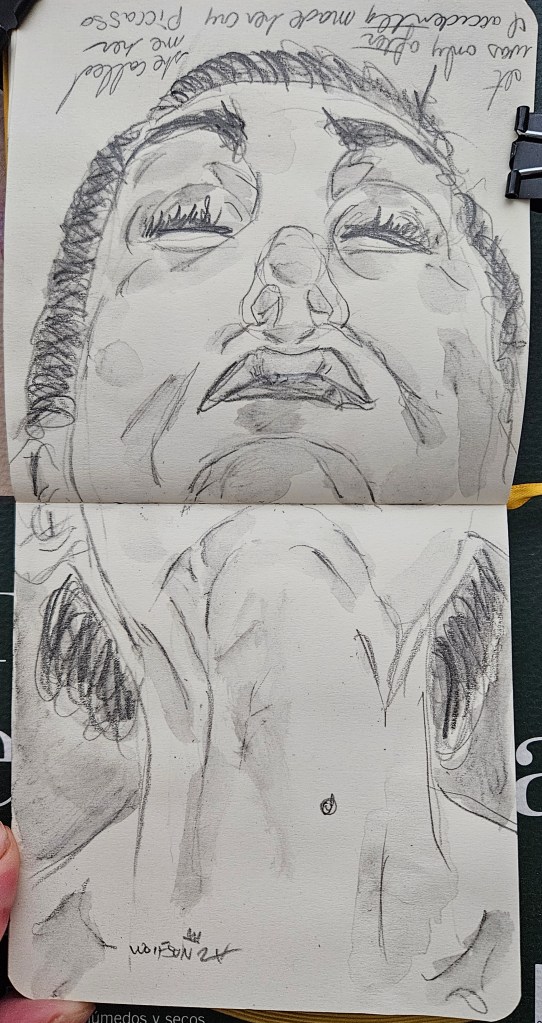
I am in the middle of edits for my next collection (spring release) and weather has stalled the painting currently working on, so here are several of the daily drawings I have been doing in various mediums. (all are quick sketches)
Prob my last drawing of ’24 Quickie charcoal piece:
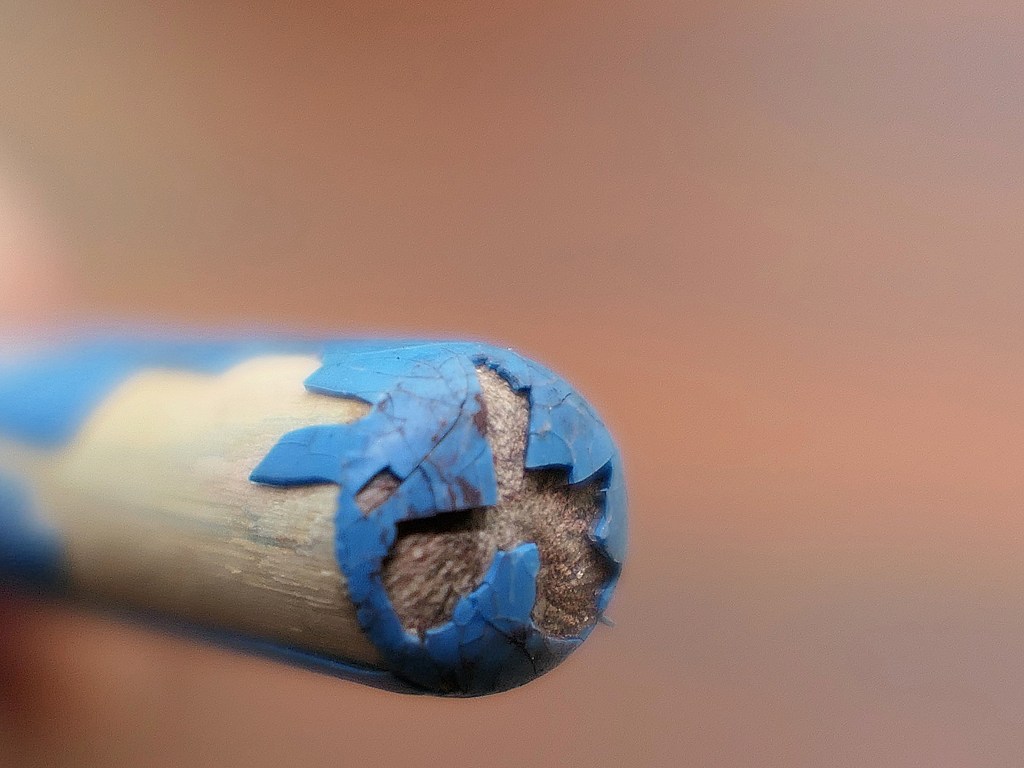
The tiny paint brush I have used all year (macro shot since it’s tiny) Nothing could be more emblematic of my life & year. Beaten upon thing which ceaselessly created beauty/terrible beauty
compulsively, I read biographies on artists of every medium & era. I will even delve into people who are not my usual thing which has more than once made me become a fan. There is a commonality which transcends both nation and decade, that of practicality initially dictating artistic direction/materials & methodology.
The Impressionists are mainly talked about in relation to how they used color and lighting effects. Their importance was not just their revolutionary portrayal of light as it effected perception though. Before them, some painters had started breaking away from the pervading “must” of people being heroically portrayed ala history/myth/allegory (Courbet & Millet had started towards more naturalized milieu) they were the first to fold it into their works wholesale.
People were portrayed having an eye opener in a cafe before work, dirty nails, bad skin. Objects were portrayed in natural positions, a wife’s hat left atop a shrub, detritus atop a studio table waiting to be swept with forearm into the trash.
Part of the reason for this all was practicalities sake. Models could not always be afforded and it was easier using friends and family to pose, especially as scheduling could prove to be more convenient and often all it cost was to eventually return the favor.
These things would be enfolded into the methodology of their work and then honed. After this point, it was became their lexicon.
The same thing happened with Picasso/Braque cubist still lives, it was just things they had laying around which were part of their every day lives. Money need not be spent on flowers or any other kind of specialty objects. The only downside to this was that by the time Picasso was moving on from cubism, cubist paintings by participators in the genre more often than not had “required” objects to be included which had initially made appearances in a natural manner due to pragmatism.
Practicality is often an important initial dictator of choices an artist makes, but once the path chosen is felt to be the right one, a philosophy sprouts up. Like the methodology, it is ready to be honed, its articulation, whether to the public or just in the artist’s head, fine tuned.
The Italian painter Giorgi Morandi rarely left his city of Bologna, Italy (only three times, much later in life and then only briefly). He did not portray life in his home city but was fueled by it. He mainly did still lives. Most of these were of bottle which had just been laying around. A cursory look at his work and they seem deceptively simple. There is no bursting forth virtuosic moments to be found in his work. What makes them remarkable is that they very much look like every day objects imbued with organically occurring poetry.
A generation later and half a world away, Henry Virgona worked along a similar philosophical line. He kept the same 300 square foot Union Square studio for fifty nine years (sadly, ending in 2019). He rarely traveled, preferring to stay within the confines of the city whose fabric he was very much part of. He did still lives which showed him to be the artistic son of Morandi. He was an accomplished draftsman and this urban Antaeus did amazing candid drawings of all the people that he encountered in his daily city life, their natural poses maintain the power of the pieces. Two men, one mainly using objects, the other, people encountered every day, both showing inherent natural beauty of regular life.
I had already hit upon my philosophy and modus operandi before discovering Henry’s work. We definitely have marked differences, some of which could be generational. It is inspiring though, to see that one’s idea of serving the process is not completely out of left field but rather an evolved link in a chain which goes way back.
Most of what I work in and how I work all started out from practical considerations. I mainly use people in my life in some manner as models for convenience’s sake. When no one is around, I will paint or draw whatever catches my eye which is right in front of me. I too go for the beauty which organically comes through in every day objects or scenes.
One of my greatest pleasures in life is to conjure up, even if only with a pencil nubbin and scrap paper, either something I am seeing or talking about.
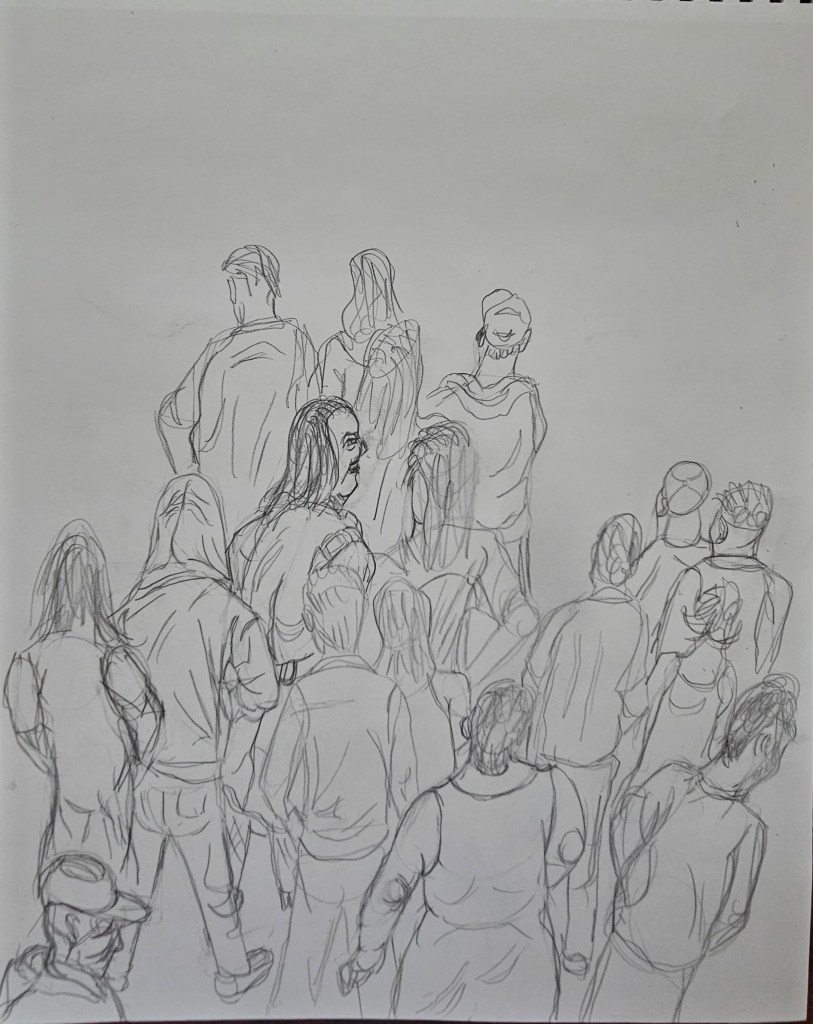
I was at a concert and observed various moments where, as much as I was enjoying the music, got caught up in people watching. Doing a sort of raw-visual-reportage after the fact, I caught the moment in a bigger sized for me piece. Aside from the size of the piece, another departure for me was the fact that I did a few studies as I wanted the crowd scene to be accurate and maintain a certain degree of looseness which already having knowledge of positioning and compositional balance would help with.
I have started reading The William H Gass reader. Right out of the gate I found myself deeply enjoying it. One of the first essays is on books which were touchstones for his life as an author. Early on he makes a point of drawing a distinction, it is not supposed to be a “best books” list but rather ones which resonated personally for him and which served in his journey into becoming an author.
He mentions Flaubert’s Bouvard et Pécuchet. Of the trinity of Flaubert, Balzac and Zola I had always held him in the least esteem (with Zola being, in general, one of my favorite authors). Right before returning to France a few years ago I read the excellent bio on Cezanne by Alex Danchev. Cezanne talks so passionately about Flaubert, i felt the stirrings of considering giving him another try.
That season I kept meeting Helene and Charlie for drinks and book talk. Her admiration of the trio was the inverse of mine. Her description has stuck with me:
“With Balzac, it was all money, money, money if only I had the money. With Zola it was sex, i need power to get sex, I use sex to get money to get power to have sex. But Flaubert, there is an author, the sentences each meticulously crafted.”
I decided to give Flaubert another try. I went to Gagliani and bought Sentimental Education and Bouvard et Pécuchet. I read Sentimental first. It was good, i definitely had more appreciation for Flaubert than I used to. It was Bouvard though which sealed the deal for me. I found the book darkly funny in the way early Celine had been.
What is interesting to me is that when this book is discussed it’s merits are often described via a shorthand of being “funny” ala wacky Swiftian satire. I think people perceive it this way because it and Sentimental Education form perfect bookends. The later is more outwardly “dark”. I like it, but really it is just a romantic era story of squandered potential and the dried up promises of bygone youth. And, of course, the usual chess like romantic patterns of the main characters. Bouvard is actually a darker novel.
Gass has very much same assessment. His articulation spot on and obvious, but not until you have heard him say it.
I would never argue interpretation with someone on art unless they were 100% wrong. With my own work, unlike when I was first starting out, I rarely talk about it. Fascinating though that art can have completely differing interpretations. Is one person wrong or are they merely noticing and emphasizing in talking of it, a different aspect than someone else?
The pandemic has effected people in drastically different ways. I am not talking about how they directly handle it i.e wearing a mask, not wearing a mask et al. Rather, the sea-change that has come over people in regards to their personal philosophy. For some it served as grim reminder that life is fleeting so live while you can. For others, it has served to bring on a sort of cautious vigilance less something else unexpected further swat us down.
A type of cabin fever-life is too short bubbles up in many and temporarily dictates their actions. I find myself getting notes, photos, movies which when looking at, I keep this in mind.
One of the photos which I recently received had an interesting compositional point of balance. I decided to make a painting of it. As i worked on it, I found people all had different interpretations on it. “Hot” “Silly” “Weird” “Beautiful”. Like Bouvard, it has a little bit of everything in it. The main overriding intent is not for me to say as why would I want to make anyone wrong and temper their enjoyment.






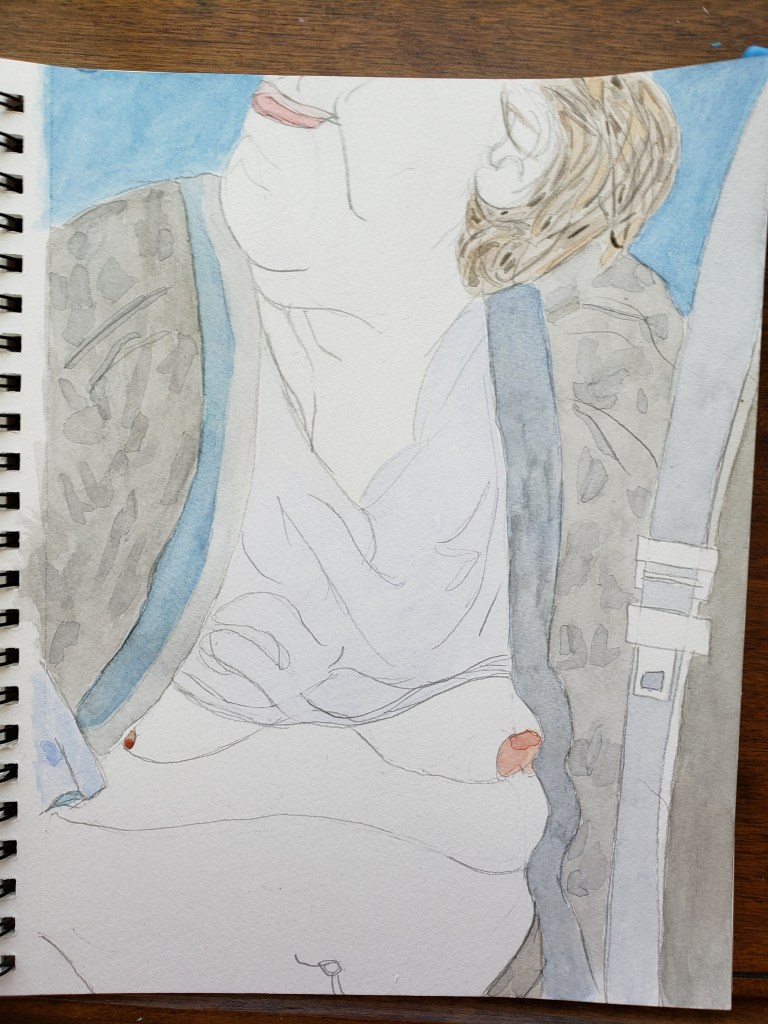


 Paper Life Painting