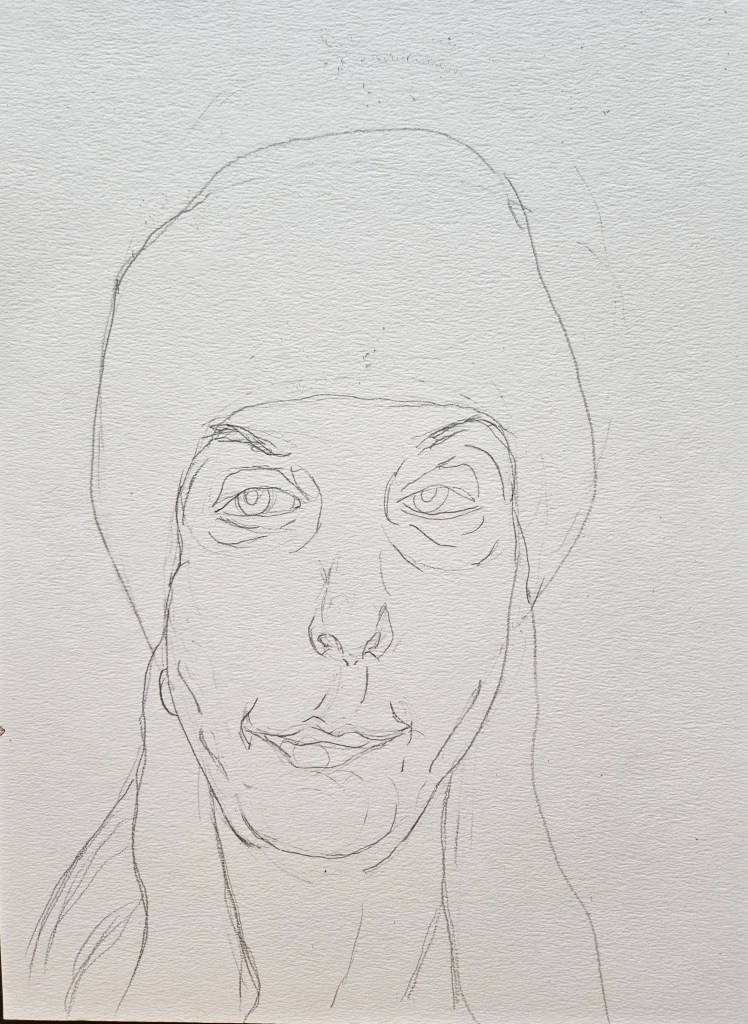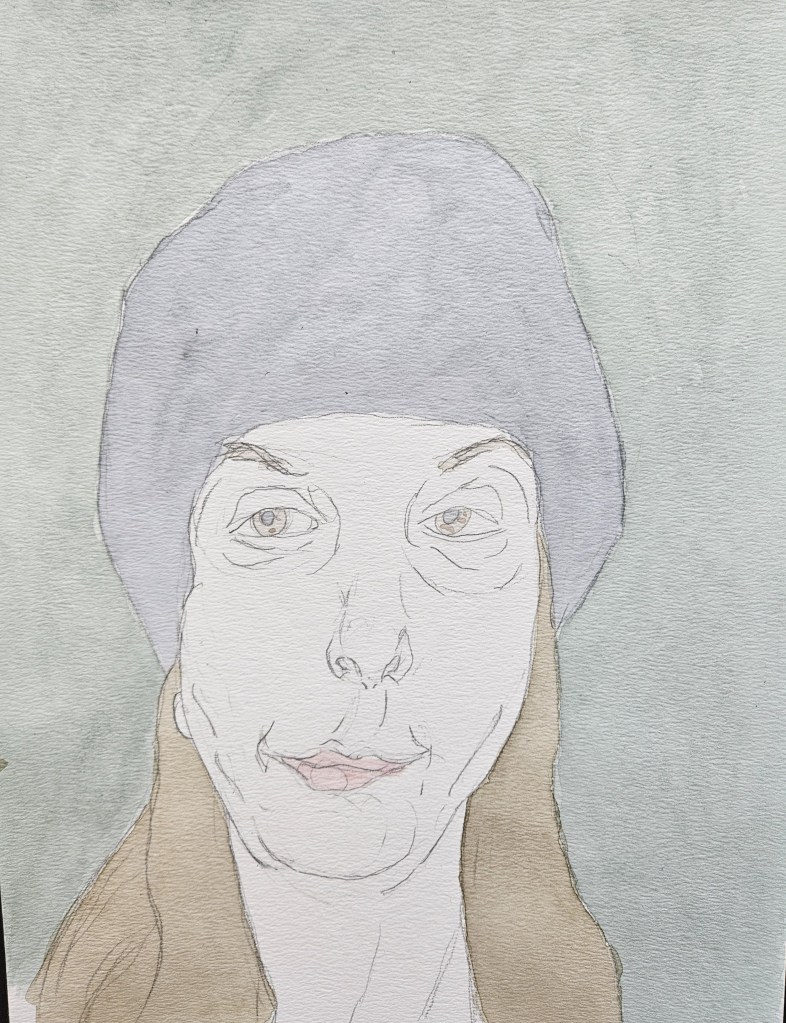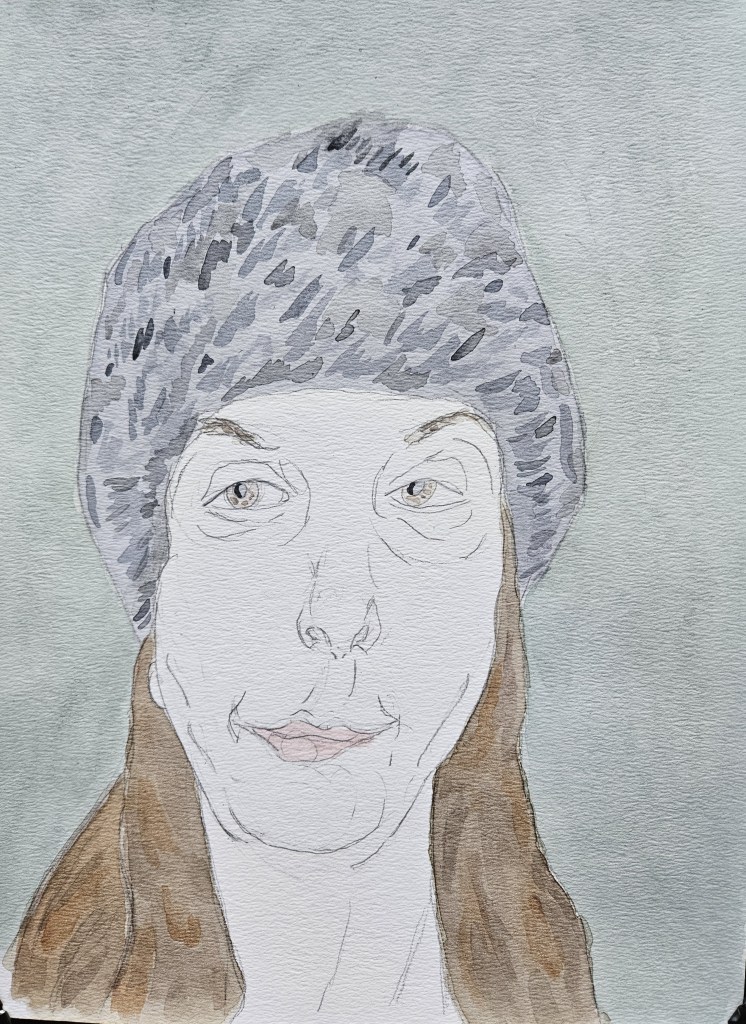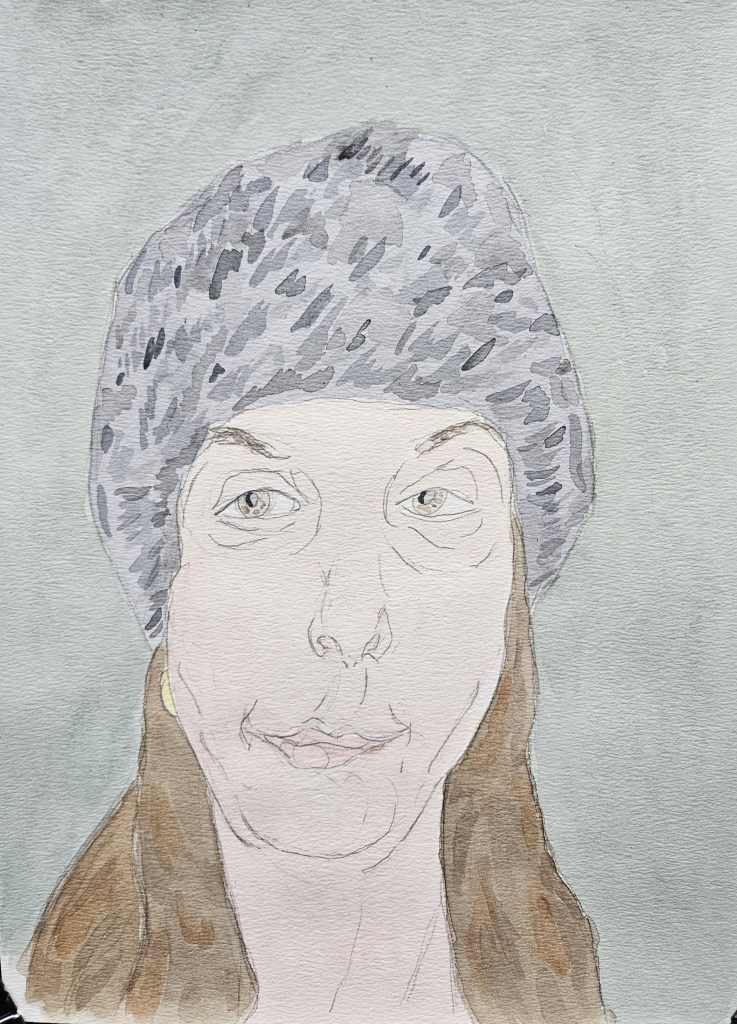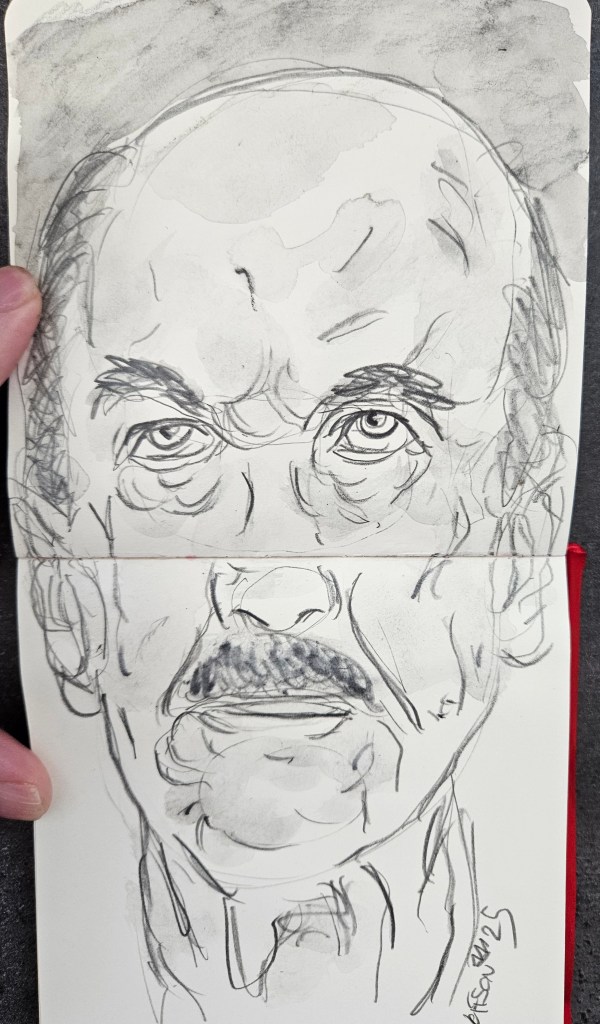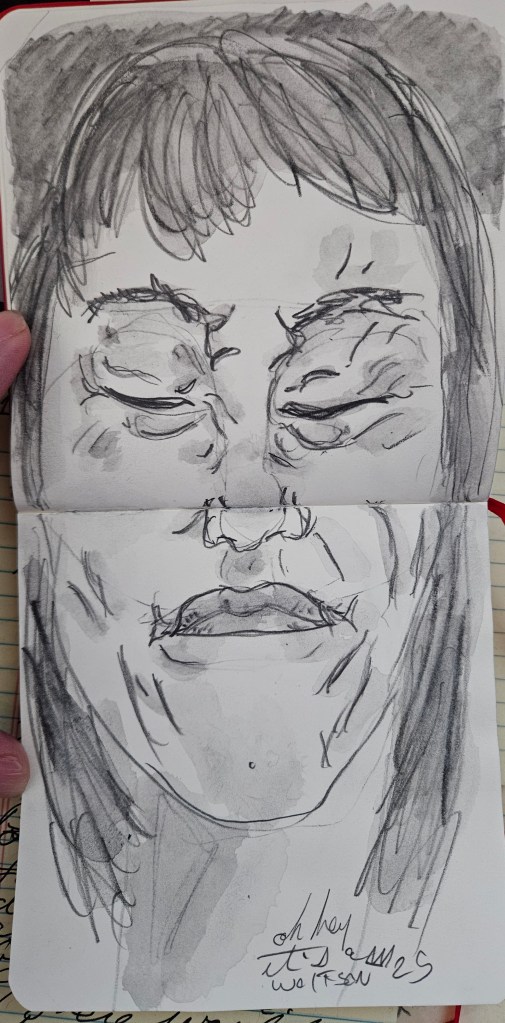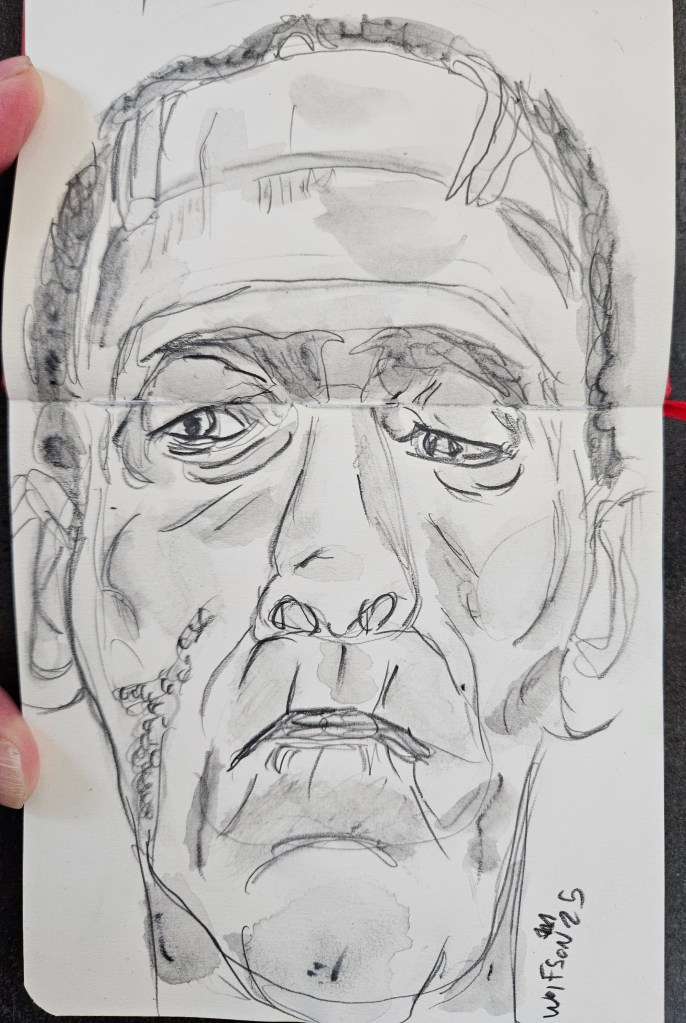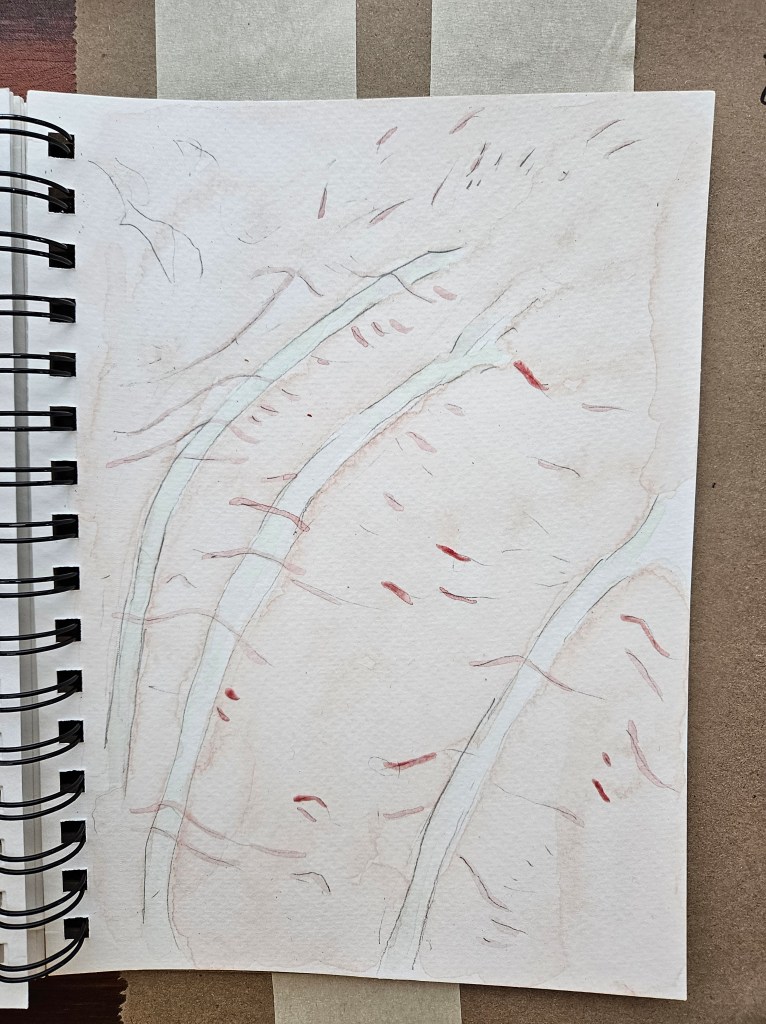
The Mark & Gerd

As I am in the middle of writing my next novella, sometimes I day dream which is an articulation of extraneous ideas that I will not use as to be able to concentrate better.

I day dream as I clean my studio. There’s a vague idea that I have had of an artist who has all the equipment he needs to do his thing and in variety. In his mind’s eye, this makes him “rich” as he let’s slip at a bar (This leads to trouble).

When I first started doing visual work, I used the pages of the newspaper (for the youngsters: this was like a twitter news feed but accurate and truthful, made from thin slices of a tree, which showed up on your doorstep every morning) I used black and red markers as to be able to see my drawings.

I then graduated to blocks of cheap paper filling every page on both sides.

Slowly, I worked my way towards legitimizing the need of good equipment. Initially, i was thrifty out of necessity, i.e using pencil extenders as to squeeze every drop out of a pencil.

Fast forward, I can now afford whatever I want for equipment, i can buy things merely to experiment with etc. I still use pencil extenders and observe other economical practices, not because I have to or even because I am cheap. It is a sign of deep affection for serving the process.

When working on a painting, the amount of paint which I use at most only takes up two ten slotted porcelain palettes. Not much but I often find myself when a painting is completed with a little bit paint remaining.

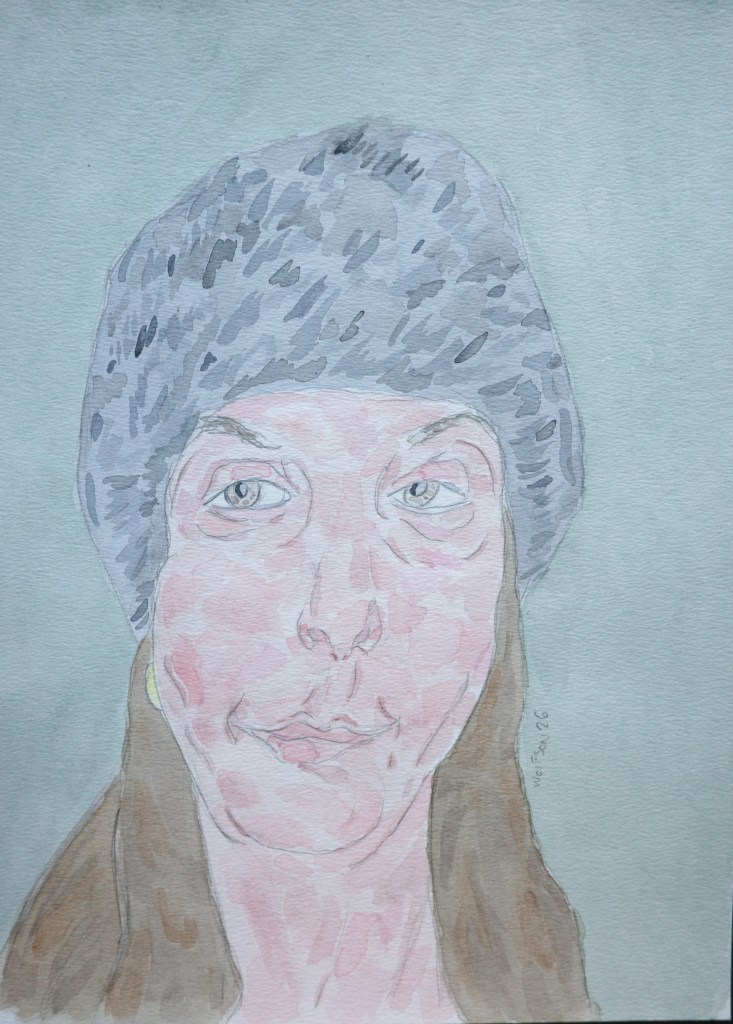
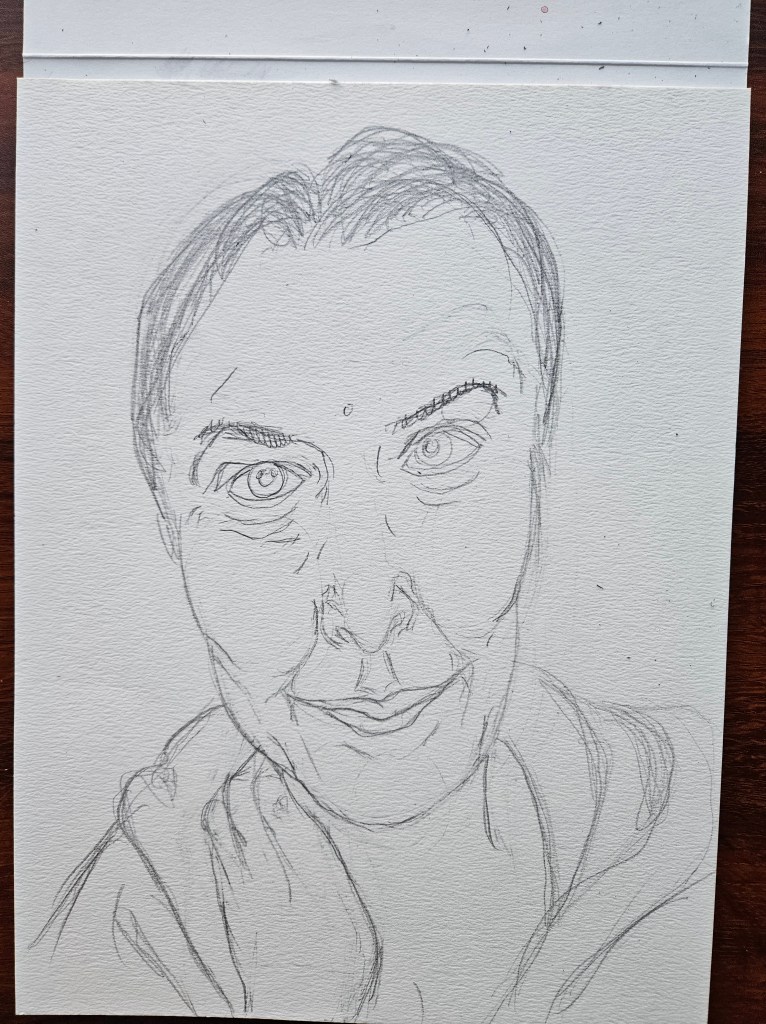
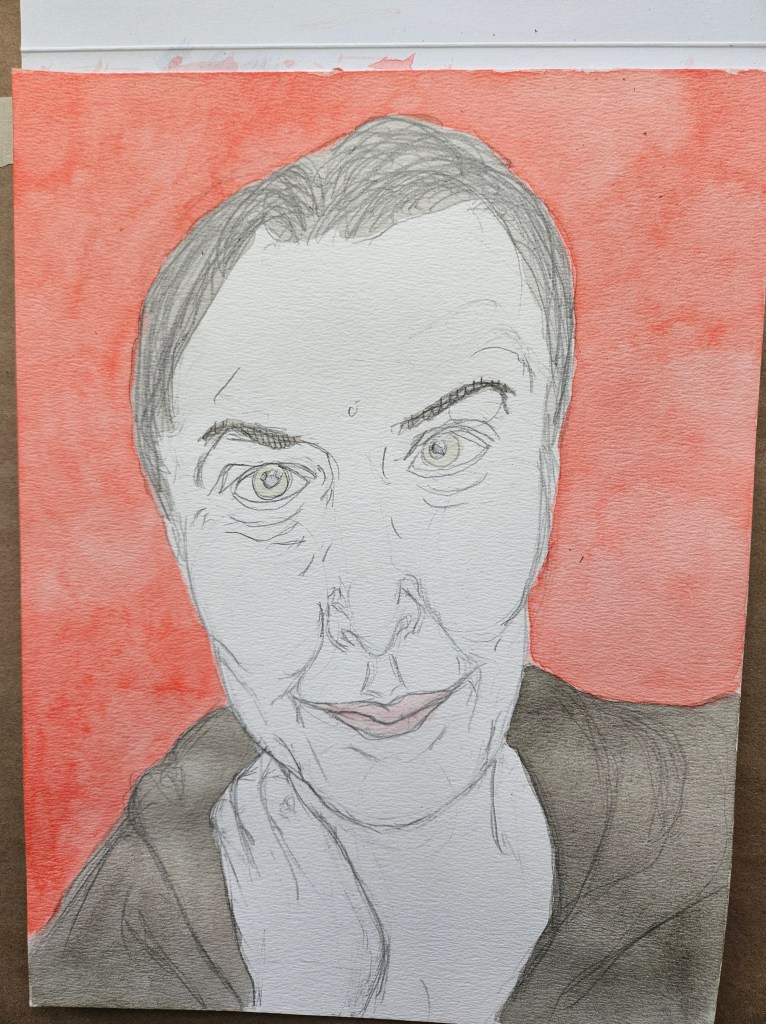
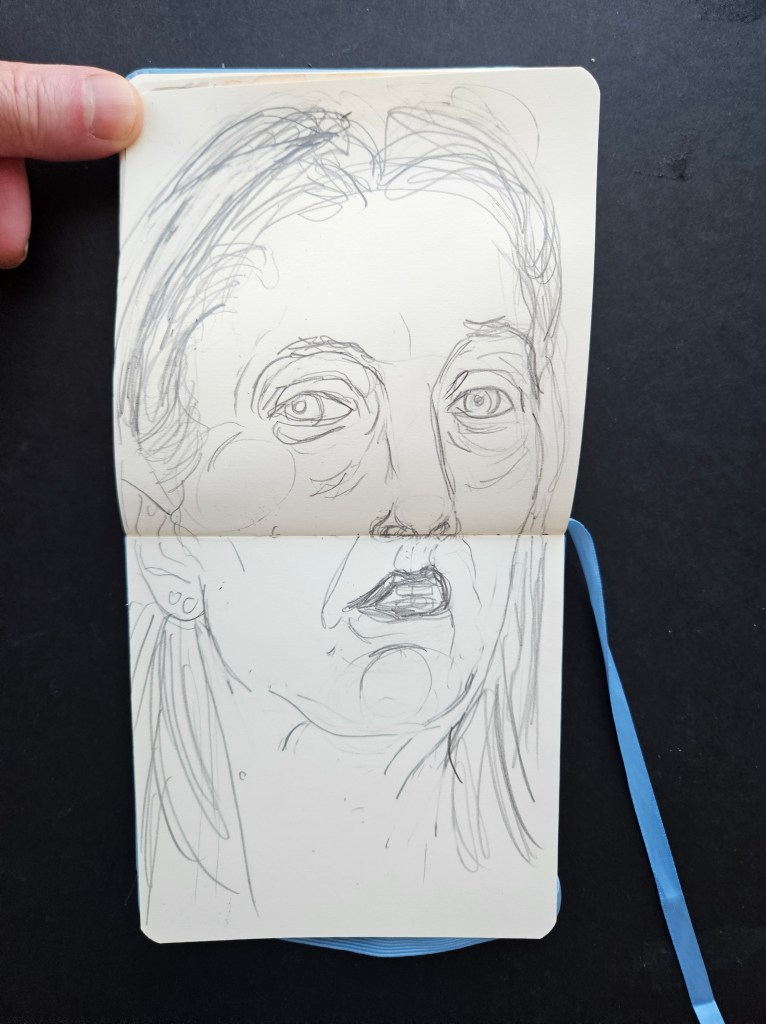
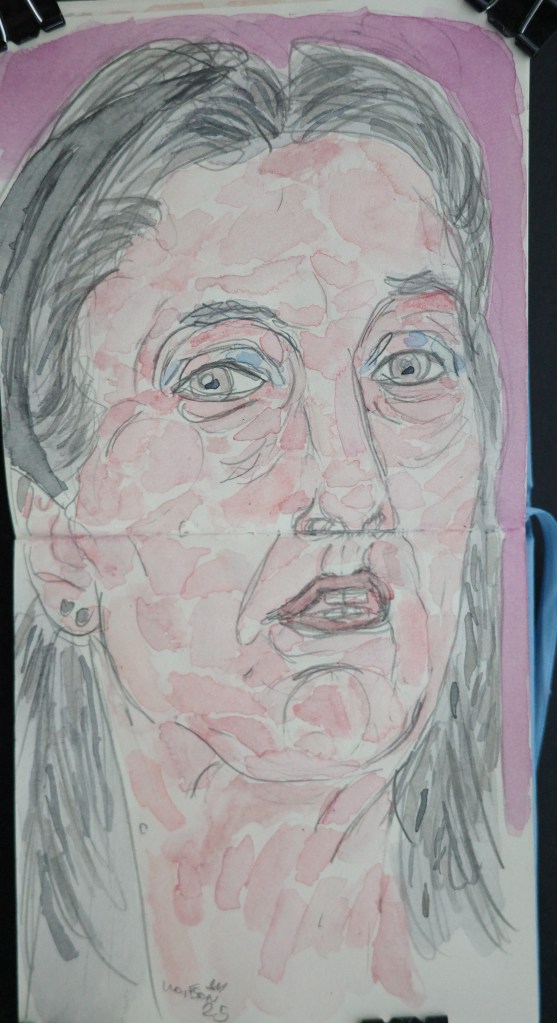
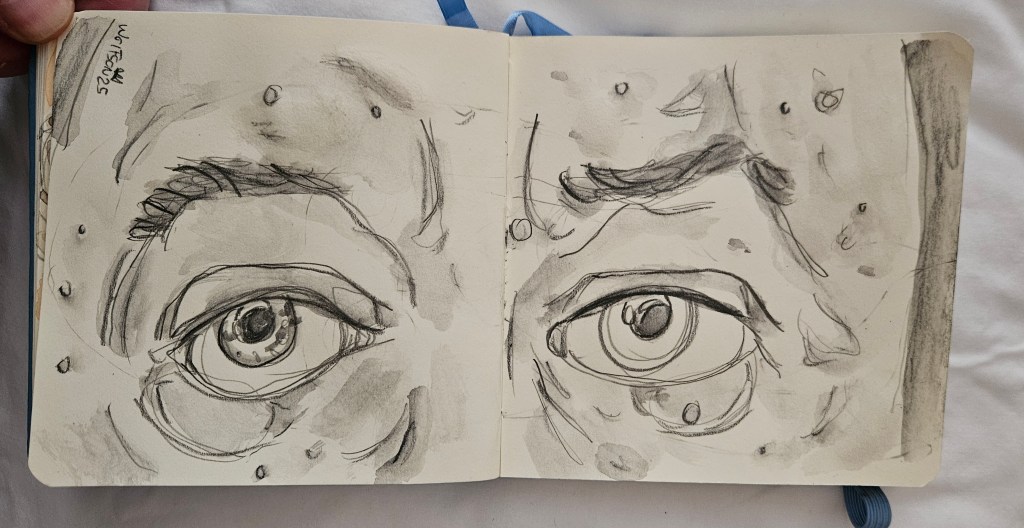
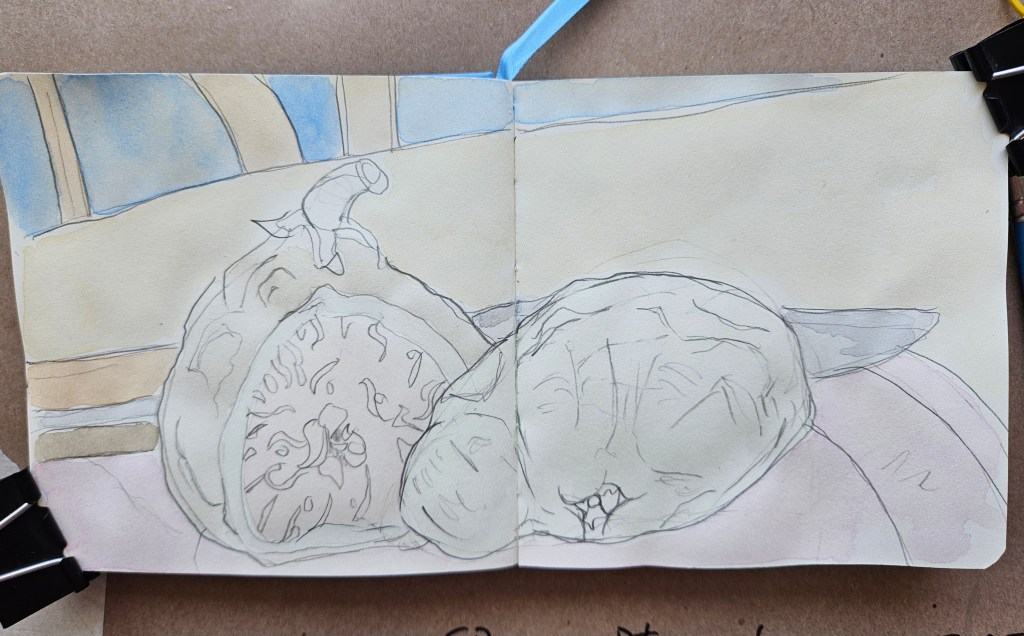
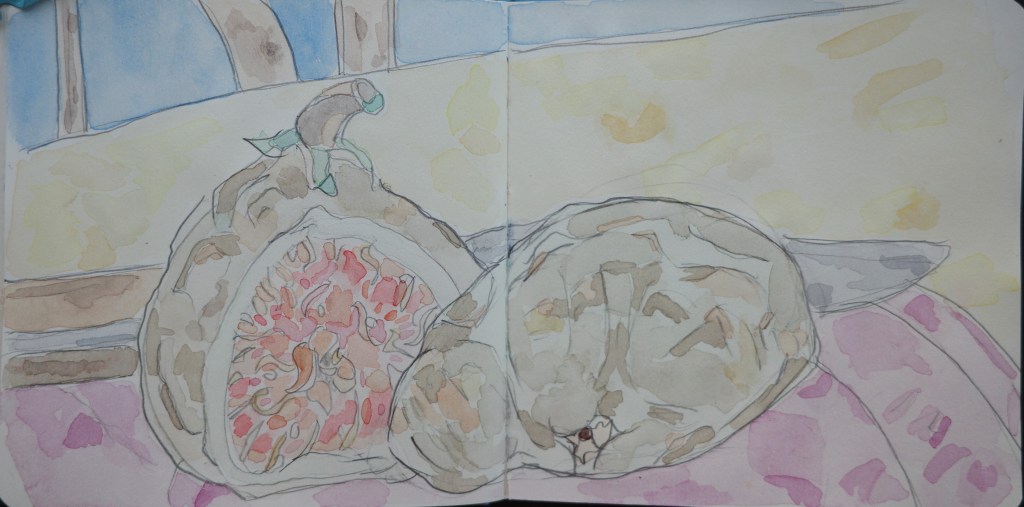
I started the practice of doing a smaller painting with remaining paints in my trusty Talen Art Creations Multi Media pocket Pad 4×4 inches. Nothing is wasted and it often presents some manner of stimulating challenge for me. It’s my version of what great chefs like Paul Bocuse did in their every part of the animal philosophy.

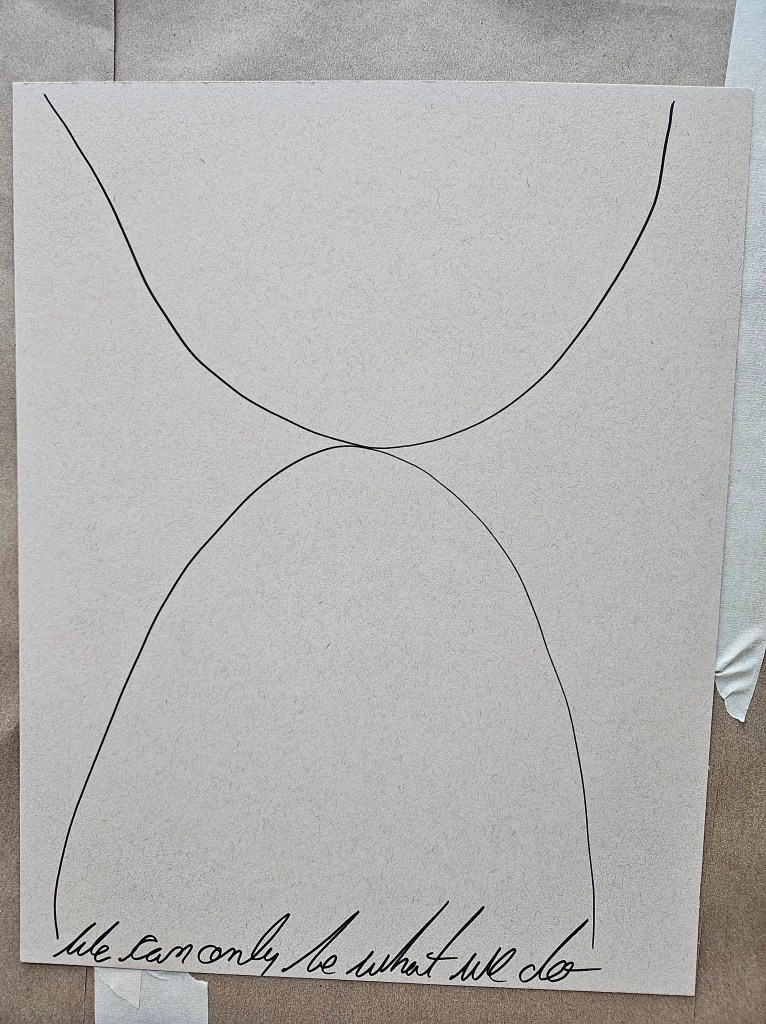
The Mark Watercolor & Rembrandt 9×12 cold pressed fin paper

Gerd Talen Art Creations Multi Media pocket Pad 4×4 inches

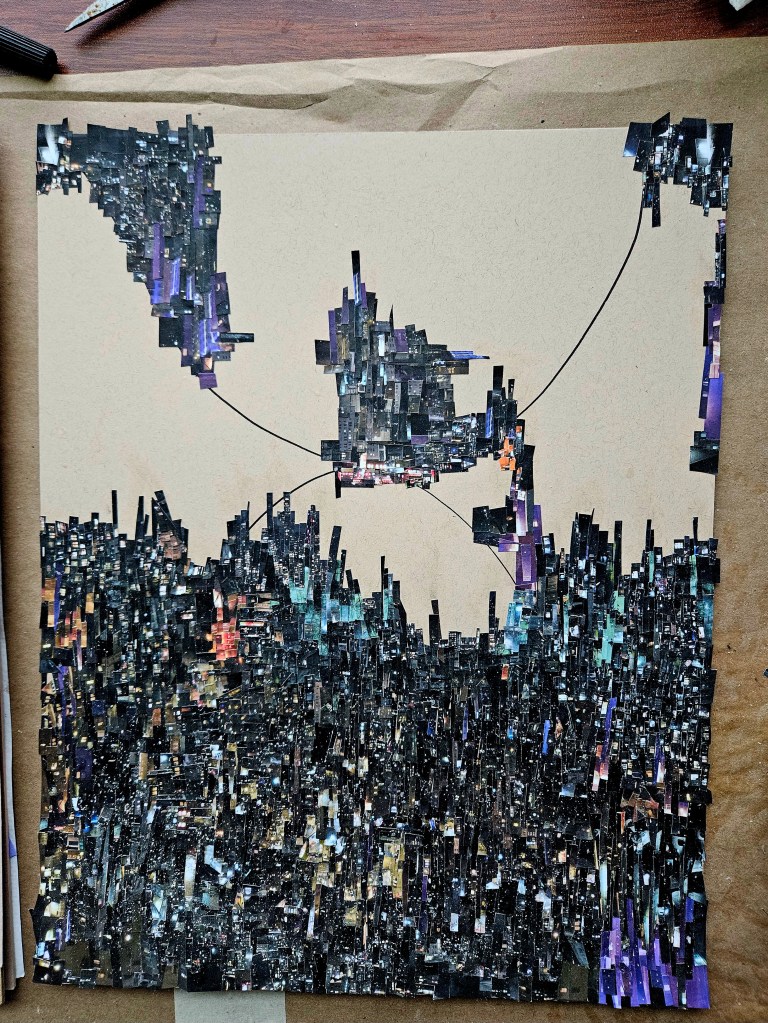
Night Tides (for Craig “Doodlebug” Irving)

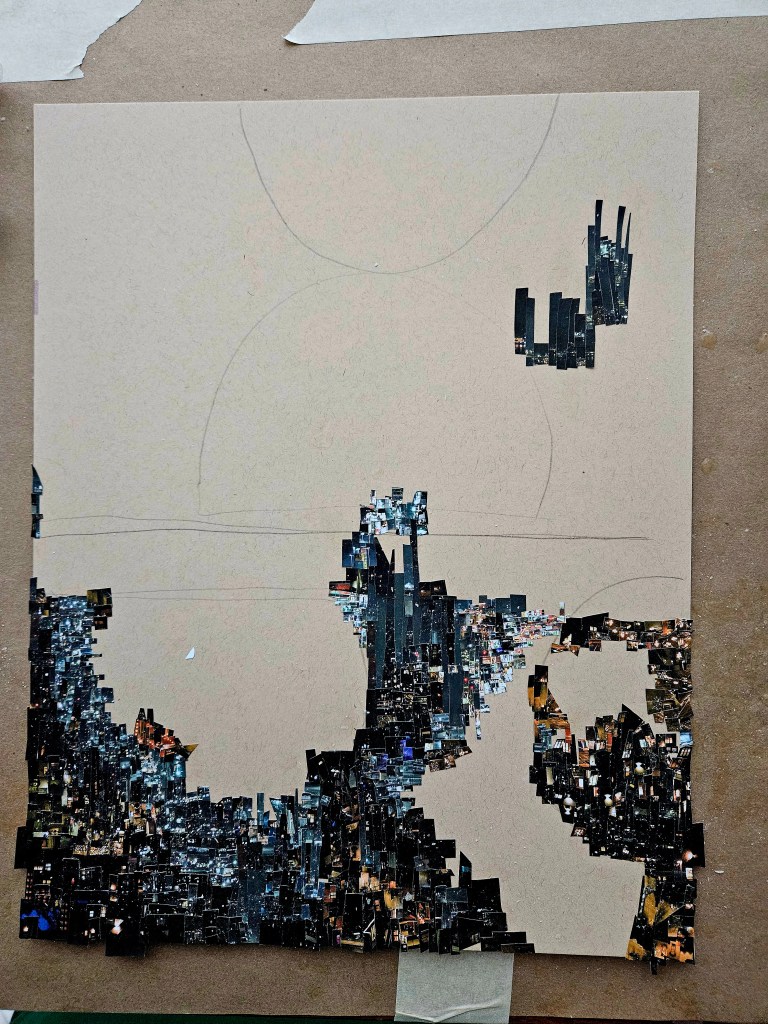
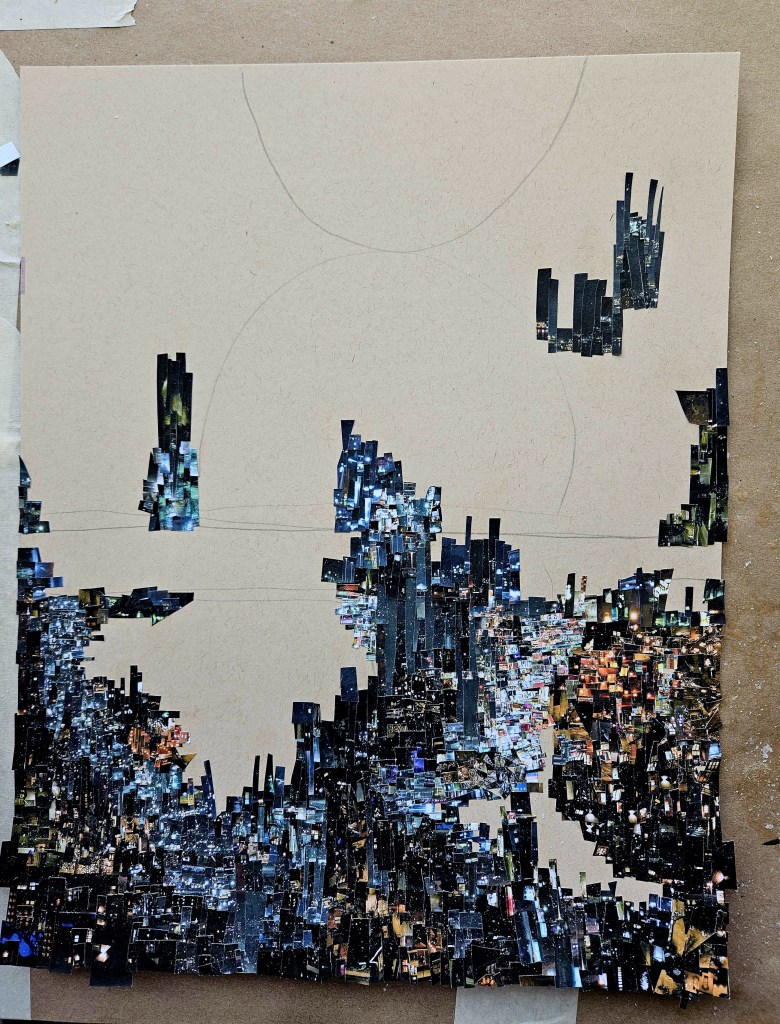
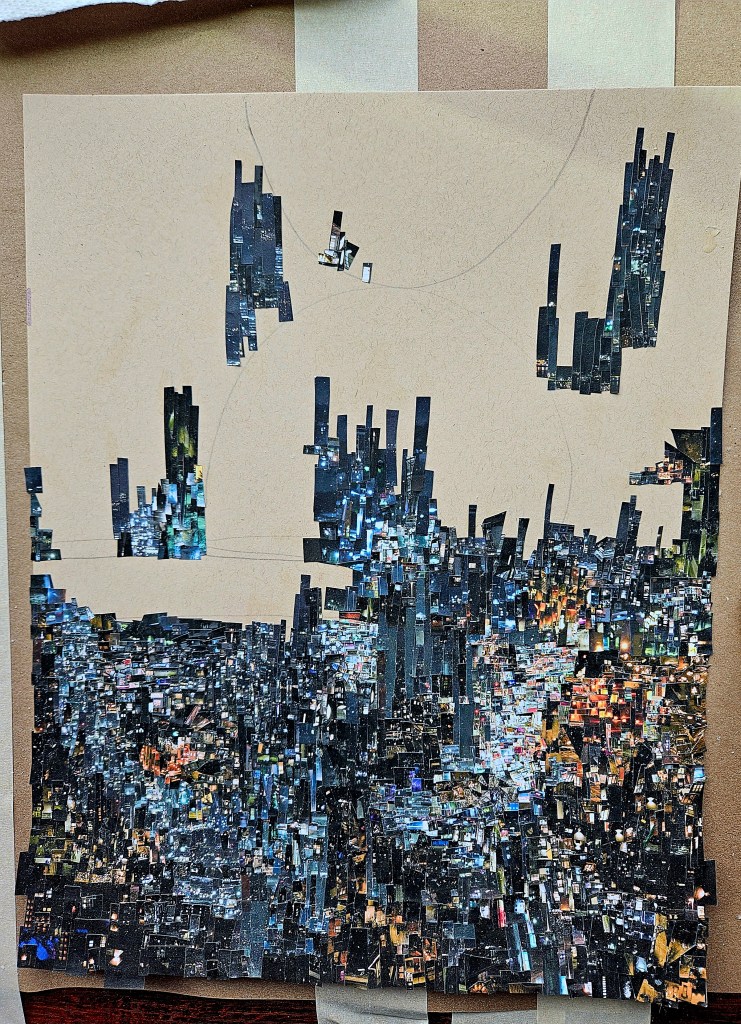
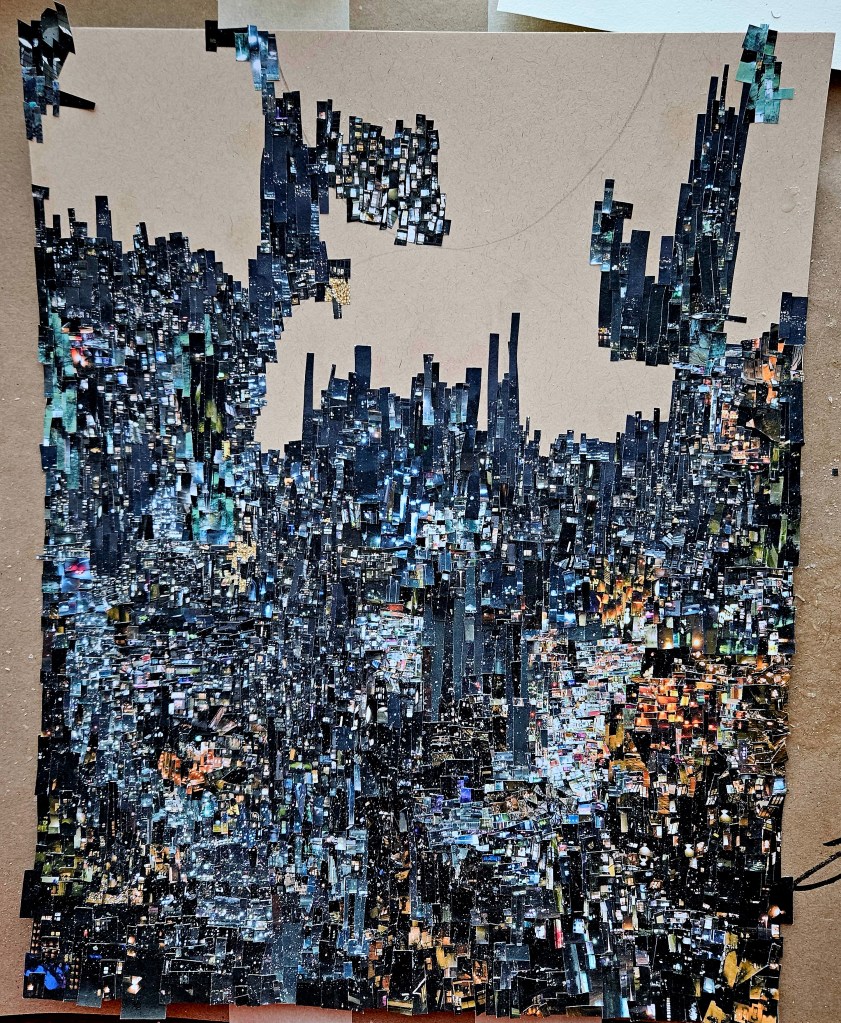
Finally finished my latest Cinefield®. For each one, my ambition is to make it better than the last in some way. In this case, it is my most rhythmically complex.

I seek to engage the viewer via creating works which offer new things to be noticed with every view. Ideally, I inspire (and maybe even awe) but if I only offer a momentary respite from the unpleasant aspects of daily life, then it’s all well worth it.

Aside from the labor intensive aspect of each Cinefield®, other information:

Each piece is comprised of one or two photos which I personally took. There is no digital magic, I use the old school method of my trusty tiny scissors and adhesive applied with brush on an 11×17 inch piece of heavy paper.

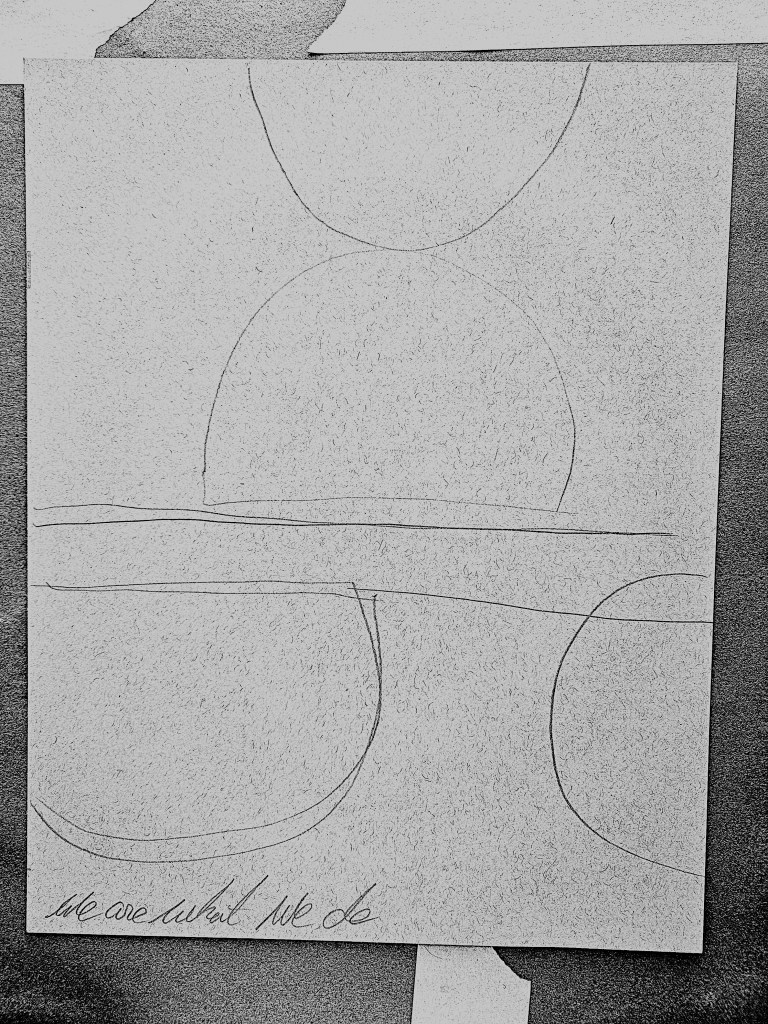
I always see the design in my head ahead of time. However, what piece is put where is in the moment improvised. I do a basic schematic on the paper the fine details reside within my inner eye. I also put a phrase which ultimately becomes hidden by the mosaic. The inspiration for this was the beautiful movie The Phantom Thread in which a master tailor did similar thing with his couture. There is such a call for meticulous detail in what I do and it’s so painstakingly executed that I have always likened it to the little old man making amazing shoes on Saville Row type of thing so these two things inspired me.

I cut up the photos into tiny, tiny pieces and they are carefully lain out on sheets. I look at the sheets as I work selecting what goes where in that moment. Do not ask me how i know, I just feel it, each selected piece seems right for where it is placed. The entire thing is very labor intensive, i see tiny paper snow flurries in my dreams often when halfway through a piece.

The work is copywritten and not for use without permission.

Drawing

“Color always occupies me, but drawing preoccupies me” Delacroix

“Drawing is the basis of art. A bad painter can’t draw but one who draws well can always paint.” Arshille Gorky

I always have a pocket pad on me, usually 3×5 inches, and then a slightly larger one in my ever present book bag. When I travel, what pads and accoutrements I have depends on length of trip, location and what else I will have going on while on the road.

It took me many years of trial and error but I have my trip equipment selection process down pat. For the past month or so I have been writing about equipment given to me by Royal Talens.  My current go to pad is by them, but I had discovered it long before they had sent me anything, Talen Art Creations Multi Media pocket Pad 4×4 inches

You can read my initial impressions:

I have never looked at drawing as a second class citizen in comparison to painting. No matter if I have spent the day painting or doing some of my other visual works, I draw an hour a night, every night. This woodshedding is akin to a musician practicing scales, but also one of my greatest pleasures in life.

I initially discovered water soluble graphite by complete happenstance. Once I had the mechanics down, I was able get painterly effects. When I work on my Cinefield® pieces, I can not draw as an under construction Cinefield® piece slowly dominates the space of my studio. But, I also do not want to let too long go without painting, which I end up missing.

Water soluble graphite work is the same as painting but in all greyish black tones. I can use my witting desk and do a piece in one session. I may not be able to paint but this was very close. Unexpectedly, I found that as I added to my graphite technique it helped my painting and vice versa.

I was just on the road and while it was a short trip, I had a lot going on. With this is mind I knew I would have no opportunities to paint. I brought my water soluble kit. Another important aspects of this medium which I like it how compact it is. 2x graphite sticks, a sharpener and one watercolor travel brush. I can literally put it in a coat pocket. If at a cafe I use a mineral water cap, in hotel one of the plastic cups to be found by the gratis bottles of dasni for water to dip brush into.

Here are some latest pieces:

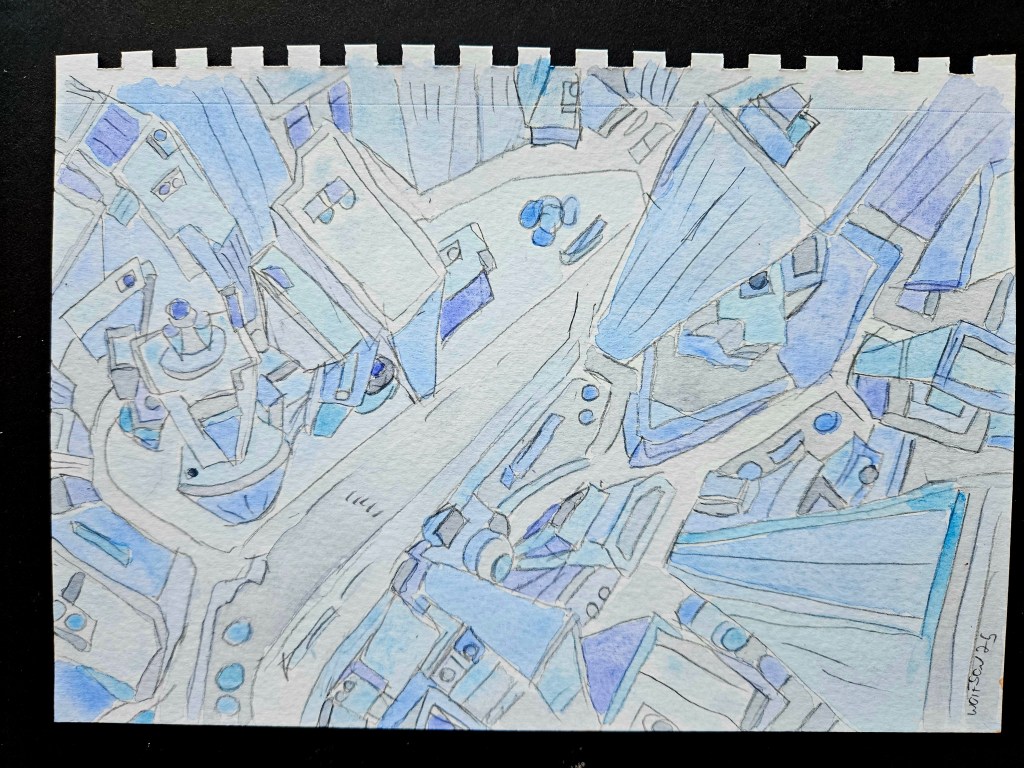
Back of Hand / City in Blue

Back of Hand / City in Blue

Royal Talens were nice enough to give me some supplies to try out (no strings attached). You can read my reviews at these two previous posts:

Now that I know the paints properties, I have added them into my permanent studio & travel palettes. They have seamlessly integrated in and so my next step is to try them with various types of paper.

When I Initially became serious about my painting, I was mainly using blocks of cotton watercolor paper. This is not ideal to travel with. I had found that it was also very sensitive to weather, one season in Paris it seemed to rain for almost a month and each layer of paint took forever to dry and it didn’t blend as well. These factors plus the increasing price of my preferred brand made me start to explore.

I ended up for a long stretch using a spiral bound pad of Canson watercolor paper. Easy to travel with, not cost prohibitive and of good quality.

In art, I am completely self-taught so I do not know how it may be for other artists, but I see the size a piece is meant to be in my head before ever touching brush to paper. I began to envision works both smaller and bigger than the Canson pad. While continuing to use it, I tried other pads too, preferring the pads over blocks as they are easier to travel with.

On the road my go to pad has been Talen Art Creations Multimedia Pocket Pad 4×4 inches. What I like about it is that I can use it for my Lyra water soluble graphite pieces, watercolors or just drawing. It eliminates my having to have multiple pads in my bag. I do still always have my trusty 3×5 pad in pocket regardless.

At home I mix it up size wise going all the way up to 11×17 size.

In my exploration of the added paints to my palette with various papers I decided to first try them with my old favorite the Canson pad.

Canson Montval Watercolor pad. Spiral bound 140 lb. cold pressed. 5.5×8.5 inch

In doing an extreme close up it presented an interesting challenge. To be able to show volume and mass without the help of showing the outline of the hand which would have served as a guide/clue to the viewer’s eye. The piece is almost abstract. Keep looking, you notice the volume and mass, keep looking you notice little things with each new viewing.

Back of Hand

I have done a lot of portraiture of late but have also always enjoyed doing cityscapes. I want a style but never mere mannerisms and a key to this is to always be challenging myself. I decided to do a cityscape, a nice challenge on a smaller sized paper, especially as it has been a while since I have done one.

City In Blue

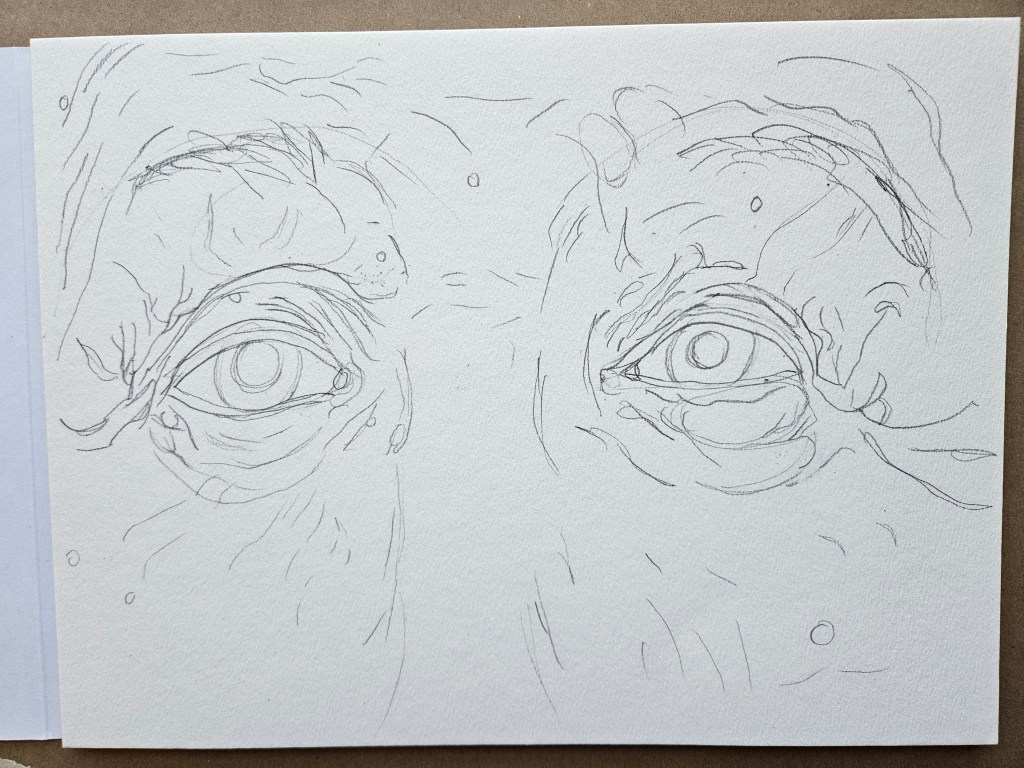
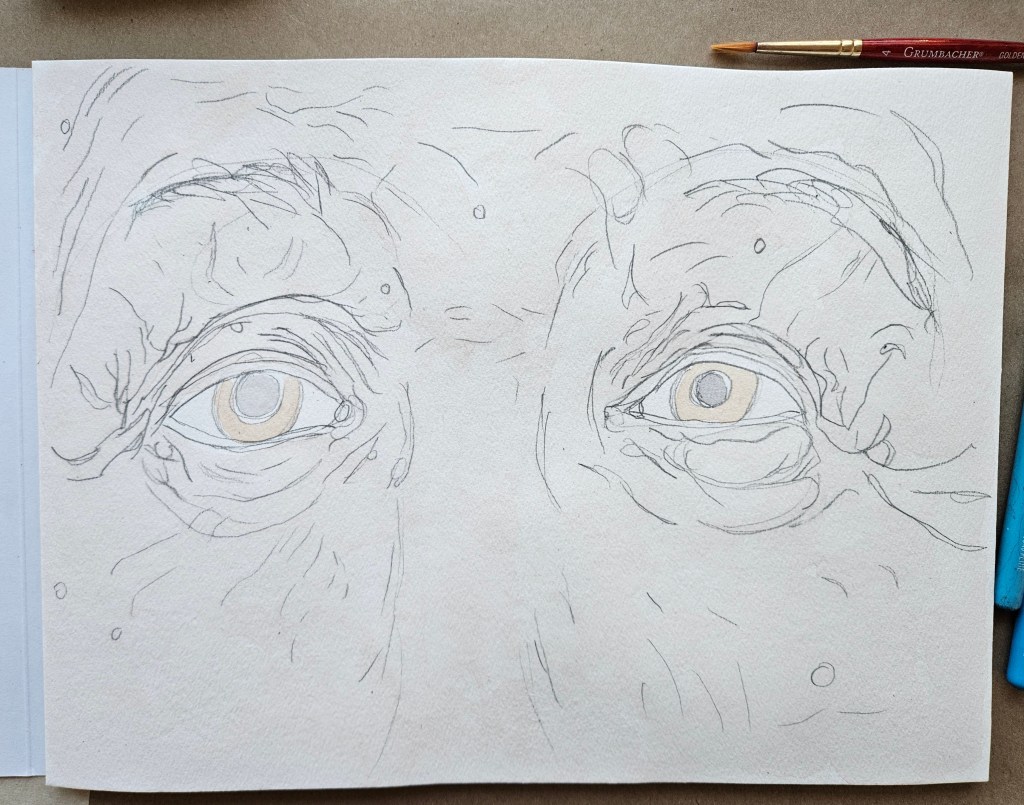
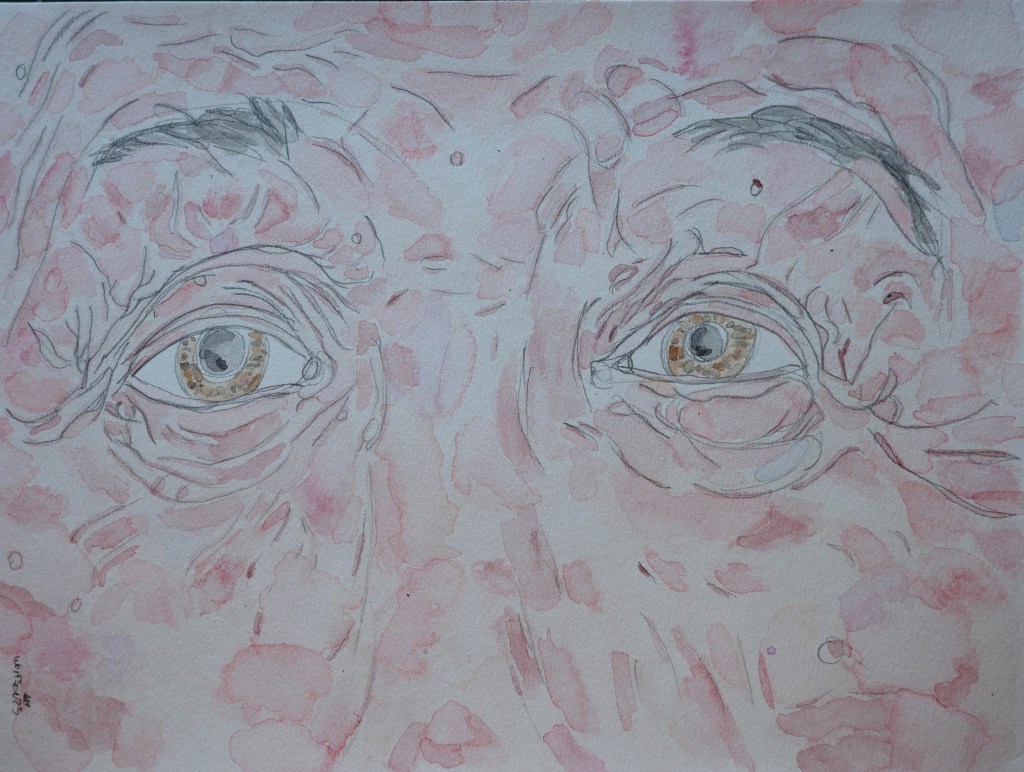
Brown Eyes/ Figs

Royal Talen was nice enough to send me equipment to try out (no strings attached). This is the next round of things I tried.

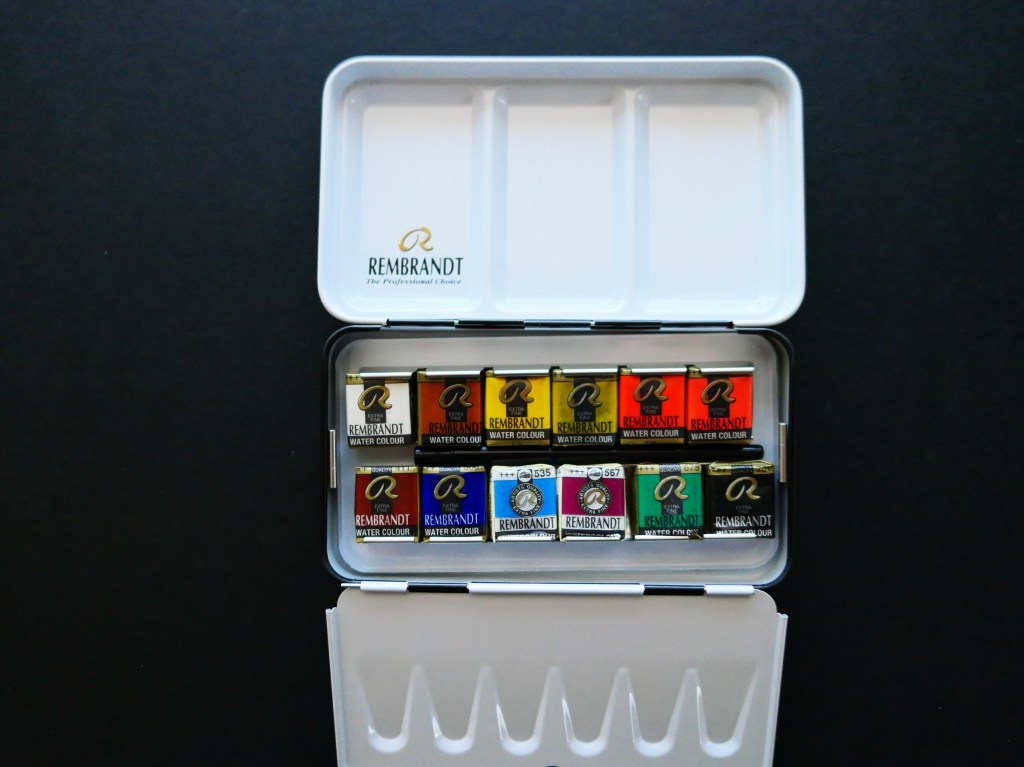
Rembrandt half pan set. The Rembrandt line is professional grade. The pigments are triple ground and suspended in gum arabic. The colors really pop and appear even with every brush stroke.

This set is twelve half pans. They come in a hinged black metal palette box with the logo on the lower left corner. It is compact enough to fit in a coat pocket and has a sturdy build. Two long struts cradle the half pans. Individual metal clamps hold each half pan in place. The entire strut is made to pop out, ease of doing so facilitated by two small handles at either end. This is so that you can replace the cradle once crimps are too loose.

(all pics by me)

Some painters have specific configurations for various subjects and places that they work. They have multiple cradles which they leave loaded up in work specific arrangements. One is popped out or in easily as needed.

There is a hinged metal cover that goes over the half pans when the box is closed. When the palette box is open it lays at an angle. This is a mini paint palette to mix or wet brush. The lid of the palette box can also be used as a larger three section palette or to hold water.

On the underside is a finger loop to hold the box while working plein air. In Paris, on Rue Mouffetard I have seen an aquarellist run a thick elastic through the loop, attaching it to her drawing board.

Some people intentionally want to work from a limited color palette. Others have travel in mind where luggage is often a factor. The size of this kit is perfect to suit either motive. This kit practically demands that one get out there, be it someplace in nature or an out of the way spot on the street, or perhaps a café table and get to work.

I do mostly portraits/ casual faces so some of included colors I would infrequently reached for. I did try all of the colors, they were all noticeably vibrant, easy to darken or lighten using an eye dropper and water (in a porcelain palette).

The kit comes with a travel brush/ A Rembrandt 110 Red Sable. This is a better-quality brush than is often included even with the bigger names in paint companies. It has a cap to protect it when not in use. It cleans up easily with water and watercolor brush soap.

There are water brushes which are a brush with fatter barrels into which you add water. Anyone who does street or café painting could use the kit as is in conjunction with a waterproof pen to create street scenes.

Draw the scene and use one or two colors to stand for in light and shadow (i.e. light blue for the front of a building, dark blue for the side in shadow).

The exciting thing about this kit is the possibilities. Two water brushes, a pocket pad, pencil and the palette box all could easily fit into two jacket pockets or the small section of a backpack.

The thing I have always liked about half pan sets is their portability. It is easy to swap out colors for ones preferred or as they run out, to replace them. Even though not all the colors included in this box were to my preference, I had already been using Rembrandt in my permanent studio set up. All the colors share the same properties and quality.

This set did get me enthused again about doing still life’s which in my body of work had sort of fallen by the wayside.

“Brown Eyes” 9×12 Rembrandt watercolor paper 140 lb cold pressed

“Fig” Talen Art Creations Multi Media pocket Pad 4×4 inches

Northern Symphony

Finally finished my latest CINEFIELD®. Although it felt as if it took forever, I am very pleased and proud of the results.

The entire piece is from a single photo which I personally took and then printed up many times. I used my trusty pair of (tiny) scissors to cut out the pieces and then glued them to 11×17 piece of paper using adhesive and small brush.

My goal was to offer up a work that one could go back to many times and notice a new thing each time. I always have the design in mind beforehand but which piece I use where is completely discovered in the moment. I cut out sheets of tiny shapes which are arranged on a table by what will become the work. In this way you can look at all my complex CINEFIELD® as completely improvised.

(I’m the Charlie Parker of collage)

Northern Symphony 11×17 (C) Wayne Wolfson. Not for use without permission

Addendum: I used to live in a city that often had weekend “art walks” or art & wine block party type things. There would be kiosks for photographers etc who had “art” but each thing was reproduced hundreds of times and in various sizes. There is nothing wrong with this so long as you realize it is less buying art and far more in line with buying a postcard/poster/print.

I have CINEFIELD® prints available but each print is only done twice and one of the two is for my own archive. My site goes into all technical details. I have gotten emails asking what is available as the site currently only lists a few as available. If there is a Cini you are interested in get in touch with me, it could be that I just had not had prints made yet.