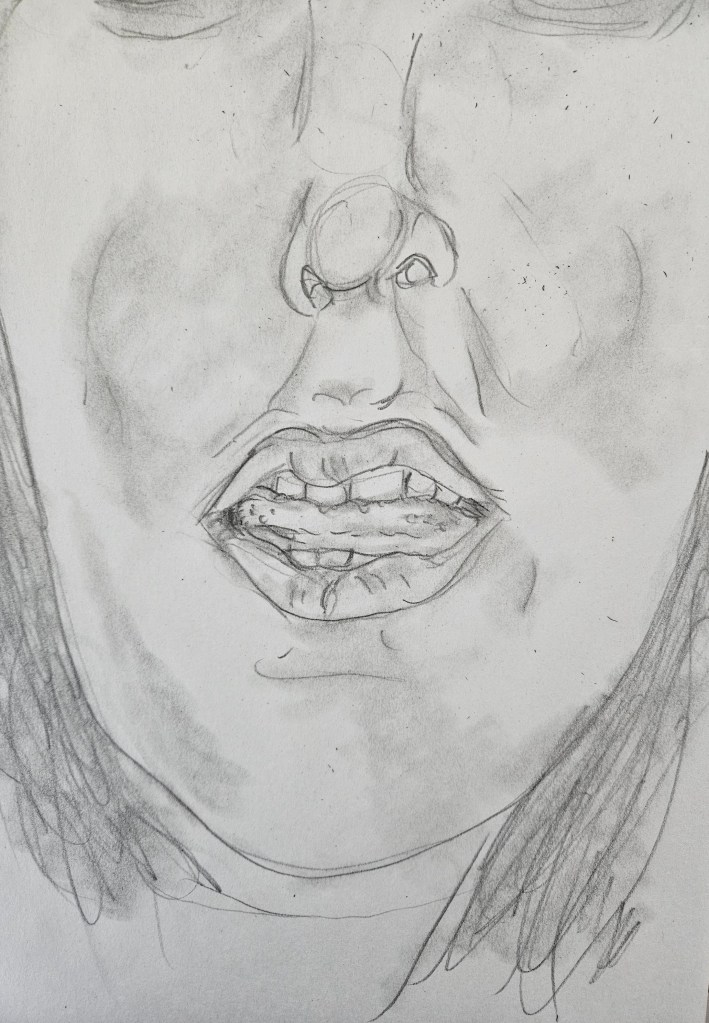
Truth is Beauty

Ever present cell phones have allowed all to capture the minutia of their lives via pics and Shakey-hand movies. on occasion marvelous things have been captured. The more present negative is that people have forgotten how to look at paintings.

A “good” painting now must be in the real/hyper real style, being comparable to photos. It is not desirable to see the artist’s hand via brush strokes et al in a work.

I was in a museum which was having a Magritte  show. There were the by now all overly familiar images on display. People would walk up to the best works, striding off muttering in disappointment that they liked it more when they had seen it on a computer screen or postcard, in person it looked “too homemade” i.e. brushstrokes etc.

I am not afraid of having one of my drawings look like a drawing or a painting. With Matisse for example, no one is going to study anatomy off of one of his works. However, when he portrays a woman reclining on a couch, you know what you are looking at. Had you been alive at that time and in the neighborhood you might even recognize the woman. Most importantly, even after all these decades, the captured emotion still radiates out of the works.

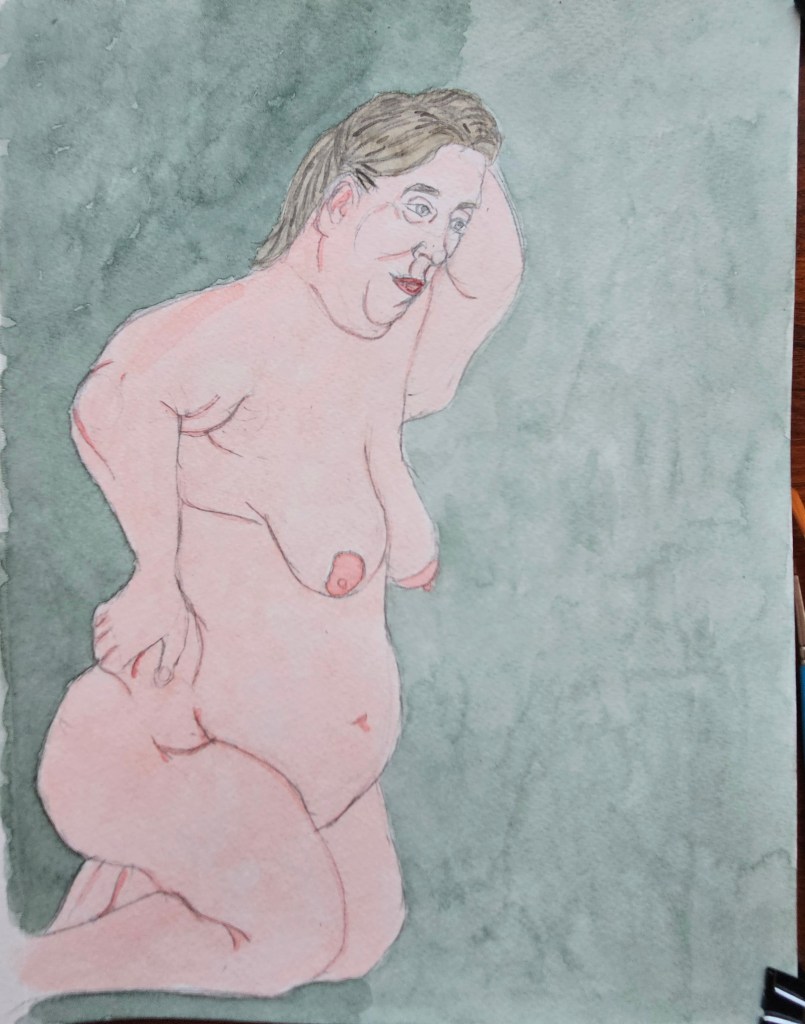
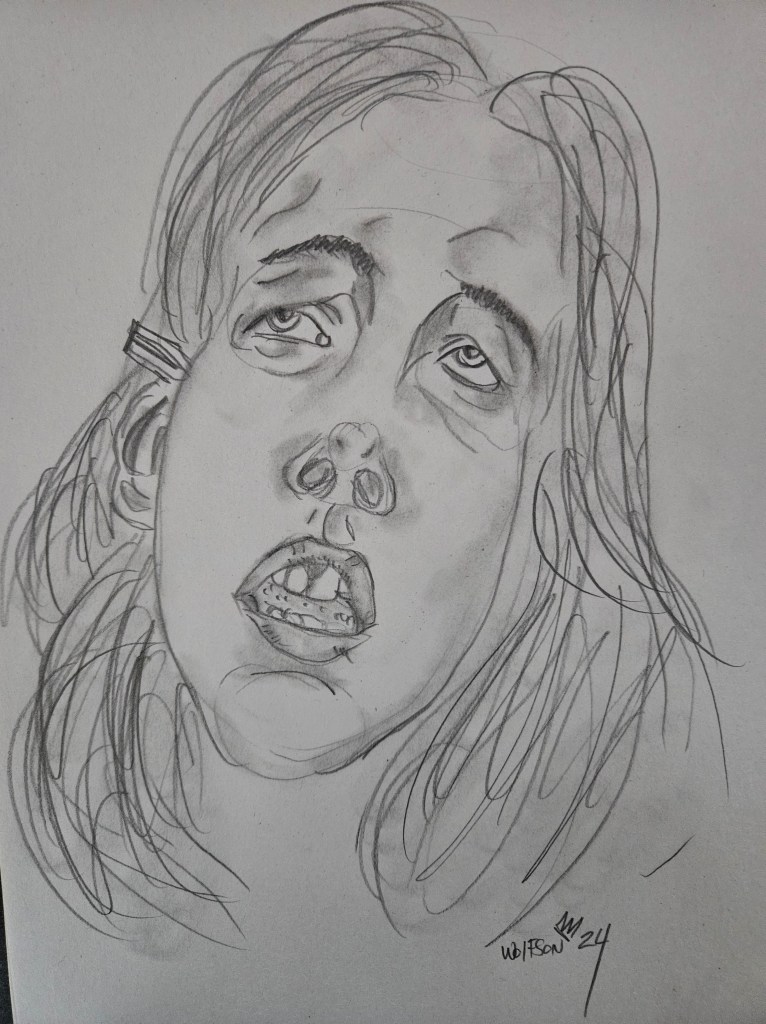
I prefer to not use professional models. There’s often an artificiality to their poses. My main thing is emotion, this is what I want to give the viewer even more than admiring technique.

More often than not, I use people whom i know and that trust me. This allows for a realness which is beautiful. The realness of my paintings is not the technique but the natural poses and emotions.

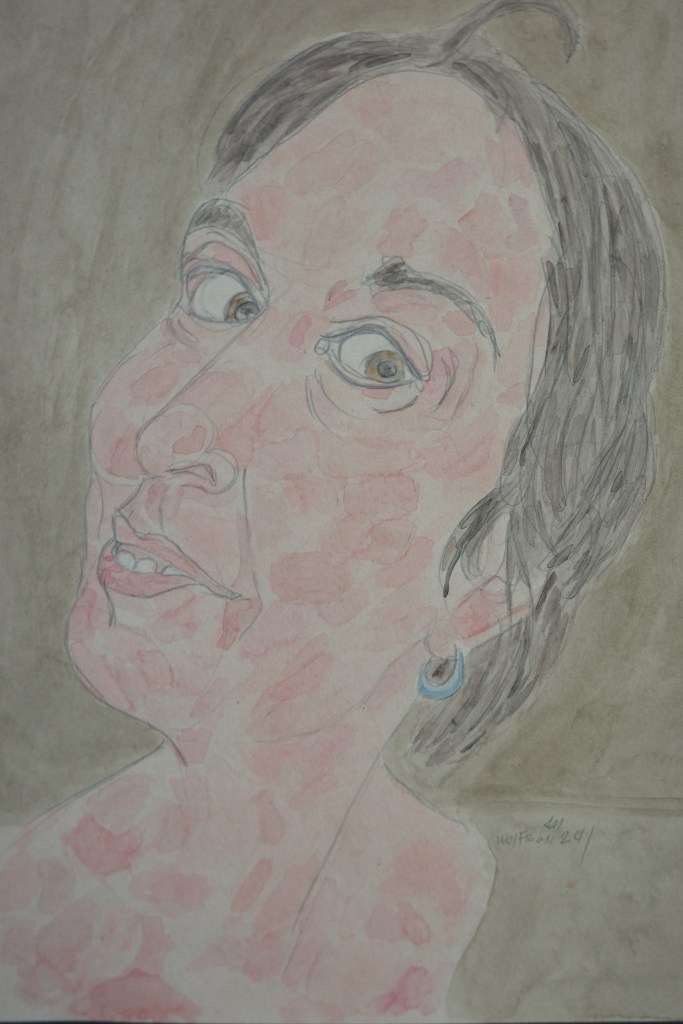
Truth is Beauty 11×17 Watercolor on tan paper

Dear Diary

With everyone having phones now the ability to capture amazing scenes is always just a pocket away. When something is too easy though, it starts to loose power. Phone-cams went from being at the ready in case something fantastically dramatic should occur to being merely the facilitator of the mostly mundane minutia of people’s live being on a non-stop social media scroll.

One of the biggest and most far reaching negatives of this is how it effects people being in the stream of life. I travel, often. An overly familiar sight now is people rushing around a famous museum or well known area (Luxembourg Garden et al) stopping to raise their phone slightly above themselves while duck billing, snap a pic, then rushing off. Their justification is that they are capturing memories. So preoccupied are they in getting the perfect pics to post that they are not in the moment, not in the stream of life.

Once back home they can show you them standing by some landmark, some great work of art but there can be no description which makes you feel as if there. Even for them, this is the case and they had actually been there.

The adage that travel broadens the mind is not merely about ticking off things on a list of what to see, where to go. It is absorbing a place with all its ambient characteristics which hopefully in some way add to you long after the trip is over.

I am not anti-photo, I take some myself wherever I am. But see and capture with your eyes first. I always have a 3×5 pad in my pocket. I will do small sketches when on the road and take notes. Not always dramatic, sometimes it’s just a room service tray with the leftover bones of a hastily eaten meal or my book bag hanging off the back of a chair.

Not everyone can draw, but you should still keep a little pad on you. Use it to take notes. In doing this you will actually be more present in the moment if you slow your roll and take a beat to describe what you are seeing. As you are doing this just for yourself, even if you can’t draw, why not try anyways?

That is another negative of social media, everything seems to be motivated now towards getting views/likes. The recently departed Paul Auster said “Do a thing simply for the beauty of doing it.” To live this way, you may not garner as many likes etc but you will create true memories.

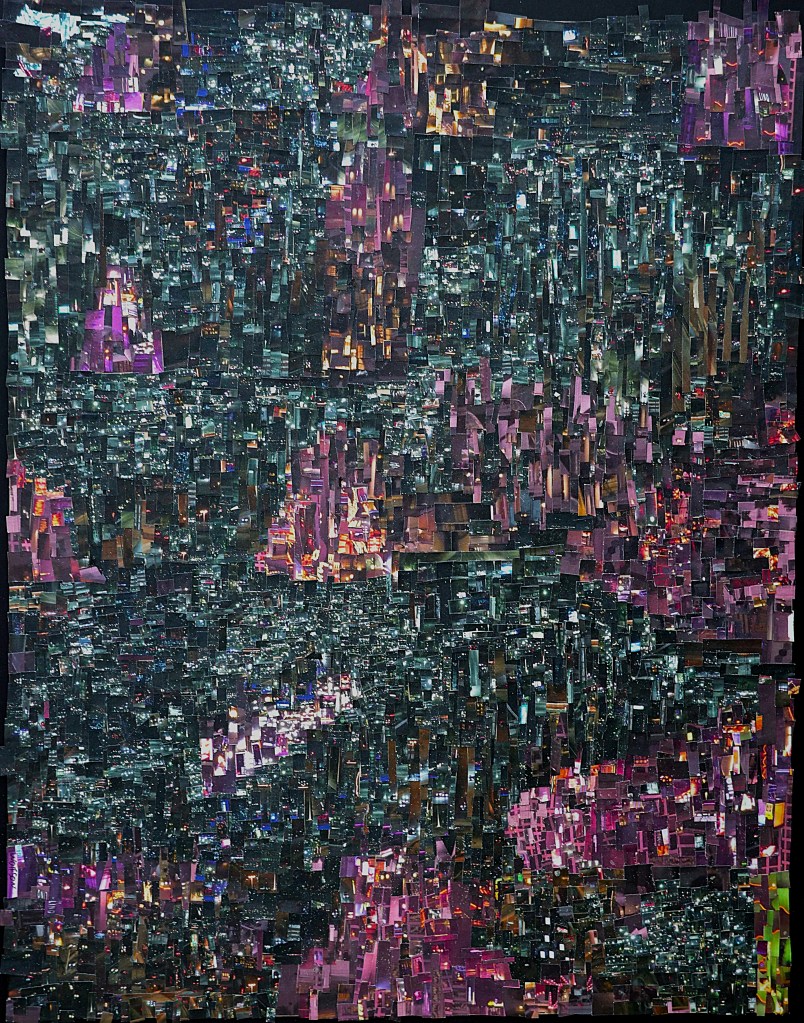
Cinefield® Miles

For all my work, I’ve always had two main goals. To develop a discernable voice and to create works which in some manner effect the viewer. The first was achieved via lots of sweat and singular concentration, while the second will be a life-long mission.

The problem with having a recognizable voice is that one can either unintentionally or out of laziness lapse into mere mannerisms. This is to be avoided at all costs. It is the motivation behind my constantly leaving my comfort zone and trying new things.

For Miles I sought to make it different than what had come previous. It can still be recognized as a sibling of the predecessors as the medium does to some extent effect the voice. The mission for this one was that I wanted the viewer to be able to go back multiple times and find new little moments occurring within to notice.

As is always the case with these works, I only use photos which I personally took. For this piece, I was fortunate to find an area which was trying to entice night people with entire buildings being lit up in purples and pinks. These colors being new to my Cini palette were a great way to further the newness I was trying to achieve. I would combine an overall different color palette with an increased rhythmic complexity.

There is no digital magic, I used my trusty scissors to cut out tiny pieces and a brush for adhesive. The piece is 11×17 inches.

I always have a sort of soundtrack when I do Cinefield® pieces. I do not merely listen to same albums over and over, the soundtrack is what i start out with and as the day goes on other things are put on. They serve as an initial mood setter. This piece’s soundtrack:

Miles Davis Big fun

The Soft Pink Truth Is It going to Get Any deeper Than This

Bennie Maupin & Adam Rudolph Symphonic Tone Poem For Brother Yusef

Mozart (Rene Jacobs conducting) La Clemenza di Tito

(C) 2024 Wayne Wolfson not for use without permission

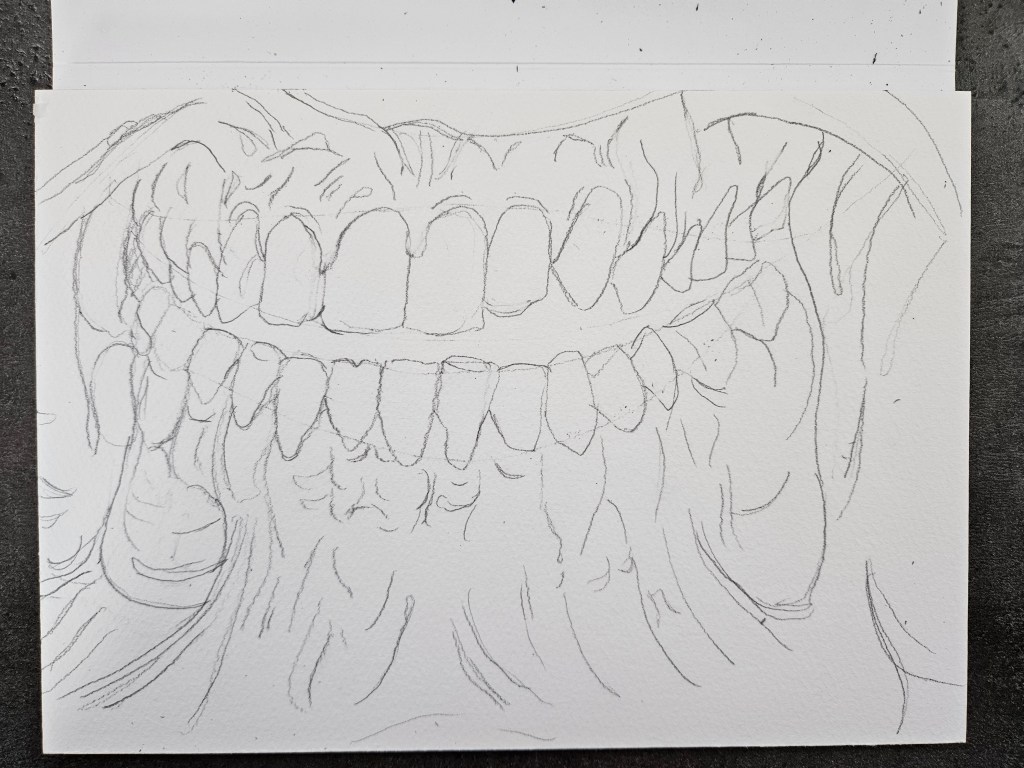
Paper chamber pieces

I am finally temporarily done with being a road-dog and the weather has turned beautiful and spring like. Starting a new Cinefield®.

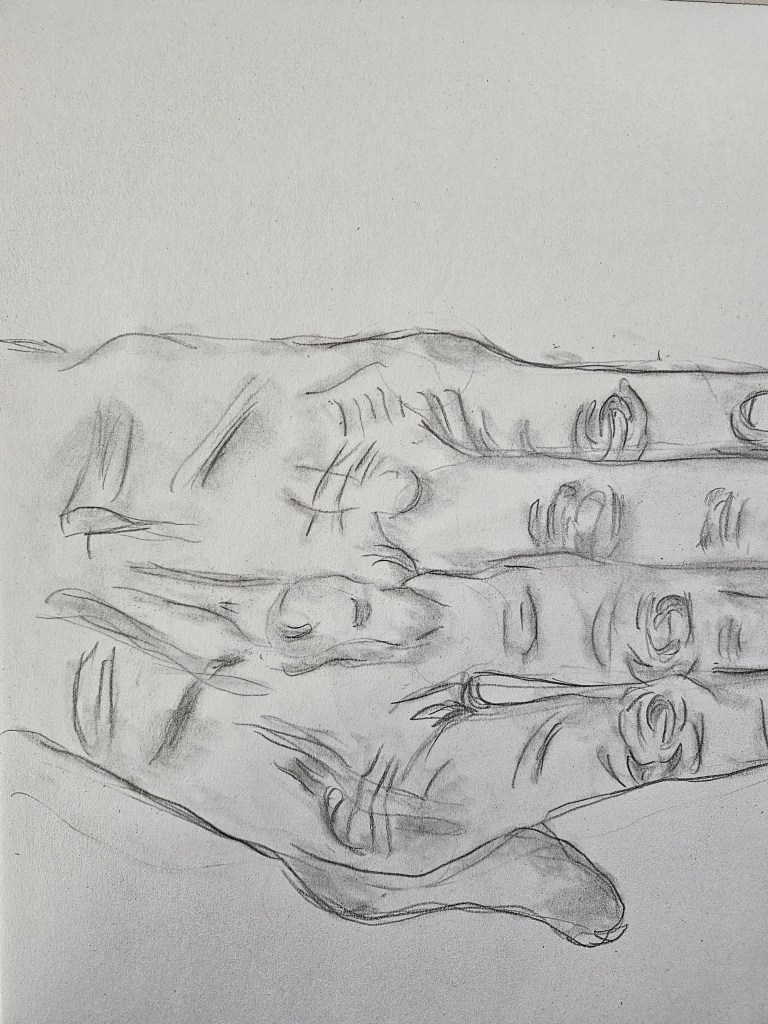
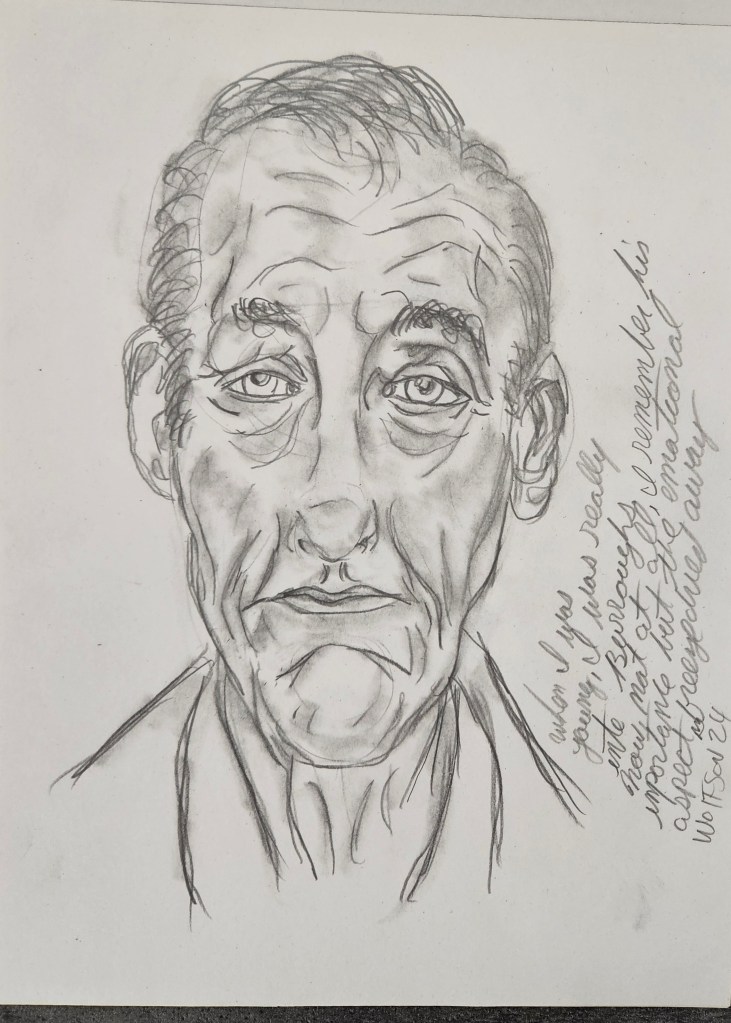
While busy with everything else going on, I have continued to draw every day. It is part of who I am. I also hope that it offers brief break from the mundane and the pressures for all those who take a minute to look.

My Cinefield® work is labor intensive, but I will still draw a little at the end of every day.

Quick Lyra Piece

Quickies

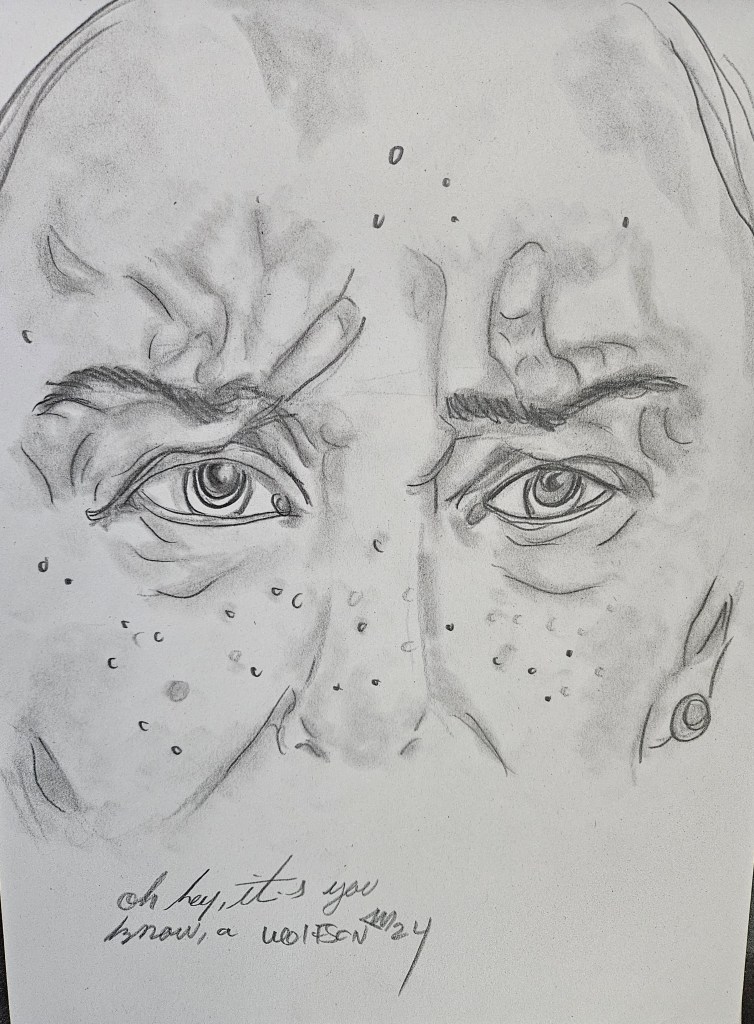
Between weather, the release of my latest book and travel I have not been able to start my next large project. With everything going on, I do still draw every day. This woodshedding is akin to musicians practicing scales.

It serves another purpose too, a type of antidote for the current zeitgeist, a brief reprieve from doom and gloom of news and what feels like non-stop culture wars over even the tiniest things.

More and more, I feel it is every artist’s duty to do their thing. Not necessarily to put any sort of message in their work, but offer up some form of beauty as a reminder that there are things out there which link us all and there are things out there longer lasting and ultimately more important than any “I”.

If my work gives someone even five minutes of peace or distraction, then it has done its job.

These are some quick sketches. In about a week i start my next big project.

Blinky

There’s a cottage industry devoted to helping people to pursue the dream of becoming a working artists. There is a lot of advice, some contradictory and other things just not how it works in the real world. Or, if it works that way, it is far slower going and heavily sprinkled with rejections and other unavoidable negative aspects.

The one commonality though is that one must have an online presence. Starting with a personal page which should not look as if only free sample software was utilized. There is also the need to have a social media presence. This is the thing so many get wrong.

Have updates of what you are doing in regards to new releases, shows, concerts etc. (It is strange though to keep up a steady stream all day long on twitter et al. When are you working? )

The biggest mistake with social media is the machine gun approach. The theory being if you have something you want people to buy/see just send a deluge out onto social media non-stop. Ten, fifty, one hundred thousand people see it and then if only “X” percent act….

Rarely does it work this way, to a higher percentage of people you are being an annoyance or another thing to mark future communications to go directly to spam folder.

Of course all artists want their work to be seen, myself included. But you should want an audience, not customers. Social media has definitely made it so that there is potential to reach many people with the press of the button, but done too often or two impersonally the only thing achieved is adding to the volume of cacophony of voices yelling “look at me, buy my stuff”.

I have several pages which have been around at this point for years. Anyone familiar with them sees that I rarely steer people towards commerce side of my artistic life. Exceptions being mainly when i have a new book out.

My newest collection is just out and you can find it at amazon in Paperback & kindle versions.

Selfie

There’s a long existing tradition of painters doing self-portraits. Even those who do not often do portraits but work in realistic/figurative style, over the course of their career will do a few. One reason every painter finds themselves giving it a try is that it is almost a way of proclaiming yourself a painter to the world, swearing allegiance to the process and planting your flag.

The painters who do it more regularly often have a Whitemanesque I celebrate myself, and sing myself element to it. Or as is usually the case for myself, pragmatism. Sometimes it is just easier to do a selfie. I do not need to worry about waiting around for a model, I do not need concern myself with if the light changes.

The relationship between artist and model, it is as if they are describing a person but using their words. The words in this case being the artist’s voice/style. Everyone looks different moment to moment. One looks different depending upon health, mood, location. You will look different sitting across from me in restaurant than at my side in car going down highway et al.

Cell phones have grated everyone ability to capture minutia of their lives. People have forgotten how to look at paintings. A subject or model wants to look exactly as they do in a photo. They want you to use their words to describe them so to speak and they don’t understand about the transmutable effect of time, being a different “I” from second to second as influenced by so many factors. To look exactly as one does in a photo, that is photo realism and that is a style, a genre not “the right way” over all. Very few of the immortal list of painters did photo realism. When you view their works, whether Frans Hals or Matisse, you know you are seeing a woman in a dress, you might even know who the subject is, but one is not going to study anatomy from the work nor confuse it for a photo. This is not a bad thing. Forgotten is that it was the artist’s hand, their voice in a work we treasured not merely because it looks so much like the thing.

In general I always want my portraits whether in paint or drawing to look like the subject, but ultimately it’s a flat square upon which one is creating an image which hopefully exudes at east a little something, life, emotion. Even with this goal though, I am not trying to hide that it’s not a photo. Why would I?

11×17 Tan Paper & Watercolor

Drella

Picasso’s name still carries much power, although not for the reasons it formally had. Now, he is an aspiration for people. The imagined life, doing very little but acting as one imagines a famous artists to act via cues from TV and movies. Paying for huge bar & restaurant bills via scribbling on a napkin, grabbing your dealer’s or someone else’s wife’s breast and other such bad behavior, all done to endless applause.

Think what you want about the man, he actually worked hard. Those who daydream of reaching his level would give up even earlier than their eventual quitting if they knew the amount of work required to attempt to scale up to his heights.

The best art and artists have an aspect to them in which each fan recreates it in the image they need, their own meanings, regardless of accuracy.

Andy Warhol is another whose name has become totemic for many. The interesting thing about him is that he seems to be made by admirers (and some detractors) into a myriad of bewigged pixies.

With Picasso, whether one is fan or not, the various ways in which he is portrayed always have a main component of him being the conqueror.

Andy though, is legion. Some admirers see him as what he offered up to the world, the public face. Others wanted to dig a little deeper and went by his published diaries, which most likely had been done for eventual public consumption. A further put on or enigma, depending upon which camp one is in.

There is the parable about the six blind men and the elephant. This perfectly sums up Andy. Assuredly, we are told he was:

Master manipulator, someone whose other-worldly boho mien was a sort of act which amused him to do, a long con performance piece.

A true artist whose cool emotional detachment was birthed out of the initial ideas behind pop-art and the booming post war years of consumerism.

An on the spectrum man-child, whose wonderment at some of life’s more mundane aspects truly enchanted him.

Each of these members of an army of Andys have a plausible explanation as to why they are the true Andy.

He achieved such fame and was in the game for so long. There was a sharp eyed cleverness behind everything he did. Part of his genius was in letting others talk for him.

Early on he found a way to to do a put on to the art world which amused him. This was facilitated by letting critics, fans and peers do the talking, coming up with the theories and meanings amongst themselves.

He was a sort of naif. Handlers and an inner circle took care of all practical matters, while he walked through life in a dream like enchantment.

It was all an act which allowed an artist who was mediocre in execution of work and its promotion in the traditional manner to accrue power and money while secretly laughing behind his wig and shades.

Interestingly, the further forward in time we move, the clearer picture of which was the true Andy is formed. All the various Andy’s which people hold dear were aspects of him.

I am actually not a fan. Recently, I had the pleasure of seeing a giant silkscreen by Rauschenberg which i greatly admired. This combined with fact that every time I watch a documentary on anything going on in the 1970’s from clothes, music, photography, night life et al, at the very least during montages, Andy can be seen watching the crowd.

It served to make me think of the nature of his fame.

Don’t hate the player, hate the game

Quick sketch on newsprint

Anniversary of a Close Call

With each of my Cinefield® pieces I try to one up myself or stretch forms in some manner. For this piece, I wanted to create a work where one can go back and even with repeated viewings find new little moments. I feel it succeeded, this being the most rhythmically complex piece I have ever done (so far!).

In the past, I have not gone into certain aspects common to the creation of all Cinefield® pieces as I was conscious of it sounding too close to boasting. All the images are from photos which I personally took. I always have a rough outline of what I am doing in pencil on the paper. However, when I look at the photos I use, often limiting myself to one or two which I just print in multiple copies, I do not know what will go where. I can have two copies of the same photo and cut them up completely differently. All the pieces are very tiny. I do not know what tiny piece goes where until I am laying it down.

I work with anywhere from one to three 11×17 sheets on tiny paper confetti sized pieces. I stand at table looking at the paper w/pencil outline for design and then see what I have cut up and where I feel it should go. What this means is that every Cinefield® which represents hundreds of hours per piece, each work session is an act of complete improvisation.

This piece is 11×17 . no digital magic, just my trusty scissors and adhesive applied with brush.

A.I & art. There is still a misconception about A.I generated artwork. A.I, if you ask it to create a city scene, does not spontaneously create a work from scratch. It pulls different aspects of pre existing work by others to create a sort of frankensteined version, more often than not without permission of the original artists. Copyright your works before doing anything with them, this includes posting on social media. If your work blatantly shows the artist’s hand i.e it looks done by hand, it’s not as much a worry as mediums such as photos et al.